Cracked Heels Remedy: A Short Foot Soak and Night Balm
Dry, cracked heels respond best to a steady routine: a short soak, a rich cream on damp skin and a protective layer at night. A calendula foot soak makes the routine more pleasant. Here is how to put it together.
Heels carry your whole weight with every step, and the skin there is thick and slow to stay supple. In dry winters, in hot summers in open sandals, or after long days on your feet, it can harden and split.
Most cracked heels can be improved at home. The secret is not one magic ingredient but a routine you repeat every day. Herbs can make that routine feel like a treat, while proven moisturizers do most of the work.
Why heels crack
When the thick skin on your heels gets very dry, it loses its stretch. Pressure from walking then pulls it apart, and small splits can deepen into painful cracks that may even bleed.
The American Academy of Dermatology (AAD) points to a few everyday habits that make things worse: long hot baths or showers, harsh soaps, and shoes that leave the heel exposed or do not fit well, such as flip-flops, slingbacks and worn-down shoes. The AAD also notes that cracked heels can sometimes be a sign of a medical condition, such as diabetes.
Calendula Foot Soak and Night Seal
You need
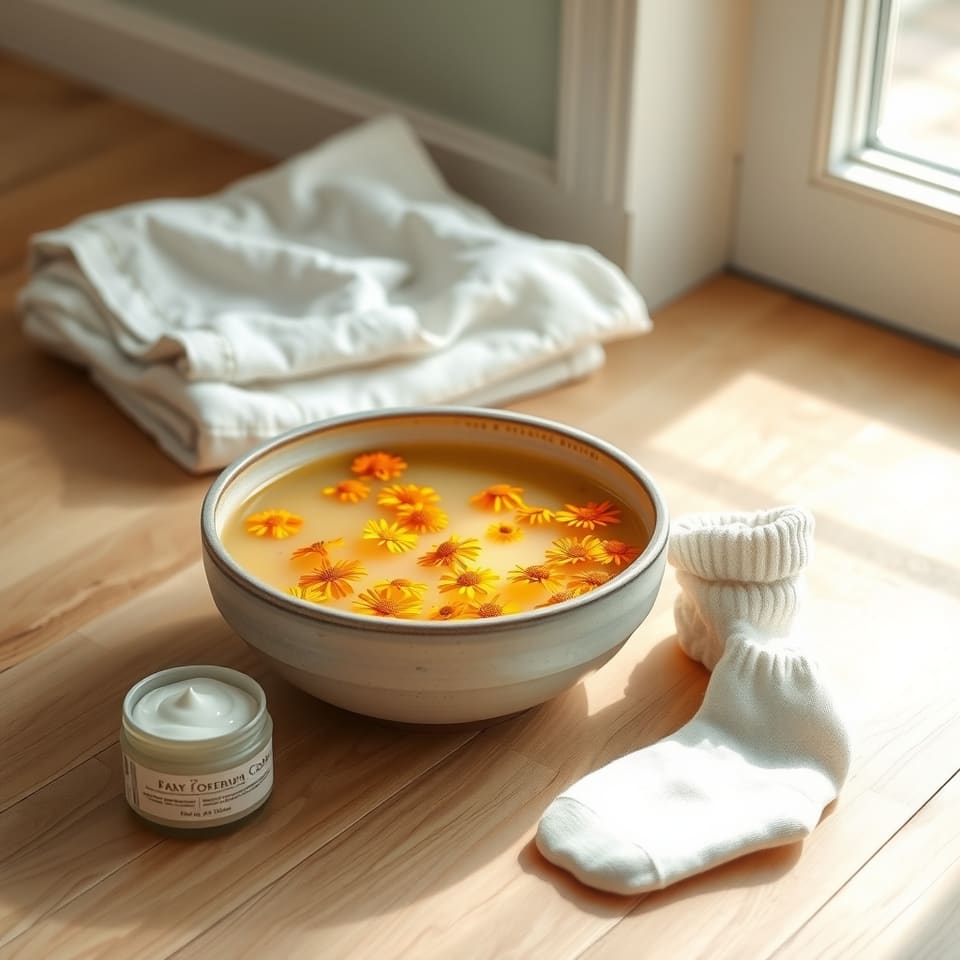
- dried calendula petals2 tbsp
- water, just off the boil500 ml (2 cups)
- lukewarm water for the basin2 liters (about 8 cups)
- urea foot cream, or plain petroleum jelly or olive oil1 tsp
- clean cotton socks1 pair
Method
- Pour the hot water over the calendula petals in a jug, cover and leave to steep for 10 minutes. Strain.
- Add the strained infusion to a basin of lukewarm water. Test the temperature with your hand or elbow first. It should feel comfortably warm, never hot.
- Soak your feet for no more than 10 minutes.
- Pat your feet dry with a soft towel, including between the toes.
- Within 5 minutes, while the heels are still slightly damp, massage in the cream, petroleum jelly or oil. Keep it off the skin between your toes.
- Put on cotton socks and leave them on overnight. Repeat every evening for a week or two.
Tips
- Make a fresh infusion each time and throw away any leftover. It is a plant tea with no preservative.
- If you do not have calendula, plain lukewarm water works just as well for softening the skin before moisturizing.
- Swap open-back sandals for closed, well-fitting shoes while your heels recover.
The routine dermatologists suggest
Keep baths and showers short, about 5 to 10 minutes, and use a gentle, fragrance-free cleanser. Pat your feet dry instead of rubbing.
Moisturize within 5 minutes, while the skin is still slightly damp. The AAD recommends a foot cream containing 10 to 25 percent urea, an alpha hydroxy acid or salicylic acid, and reapplying whenever your heels feel dry. Before bed, a layer of plain petroleum jelly under cotton socks helps seal in moisture and keeps grease off your sheets.
During the day, the AAD suggests a liquid bandage over deeper cracks. It forms a protective layer that may ease pain and help keep germs out while the skin heals.
What the evidence says
The strongest advice for cracked heels is not herbal. Short soaks, a urea or similar cream on damp skin, and covering the heels at night are the steps dermatologists recommend.
Calendula has a long history on the skin. The European Medicines Agency recognizes it as a traditional herbal medicine for minor skin inflammation and as an aid in healing minor wounds, based on long use rather than strong clinical trials. In a foot soak it is a gentle, pleasant addition, but it will not replace a good moisturizer.
Plain oils can help too. MedlinePlus foot care advice for people with diabetes lists lotion, petroleum jelly, lanolin or oil for dry skin, kept out from between the toes.
Questions people ask
How often should I soak my feet?
Once a day is plenty. Keep it short and lukewarm, in line with the AAD advice to limit baths and showers to 5 to 10 minutes. What matters most is moisturizing straight afterwards.
Which cream works best for cracked heels?
The AAD suggests a foot cream with 10 to 25 percent urea, an alpha hydroxy acid or salicylic acid. Plain petroleum jelly at night under socks is a cheap and simple extra.
Can I use fresh calendula flowers?
Yes, if they come from plants grown without pesticides. Use a small handful of fresh petals instead of the dried ones and strain well.
Sources
- How to care for dry, cracked heels — American Academy of Dermatology
- Diabetes: Caring for your feet — MedlinePlus
- European Union herbal monograph on Calendula officinalis L., flos — European Medicines Agency
This article is for general information only and is not medical advice. Herbs can interact with medicines and health conditions. Talk to a doctor or pharmacist before trying a herbal remedy, especially if you are pregnant, breastfeeding, giving it to a child, or taking any medication.