Clove Water for Face: What Is True and What Is Hype
Clove water is popular in skin care videos as a toner for spots, pores and dark marks. The real evidence is thin, and clove is a strong spice that can irritate skin. Here is an honest look, and a careful way to try it if you still want to.
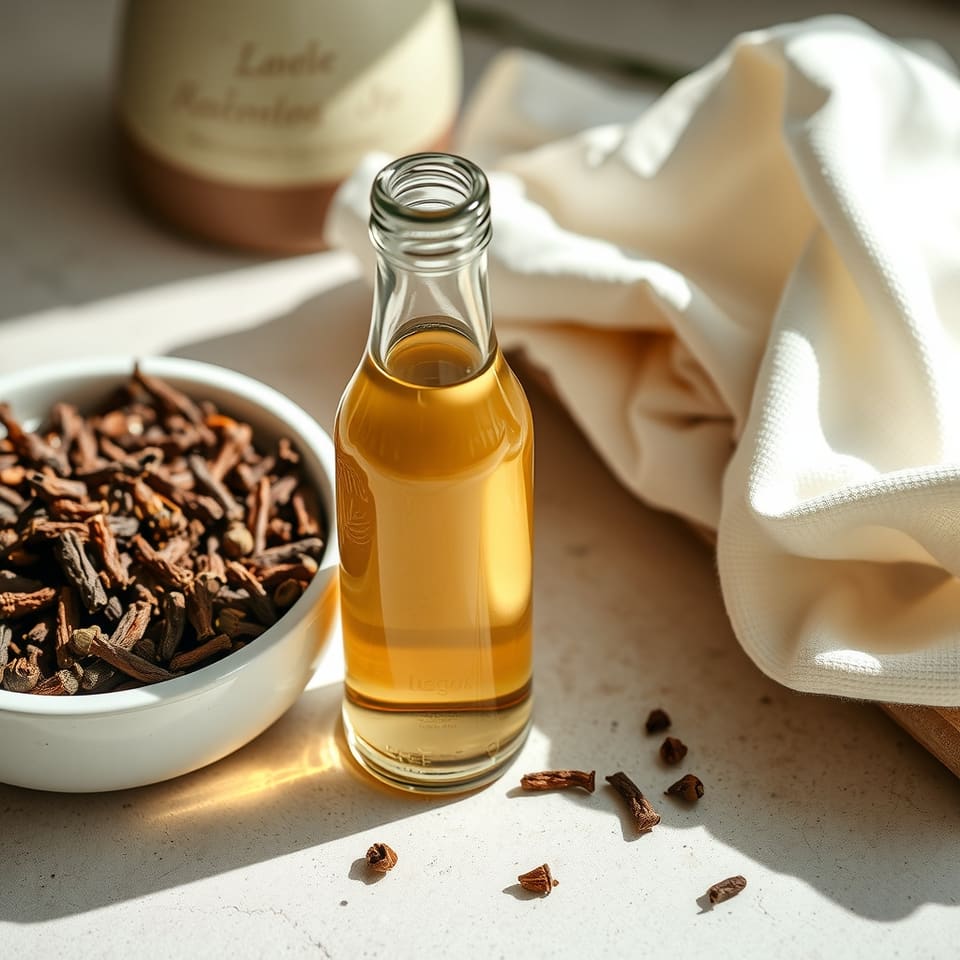
Cloves are the dried flower buds of the clove tree, a warm, strong spice used in kitchens around the world. Online, clove water has a second life as a home toner. Videos promise that splashing it on your face will clear acne, shrink pores and fade dark spots.
Those promises run far ahead of the science. Clove contains a powerful natural compound called eugenol, and the same strength that makes cloves useful in a toothache remedy is a reason to be careful with your face.
What people claim clove water does
The usual recipe is whole cloves soaked or simmered in water, then cooled and used as a toner or face rinse. It is shared as a cheap, natural fix for pimples, oily skin, enlarged pores, dark marks and dull skin.
We did not find good human studies showing that clove water applied to the face clears acne, fades dark spots or tightens pores. Any lab results on clove extracts would not tell you what a home toner does on real skin.
Mild Clove Water (Patch Test First)
You need
- water, freshly boiled250 ml (1 cup)
- whole cloves4
Method
- Put the whole cloves in a clean heatproof jar and pour over the freshly boiled water.
- Leave to steep for 15 minutes, then let it cool completely to room temperature.
- Strain out the cloves and pour the water into a clean, lidded bottle. Keep it in the fridge.
- Patch test before using it on your face. As the AAD advises, apply it twice a day to a quarter-sized spot on the inside of your arm or the bend of your elbow for 7 to 10 days.
- If there is no redness, itching or swelling, you can dab a little on clean skin with a cotton pad, avoiding the eyes and lips.
- Throw away any leftover after 24 hours and make a fresh batch if you want more.
Tips
- Keep it weak. More cloves or longer simmering does not make it work better and may make irritation more likely.
- Do not use it on broken, sunburned or freshly shaved skin.
- Never add clove essential oil to the water or apply the oil to your face.
Why clove needs care on skin
Clove's official medical uses are narrow. In Europe, the European Medicines Agency (EMA) recognizes clove oil only as a traditional remedy for minor inflammation in the mouth or throat and as a short-term measure for toothache, not for skin. Even in the mouth, the EMA lists irritation and allergic reactions as possible side effects.
The EMA also says clove oil should not be used by people who are hypersensitive to Peru balsam. The American Academy of Dermatology (AAD) lists balsam of Peru as a fragrance allergen that can cause allergic contact dermatitis, a skin rash. The AAD also stresses that natural products can cause skin reactions too.
Clove water is far milder than clove oil, but if your skin is sensitive, reactive or prone to fragrance allergy, it is a poor match.
What the evidence says
In short, there is no reliable evidence that clove water improves acne, pores or pigmentation. The EMA has not approved any skin use of clove, and its assessment covers only the mouth and teeth.
There is clear evidence that concentrated clove oil can be harmful. MedlinePlus explains that eugenol, the compound from cloves found in clove oil, can be harmful in large enough amounts, and that as little as 10 ml swallowed by an adult can cause serious effects, with children at higher risk. That is about clove oil, not a weak water infusion, but it is a good reason never to use the oil neat on your face.
If you want proven help for acne or dark spots, a dermatologist or pharmacist can suggest treatments with real evidence behind them.
Questions people ask
Does clove water clear acne?
There is no good evidence that it does. We found no proper studies of clove water used on people's faces as a home toner.
Can clove water lighten dark spots?
We found no reliable human evidence for this. Dark spots can have several causes, so if they bother you, a dermatologist can check them and suggest proven treatments.
Is it safe to drink clove water instead?
A light clove tea in normal food amounts is a different topic from putting clove on your skin. Our separate clove tea guide covers how much is sensible and who should avoid it.
Sources
- Community herbal monograph on Syzygium aromaticum, floris aetheroleum (clove oil) — European Medicines Agency
- Eugenol oil overdose — MedlinePlus
- How to test skin care products — American Academy of Dermatology
- Contact dermatitis: Causes — American Academy of Dermatology
This article is for general information only and is not medical advice. Herbs can interact with medicines and health conditions. Talk to a doctor or pharmacist before trying a herbal remedy, especially if you are pregnant, breastfeeding, giving it to a child, or taking any medication.