Herb-Infused Vinegar Cleaning Spray
White vinegar steeped with rosemary, thyme or lemon peel makes a cheap, pleasant-smelling spray for everyday grime. It is not a disinfectant, it can damage some surfaces, and it must never be mixed with bleach.
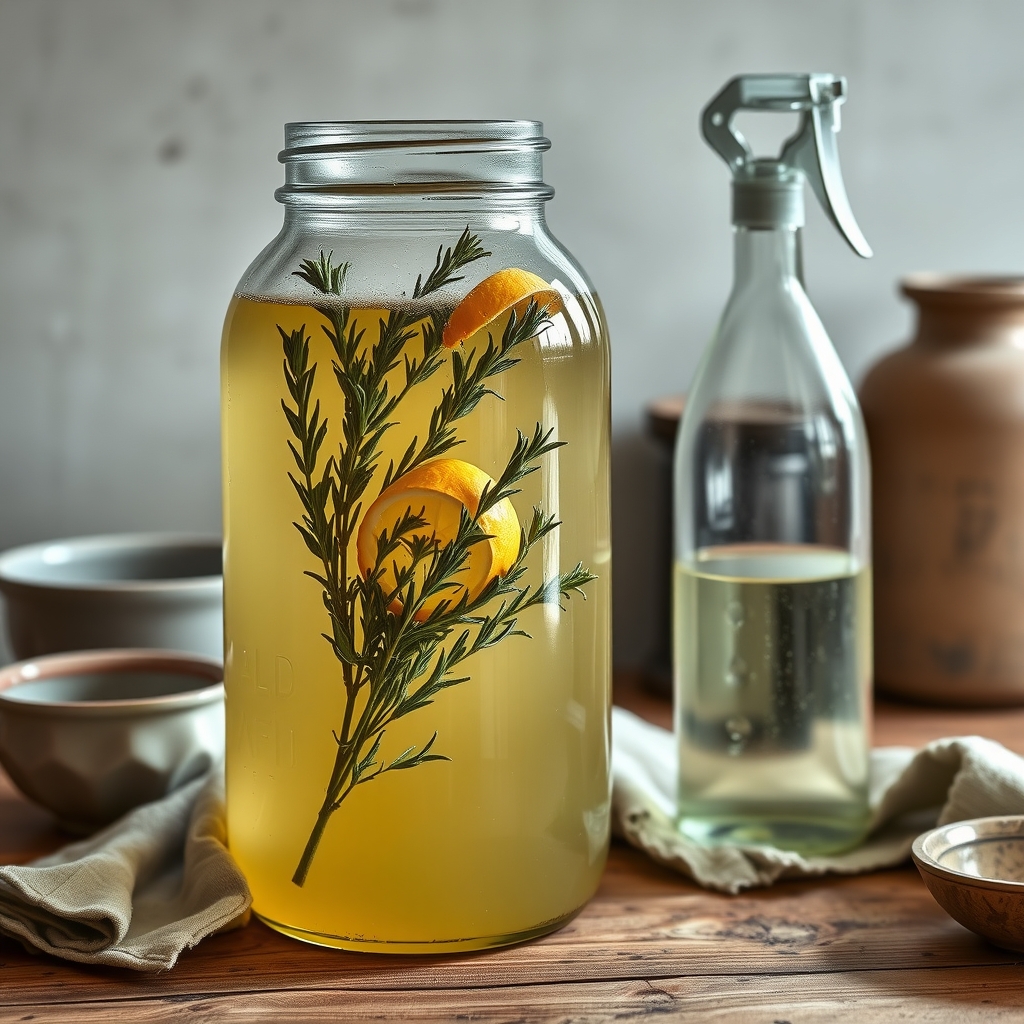
A jar of vinegar with herbs and citrus peel steeping on the windowsill is one of the oldest home-cleaning tricks. After a couple of weeks you strain it, dilute it with water and have a spray that cuts through everyday grime and smells far nicer than plain vinegar.
It is a useful thing to have under the sink, but it is often oversold. This guide explains what herb vinegar cleans well, what it does not do, which surfaces it can harm, and the one safety rule you must never break.
What vinegar is good at
White vinegar is a mild acid. That makes it handy for loosening mineral deposits and hard-water marks, cutting light grease, and leaving glass and glazed tiles streak-free. Extension services such as UF/IFAS use it as the base for simple homemade window, tile and all-purpose cleaners.
The herbs do not do the cleaning. Rosemary, thyme and lemon or orange peel are added mainly to soften the sharp smell of vinegar with something fresher. Once diluted and sprayed, the herbal scent fades within a few minutes, as does the vinegar smell.
Herb-Infused Vinegar Cleaning Spray
You need
- white distilled vinegar500 ml (2 cups)
- fresh rosemary or thyme, rinsed and fully dried3 to 4 sprigs
- lemon or orange, white pith removedPeel of 1
- water, for diluting500 ml (2 cups)
Method
- Put the herb sprigs and citrus peel into a clean glass jar with a lid.
- Pour in the vinegar so that everything is covered, then close the jar.
- Leave it in a cool, dark place for 1 to 2 weeks, giving it a gentle shake every few days.
- Strain through a sieve or cloth and discard the herbs and peel. Store the infused vinegar in a labeled glass bottle.
- To use, mix equal parts infused vinegar and water in a labeled spray bottle.
- Spray onto the surface, wipe with a damp cloth, then rinse or wipe with clean water if the surface is used for food.
Tips
- Use a glass jar for steeping. Acid can react with some metal lids, so put a piece of baking paper under a metal lid.
- If the infusion turns cloudy or smells off, throw it away and start again with drier herbs.
- For glass and mirrors, wipe with a lint-free cloth for a streak-free finish.
- Label the bottle with its contents and the words 'do not mix with bleach'.
What the evidence says
Cleaning and disinfecting are not the same. Cleaning removes dirt and some germs along with it. Disinfecting means killing germs on a surface to a tested standard. Vinegar is good at the first job and weak at the second.
In a laboratory study published in Infection Control and Hospital Epidemiology, vinegar and baking soda were less effective at killing common bacteria such as Staphylococcus aureus and E. coli than commercial household disinfectants. The UF/IFAS guide to homemade cleaners does not present vinegar as a disinfectant either; its disinfecting recipes use diluted bleach.
Adding herbs does not change this. Thyme and rosemary contain aromatic compounds that are studied in labs, but there is no good evidence that a few sprigs steeped in vinegar turn it into a disinfectant. Use herb vinegar for everyday cleaning, and use a proper disinfectant when you really need one, such as after handling raw meat or when someone at home is ill with a stomach bug.
Surfaces vinegar can damage
Because vinegar is acidic, it can harm some materials. Keep it away from natural stone such as marble, limestone, travertine and granite, where it can etch or dull the surface and wear down sealants. Avoid waxed or oiled wood and some furniture finishes, which it can strip or cloud.
Take care with some metals and parts too. Repeated use can mark aluminum, cast iron and some plated finishes, and it is best kept off rubber seals and the screens of phones, laptops and TVs. When you are unsure, test on a small hidden spot first and wipe it off after a minute to check.
Never mix with bleach
This is the one rule that matters most. Never mix vinegar, herb vinegar or any other acid with bleach, and do not use them one after the other on the same surface without rinsing well in between. The UF/IFAS guide warns that mixing bleach with vinegar, ammonia or other cleaners can create toxic fumes that affect the lungs, and the CDC advises never mixing bleach with any other cleaner.
Label your spray bottle clearly, keep it in its own place, and never pour leftovers into a bottle that has held another product.
Questions people ask
Can I add essential oils instead of fresh herbs?
You can, but fresh herbs and peel are gentler and cheaper. If you use oils, add only a few drops, keep the bottle away from children and pets, and remember that concentrated oils such as tea tree can be harmful to cats and dogs.
Does herb vinegar kill mold?
It can help clean light surface mildew on tiles, but it is not a proven mold treatment. Large or recurring mold patches point to a damp problem that needs fixing, and may need professional help.
How long does the spray keep?
The strained infused vinegar keeps for several months in a closed bottle. Once diluted with water, use it within a few weeks.
Sources
This article is for general information only and is not medical advice. Herbs can interact with medicines and health conditions. Talk to a doctor or pharmacist before trying a herbal remedy, especially if you are pregnant, breastfeeding, giving it to a child, or taking any medication.