Cooled Green Tea Face Toner: Recipe and Honest Facts
A cup of green tea, fully cooled, makes a fresh, alcohol-free splash for after washing your face. Here is how to make it, and why the impressive lab results for green tea do not carry over to a homemade bottle.
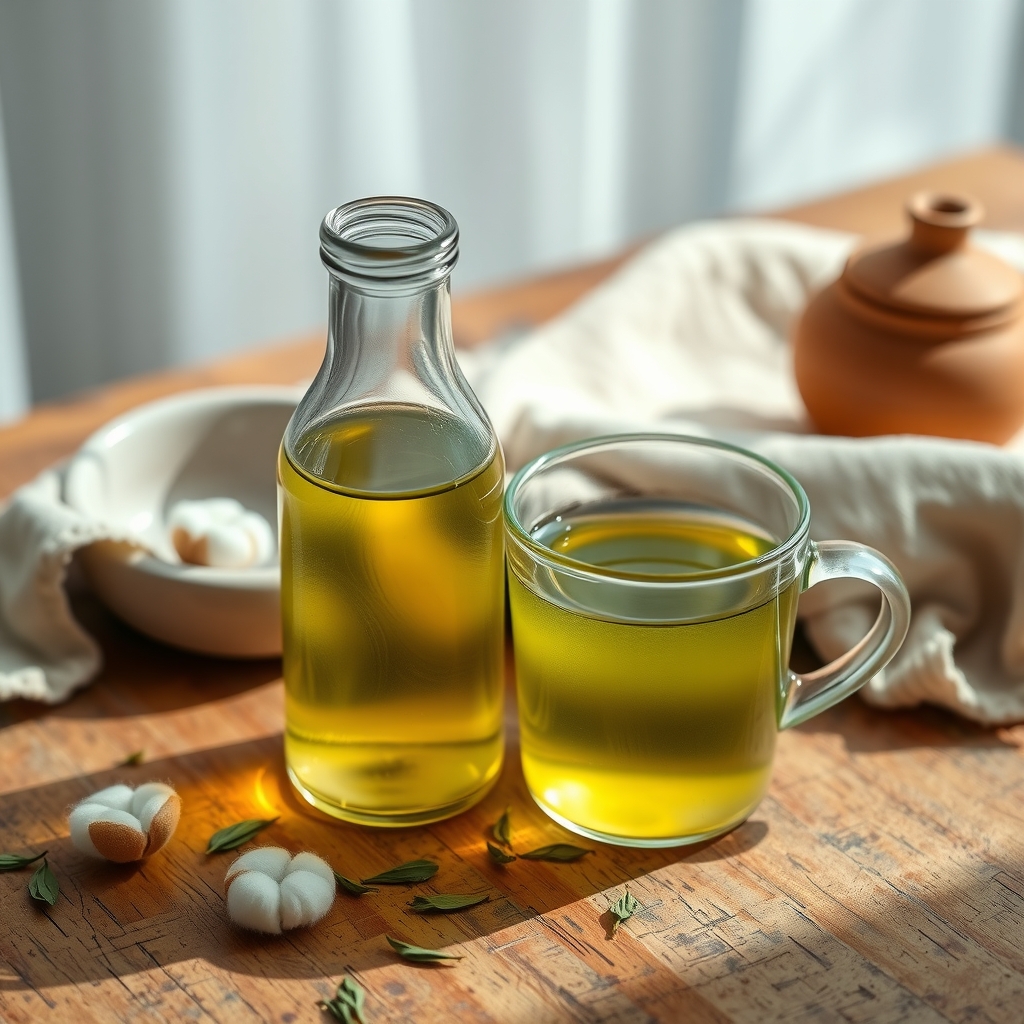
Green tea is one of the most popular ingredients in skin care, and it is easy to see why: it sounds natural, it smells clean, and lab studies of its antioxidants are often quoted on labels. Making your own toner from a cup of brewed tea is cheap and simple.
This guide shows you how to make a cooled green tea toner, what the research does and does not show, and the few simple rules that keep it gentle and clean.
Why people use it
A toner is a light liquid you apply after washing your face. Many shop toners contain alcohol, which can feel tight and drying. The American Academy of Dermatology (AAD) advises choosing gentle, alcohol-free cleansers, and a cooled tea toner is alcohol-free too.
Most people use a green tea toner because it feels refreshing, especially when it is cold from the fridge, and because they like the idea of putting green tea on their skin.
Cooled Green Tea Face Toner
You need
- loose green tea, or 1 plain green tea bag1 tsp
- water heated to about 80 °C (175 °F)125 ml (1/2 cup)
Method
- Wash a small glass bottle or jar in hot soapy water, rinse well and let it dry.
- Pour the hot water over the tea and steep for 3 minutes.
- Strain, or remove the tea bag, and let the tea cool completely to room temperature.
- Pour it into the clean bottle, close it and keep it in the fridge.
- After washing your face with a gentle cleanser and patting it dry, soak a cotton pad and sweep it lightly over your skin, avoiding the eyes.
- Let it dry, then apply your usual moisturizer. Throw away any toner left after two days.
Tips
- Use plain green tea only, not flavored or scented blends, which may contain ingredients that irritate skin.
- If you do not have a thermometer, let boiled water stand for a few minutes before pouring.
- A chilled toner feels especially refreshing on a warm day.
What the evidence says
A 2025 scoping review of green tea as a cosmetic ingredient for skin aging gathered 21 papers. It found that green tea and its main polyphenol, EGCG, showed effects such as antioxidant activity and improvements in wrinkles and skin moisture, mainly in cell studies and small human trials.
There are important limits. The human studies used specially formulated creams, emulsions and standardized extracts, not brewed tea. The authors point out that EGCG breaks down easily with heat, air and changes in acidity, and that the skin's outer layer makes it hard for EGCG to get in. The review did not grade the quality of the evidence, and none of it tested homemade tea on skin.
The US National Center for Complementary and Integrative Health notes one approved medical use of a specific green tea extract on skin, a prescription ointment for genital warts. That is a carefully made medicine and says nothing about a kitchen toner. So the honest summary is that a green tea toner is a pleasant, gentle splash, and any anti-aging effect is unproven.
Keeping it fresh and clean
Brewed tea has no preservatives, so treat it like food. Make a small amount, keep it in a clean, closed bottle in the fridge and throw it away after two days, or sooner if it looks cloudy or smells off.
Use clean hands and a fresh cotton pad each time, and never pour used toner back into the bottle.
Questions people ask
Will a green tea toner reduce wrinkles?
There is no evidence that it will. Studies that found small effects on wrinkles used specially formulated creams and extracts, not brewed tea, and even those results are early.
Can I use it every day?
If your skin is happy with it after a patch test, once or twice a day after washing is fine. Make a fresh batch every two days.
Is it suitable for acne-prone skin?
It is gentle and alcohol-free, so many people tolerate it, but it has not been shown to treat acne. If spots are bothering you, a dermatologist can recommend proven treatments.
Sources
- Green tea as a cosmetic agent for skin aging: A scoping review — Avicenna Journal of Phytomedicine, via PubMed Central
- Green Tea: Usefulness and Safety — National Center for Complementary and Integrative Health
- Face washing 101 — American Academy of Dermatology
- How to test skin care products — American Academy of Dermatology
This article is for general information only and is not medical advice. Herbs can interact with medicines and health conditions. Talk to a doctor or pharmacist before trying a herbal remedy, especially if you are pregnant, breastfeeding, giving it to a child, or taking any medication.