Ginseng Tea for Energy: Evidence and Interactions
Asian ginseng is traditionally used for tiredness and weakness, and a review suggests it may have a small benefit for general fatigue. It also interacts with some common medicines. Here is what to know before you brew it.
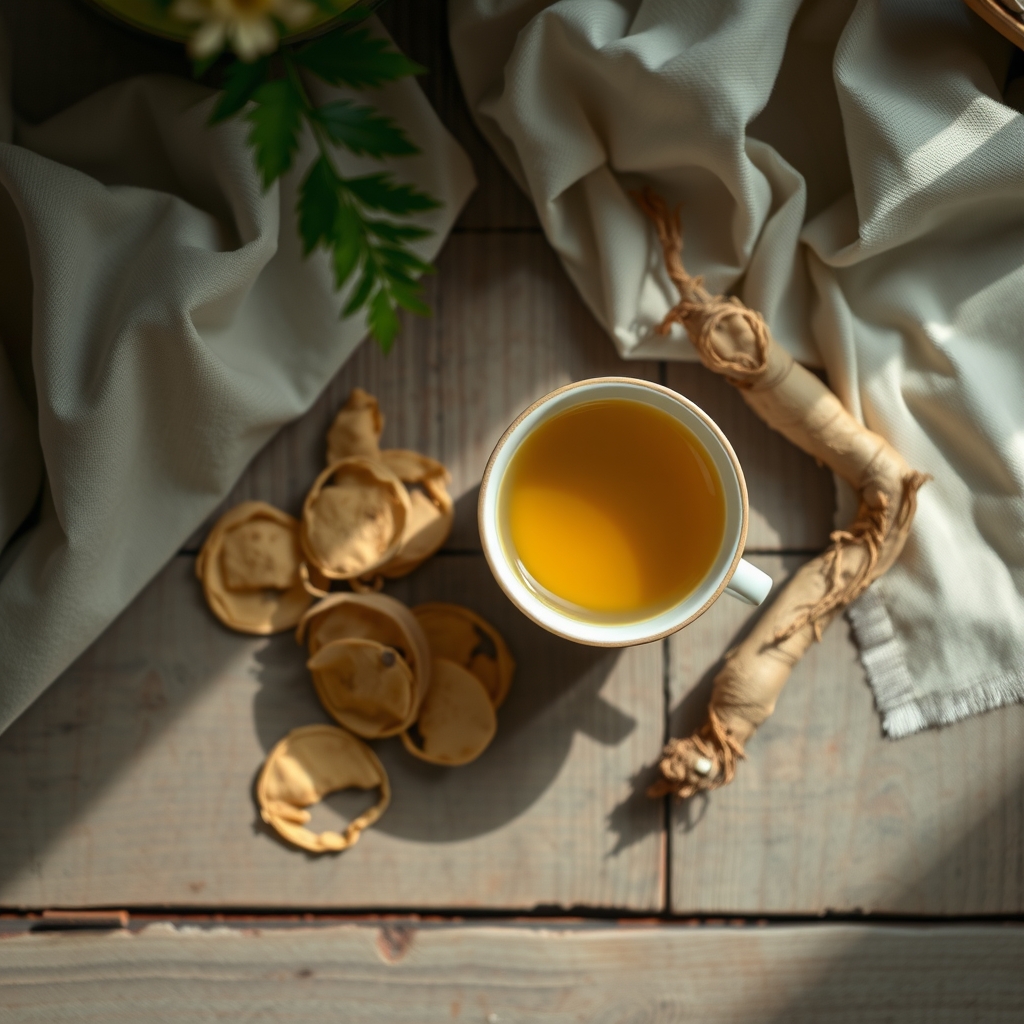
Ginseng is one of the best-known roots in traditional medicine, especially in East Asia, where it has long been used as a tonic for low energy. Today you will find it in teas, drinks and supplements promising more stamina and focus.
This guide is about Asian ginseng, Panax ginseng. American ginseng and the plant sold as Siberian ginseng are different plants. Below you will find what the research actually says, a simple root tea, and the interactions and cautions that matter most.
Why people use it
The European Medicines Agency recognizes Asian ginseng root as a traditional herbal medicine for symptoms of weakness, such as fatigue and feeling run down. That recognition is based on long-standing use rather than proof from strong clinical trials.
The agency describes a tea made by simmering 1 to 2 g of the cut root in 150 ml of water, taken two to three times a day, for up to three months.
Simple Ginseng Root Tea
You need
- dried Asian ginseng root (Panax ginseng), thinly sliced1 to 2 g
- cold water, to allow for evaporation200 ml (about 3/4 cup)
- honey (optional, not for children)1 teaspoon (5 ml)
Method
- Weigh the dried root slices on a kitchen scale. Ginseng is light, so 1 to 2 g is only a few thin slices.
- Put the slices and cold water in a small saucepan and bring to a boil.
- Turn the heat down, cover and simmer gently for 10 to 15 minutes, until the liquid is pale gold and reduced to about 150 ml (2/3 cup).
- Strain into a cup. Let it cool for a few minutes and stir in honey, if using.
- Drink it in the morning or early afternoon rather than in the evening, as ginseng can disturb sleep.
Tips
- The taste is earthy and slightly bitter. A thin slice of fresh ginger in the pan can make it more pleasant.
- Ready-made ginseng tea blends often contain other herbs or tea leaves, so read the ingredients list.
- Take breaks. Traditional guidance limits use to three months at a time.
What the evidence says
The US National Center for Complementary and Integrative Health reports that a 2023 review of 19 studies suggested Asian ginseng on its own may have a small benefit for general fatigue. Not all research agrees, and most trials have been small and short, usually under three months.
For cancer-related fatigue, Memorial Sloan Kettering Cancer Center says it is not clear whether ginseng helps. One analysis found that formulas containing ginseng reduced fatigue, but ginseng alone did not.
Some small studies suggest possible effects on attention and reaction time in middle-aged adults, but not in young adults. Most research finds no benefit for athletic performance.
The honest summary: ginseng tea may give a modest lift for some people who feel generally tired, but the evidence is limited and it is not a fix for ongoing exhaustion.
Important interactions
Ginseng may lower blood sugar. Memorial Sloan Kettering warns it may add to the effect of insulin and some diabetes tablets called sulfonylureas, which could cause blood sugar to drop too low. If you have diabetes, talk to your doctor before trying it.
Ginseng may also affect blood clotting. It may increase bleeding risk with warfarin, although study results are mixed, and it should be stopped at least one week before surgery.
Other reported interactions include manic-like symptoms with MAOI antidepressants and a higher risk of liver damage with the cancer drug imatinib. If you take any regular medicine, check with your doctor or pharmacist first.
When tiredness needs a doctor, not a tea
Ongoing tiredness often has a cause that a tea cannot fix. The NHS lists poor sleep, stress, low mood and lifestyle as common reasons, along with medical causes such as iron deficiency anemia, diabetes, sleep apnea and an overactive thyroid.
The NHS advises seeing a GP if you have felt tired for a few weeks without knowing why, if it affects your daily life, or if you also have symptoms such as weight loss or changes in mood.
Questions people ask
Does ginseng tea have caffeine?
A tea made only from ginseng root contains no caffeine, because ginseng is a different plant from tea leaves. Many ready-made ginseng blends add green or black tea, which do contain caffeine, so check the ingredients list.
How long does ginseng take to work?
Studies have mostly lasted under three months, and any benefit for general fatigue seems small. Traditional guidance allows up to three months of use, but if you still feel tired after two weeks, see a doctor rather than continuing indefinitely.
Can I drink ginseng tea every day?
Short-term use of up to about six months at usual amounts appears safe for most healthy adults, and traditional guidance suggests no more than three months at a time. Avoid it if you are pregnant, breastfeeding, under 18 or take interacting medicines.
Sources
- Asian Ginseng — National Center for Complementary and Integrative Health
- Ginseng (Asian) — Memorial Sloan Kettering Cancer Center
- European Union herbal monograph on Panax ginseng C.A. Meyer, radix — European Medicines Agency
- Tiredness and fatigue — NHS
This article is for general information only and is not medical advice. Herbs can interact with medicines and health conditions. Talk to a doctor or pharmacist before trying a herbal remedy, especially if you are pregnant, breastfeeding, giving it to a child, or taking any medication.