Garlic in Honey for Colds: What the Evidence Says
Garlic cloves soaked in honey are all over social media as a winter remedy. The research on garlic and colds is thin, and the popular long, room-temperature version has food safety questions you should know about.
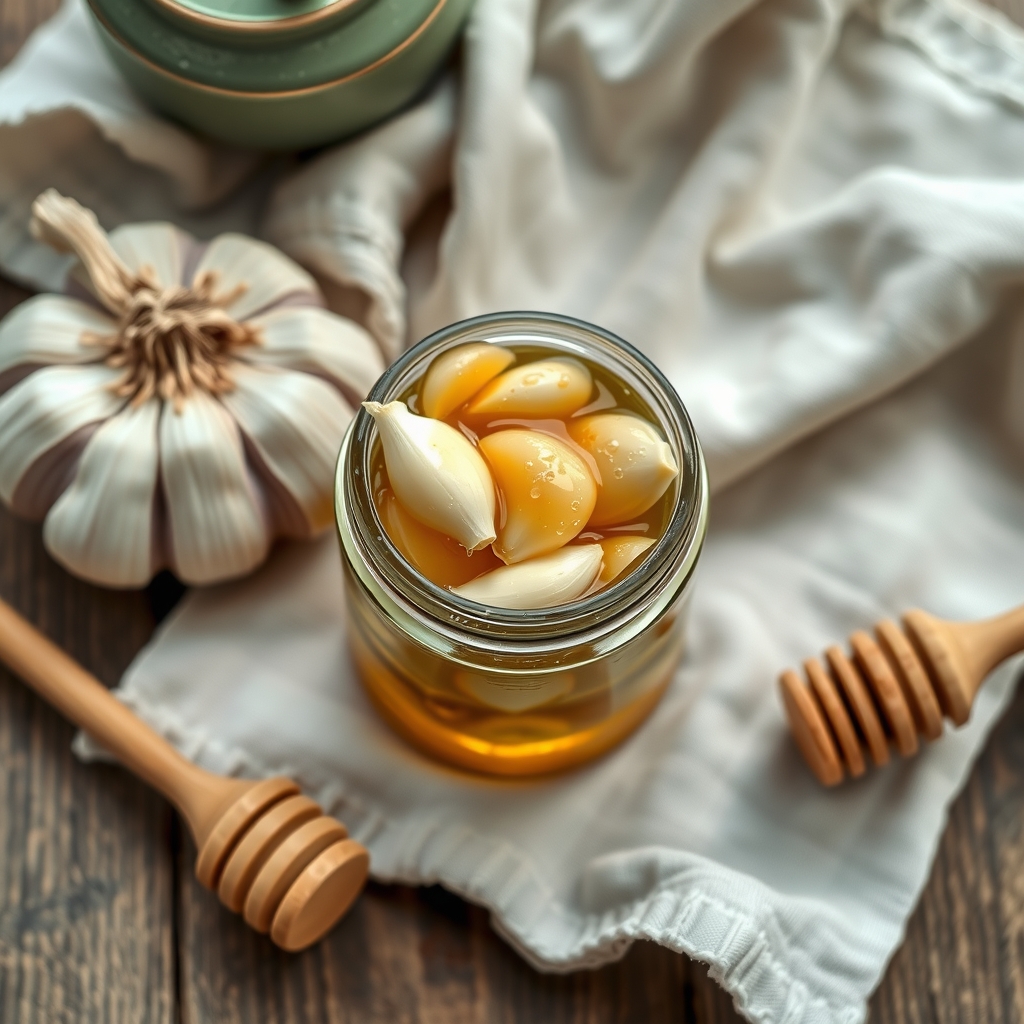
Garlic has a long reputation as a kitchen remedy for colds, and honey is one of the oldest cough soothers there is. Putting the two together in a jar seems like an obvious idea, and the result is a sweet, pungent spoonful many people take when they feel a cold coming on.
Before you make a big jar, it helps to know two things: how little is really known about garlic and colds, and why we suggest a small batch kept in the fridge rather than the weeks-long fermented version you may have seen online.
Why people use garlic and honey
Garlic has been used in food and folk medicine for thousands of years, and colds are one of the most common reasons people reach for it. Honey is popular for the cough and scratchy throat that often come with a cold.
A jar of garlic in honey is a way to take both in one spoonful. The honey also softens the sharp taste of raw garlic, which many people find hard to eat on its own.
Quick Fridge Garlic Honey
You need
- garlic cloves, peeled3 to 4
- runny honey60 ml (1/4 cup)
Method
- Wash a small glass jar and lid in hot soapy water, rinse and let dry completely.
- Lightly crush or thinly slice the garlic cloves with a knife.
- Put the garlic in the jar and pour the honey over it so the garlic is fully covered.
- Close the lid and place it in the fridge for at least 2 hours to let the flavor develop.
- Take 1 teaspoon (5 ml) of the honey, with or without a slice of garlic, up to 2 to 3 times a day. Stir it into warm, not hot, water or tea if the taste is too strong.
Tips
- Use it within 3 to 4 days and then throw away whatever is left. Discard it at once if it fizzes, smells off or looks moldy.
- Always use a clean, dry spoon in the jar.
- Raw garlic can be harsh on an empty stomach. Take it after food if it gives you stomach discomfort.
What the evidence says
For garlic, the honest answer is that we do not know much. The US National Center for Complementary and Integrative Health (NCCIH) says very little research has been done on garlic and colds. A 2022 review found only two studies hinting at a possible benefit, and both were small and had weaknesses.
Honey has better support for cough. Mayo Clinic notes that several studies in people with colds and other upper respiratory infections found honey reduced coughing and improved sleep, roughly as well as diphenhydramine, a common cough medicine ingredient, although higher-quality studies are still needed.
So a spoonful of garlic honey may soothe a cough thanks to the honey. There is no good evidence that it stops a cold, shortens it, or replaces rest, fluids and time. The NHS says most coughs clear up on their own within three to four weeks.
Why we skip the long fermented version
Many online recipes leave garlic in honey at room temperature for weeks until it bubbles. That is a food safety question, not just a taste one. In its advice on preventing botulism, a rare but serious illness, the CDC tells people to keep homemade oils made with garlic or herbs in the fridge and throw them away after 4 days.
Garlic in honey has not been well studied for safety, and the garlic releases moisture that thins the honey around it. Because the risk is serious and the benefit uncertain, we suggest the cautious route: make a small amount, keep it in the fridge, and use it within a few days.
Questions people ask
Will garlic honey stop a cold from starting?
There is no good evidence that it does. Only two small studies have hinted at a possible benefit from garlic, and they had weaknesses. Rest, fluids and time remain the basics.
Is fermented garlic honey safe?
Its safety has not been well studied. For the similar home product garlic in oil, the CDC's botulism advice is to refrigerate it and discard it after 4 days. We think a small fridge batch used within a few days is the more cautious choice.
Can I just eat garlic in my food instead?
Yes. Garlic in normal cooking amounts is the simplest way to enjoy it, and food amounts are the level the safety advice is most comfortable with, especially if you take blood thinners or are pregnant.
Sources
- Garlic — NCCIH
- Preventing Botulism — CDC
- Honey: An effective cough remedy? — Mayo Clinic
- Cough — NHS
This article is for general information only and is not medical advice. Herbs can interact with medicines and health conditions. Talk to a doctor or pharmacist before trying a herbal remedy, especially if you are pregnant, breastfeeding, giving it to a child, or taking any medication.