Sage and Salt Water Gargle
Sage has a long tradition as a mouth and throat rinse. Combined with the familiar salt water gargle, it makes a simple, fragrant option for a scratchy throat.
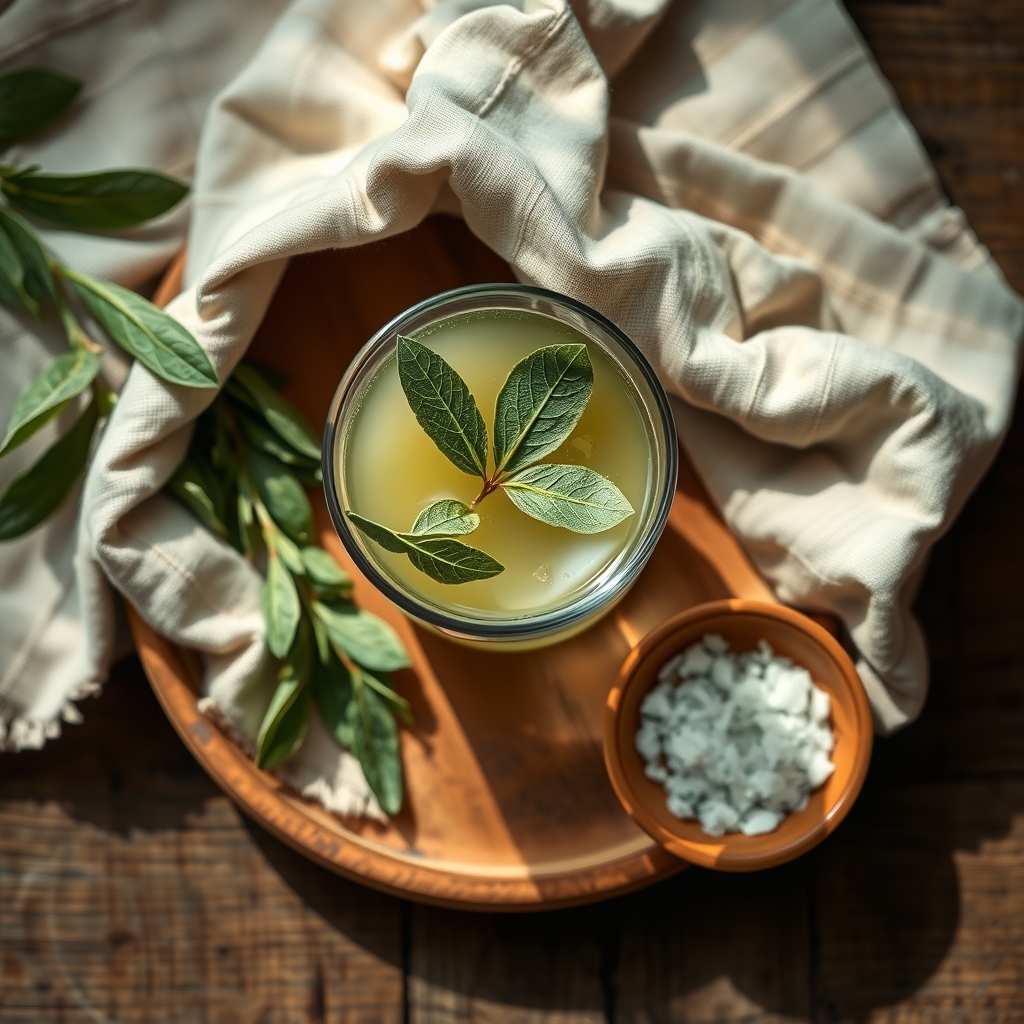
A warm salt water gargle is one of the most familiar home steps for a sore throat. Some people like to brew it with sage, a kitchen herb with a long history as a mouth and throat rinse.
This guide shows you how to make a sage and salt gargle, explains how much the evidence supports it, and covers who should not use it. It also lists the throat symptoms that mean you should stop home care and get checked.
Why people gargle with sage and salt
The NHS suggests gargling with warm salty water as one of the things you can do yourself for a sore throat, along with drinking plenty of water, eating cool or soft foods, and resting.
Sage leaf is recognized by the European Medicines Agency as a traditional herbal medicine for relief of inflammation in the mouth or throat, used as a warm gargle or mouth rinse. Brewing your salt gargle with sage brings the two traditions together.
Sage and Salt Water Gargle
You need
- freshly boiled water100 ml (a scant 1/2 cup)
- dried sage leaf, or a small handful of fresh leaves, torn2.5 g (about 1 tablespoon)
- salt1/4 teaspoon
Method
- Put the sage in a cup and pour over the freshly boiled water.
- Cover and steep for 10 minutes, then strain out the leaves.
- Stir in the salt until it dissolves.
- Let it cool until it is warm but comfortable, around 37 to 40°C (99 to 104°F). Test a little on your wrist first.
- Take a mouthful, tip your head back and gargle for about 30 seconds, then spit it out. Repeat until the cup is used.
Tips
- Make a fresh batch each time rather than storing it.
- The salt ratio matches the NHS suggestion of about half a teaspoon of salt in a glass of warm water.
What the evidence says
Sage's recognition for the throat is based on long-standing use, not on strong clinical trials. The US National Center for Complementary and Integrative Health says research on sage is limited overall, so firm conclusions cannot be drawn.
Salt water gargling appears in NHS self-care advice, but neither salt nor sage will shorten an infection. Most sore throats get better on their own within about a week. Think of this gargle as a soothing extra while you recover.
Gargle, do not swallow
This is a rinse, not a drink. Spit it out after each gargle. Common sage contains thujone, a compound that can be toxic in large amounts, which is one more reason to keep it in your mouth and out of your stomach.
The European herbal monograph describes using a sage infusion as a warm gargle three times a day. If your throat has not improved after a week, or it is getting worse, stop and get advice.
Questions people ask
How often can I use a sage gargle?
The European herbal monograph describes a warm sage gargle three times a day. Stop and get advice if there is no improvement after a week.
Can I just use salt water without sage?
Yes. A plain warm salt water gargle, about half a teaspoon of salt in a glass of warm water, is the version the NHS suggests for adults.
Can I drink sage tea instead?
Small amounts of sage in food are likely safe, but sage contains thujone, which can be toxic in large amounts. For a sore throat, gargling and spitting it out is the traditional use.
Sources
- European Union herbal monograph on Salvia officinalis L., folium — European Medicines Agency
- Sage: Usefulness and Safety — NCCIH
- Sore throat — NHS
This article is for general information only and is not medical advice. Herbs can interact with medicines and health conditions. Talk to a doctor or pharmacist before trying a herbal remedy, especially if you are pregnant, breastfeeding, giving it to a child, or taking any medication.