Echinacea Tea: What the Studies Really Say
Echinacea is one of the best-known cold herbs in the world, and one of the most studied. Here is what all that research found, what it means for a cup of tea, and who should skip it.
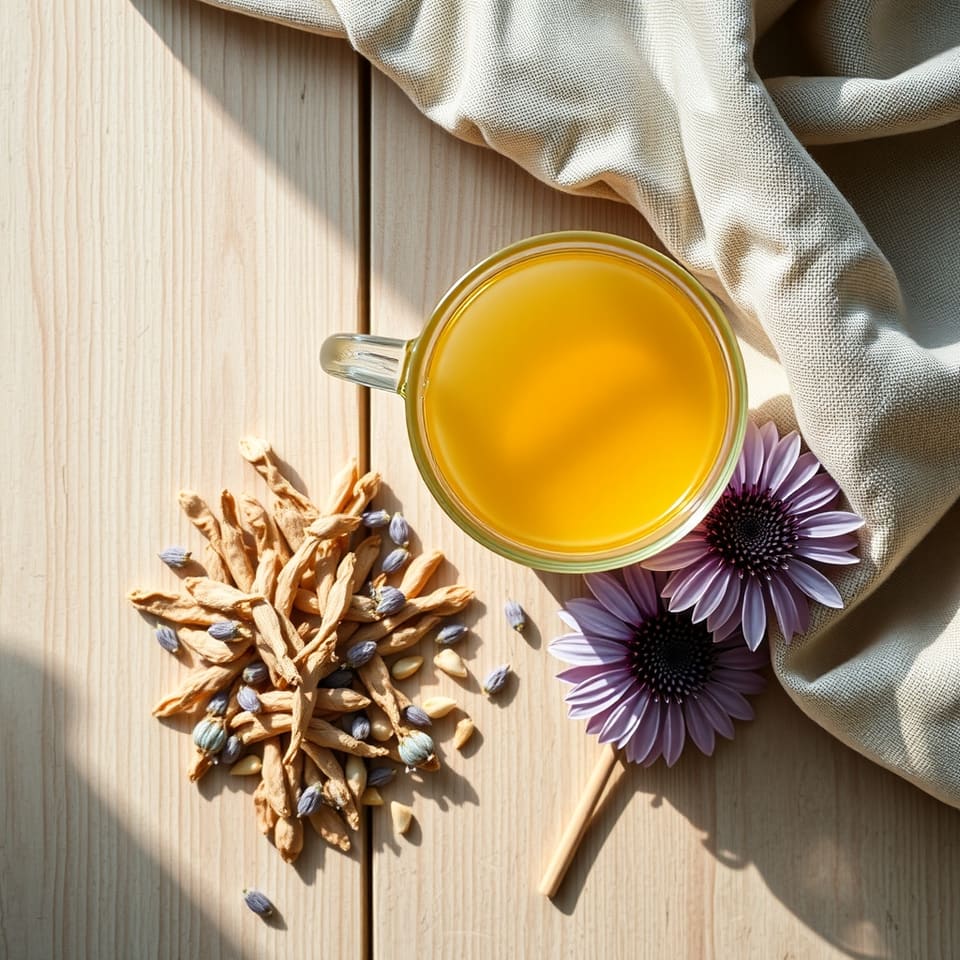
Echinacea, the purple coneflower, is a cousin of the sunflower and the daisy. It grows wild in North America, where Indigenous peoples used it for coughs, sore teeth and even snakebite. Today it is widely cultivated and sold in many countries, mostly as a remedy for colds.
Because it is so popular, echinacea has been tested many times. That is good news: we know more about it than about most herbs. The honest summary, though, is less exciting than the label on the box. This guide walks you through the evidence, explains why a home-made tea is not the same as the products in the studies, and shows you how to brew a cup if you still want one.
Three plants, many products
Three species are used most: Echinacea purpurea, Echinacea angustifolia and Echinacea pallida. Some products use the flowers and leaves, some the roots, and some a juice pressed from the fresh plant. Many mix species or add other herbs.
This matters more than it sounds. NCCIH and the Cochrane reviewers both point out that echinacea products differ so much that a result for one product may not apply to another. A mug of tea made from dried flowers is one more variation again.
Simple Echinacea Tea
You need
- water, just off the boil250 ml (1 cup)
- dried echinacea flowers and leaves, or 1 tsp dried chopped root1 to 2 tsp
- thin slice of lemon, optional1
- honey, optional (not for babies under 12 months)1 tsp
Method
- For flowers and leaves, put the herb in a mug or teapot and pour over the hot water. Cover and steep for 10 minutes.
- For root, simmer it gently in a small pan with the water for 10 minutes, then let it stand for 5 minutes.
- Strain, add lemon or honey if you like, and let it cool to a comfortable sipping temperature.
Tips
- If you find the earthy taste strong, a little mint or lemon balm in the pot makes it more pleasant.
- Buy dried echinacea from a food-grade herb supplier, and check the label says which species and plant part it contains.
What the evidence says
The largest independent review, from Cochrane, pooled 24 trials with more than 4,600 people. None of the prevention trials on its own showed a clear difference from placebo. When the results were combined, echinacea seemed to lower the risk of catching a cold by roughly 10 to 20 percent, an effect the authors called of questionable clinical relevance.
For treating a cold you already have, the picture was weaker still. Only two of six trials that measured how long colds lasted found a benefit, and the reviewers judged the overall evidence for a useful treatment effect to be weak. NCCIH sums it up the same way: echinacea may slightly lower the chance of catching a cold, and it is still unclear whether it shortens one. Memorial Sloan Kettering describes the results as mixed.
In Europe, the European Medicines Agency accepts medicines made from the pressed juice of fresh Echinacea purpurea for short-term use against colds in people over 12. That is a specific, standardized preparation, not a loose tea, and none of these sources tested herbal tea directly.
So is there any point in the tea?
Think of echinacea tea as a pleasant, slightly earthy warm drink, not as protection. If it helps you rest and drink more fluids while you have a cold, that is useful in itself. Just do not expect it to stop a cold or replace sleep, fluids and time.
If you want the version that has actually been studied, talk to a pharmacist about a licensed product, and check the safety notes below first.
Questions people ask
Can echinacea tea stop a cold if I drink it at the first sniffle?
There is no good evidence that it does. Trials of echinacea products found, at best, a weak effect on how long colds last, and tea itself was not tested.
Can I drink echinacea tea every day to stay well?
Studies looked at short-term use, and European medicines are meant for short courses. Daily, long-term use has not been shown to help and is not well studied for safety.
Is root or flower tea better?
No one knows. Different plant parts contain different compounds, and the studies used many different products, so neither has been shown to be the better choice.
Sources
- Echinacea: Usefulness and Safety — NCCIH
- Echinacea for preventing and treating the common cold — Cochrane
- Echinacea (About Herbs) — Memorial Sloan Kettering Cancer Center
- Echinaceae purpureae herba - herbal medicinal product — European Medicines Agency
This article is for general information only and is not medical advice. Herbs can interact with medicines and health conditions. Talk to a doctor or pharmacist before trying a herbal remedy, especially if you are pregnant, breastfeeding, giving it to a child, or taking any medication.