DIY Natural Deodorant: A Gentle Balm Without Baking Soda
A homemade underarm balm takes ten minutes and three pantry-style ingredients. Here is an honest look at what a natural deodorant can do, what it cannot, and how to keep your skin happy while you try one.
People switch to homemade deodorant for many reasons: a sensitive underarm, a wish for fewer ingredients, or simply curiosity. Online recipes are everywhere, and many of them are loaded with baking soda and strong scents.
This version is deliberately simple and unscented. Before you make it, it helps to know how body odor really works, because that tells you what a natural deodorant can realistically do for you.
Why underarms smell
Underarm odor is mostly the work of bacteria. A 2023 scientific review explains that bacteria which normally live on the skin, especially Staphylococcus and Corynebacterium, break down components of sweat into the strong-smelling compounds we notice.
Many things can make body odor worse. The NHS lists exercise, hot weather, hormonal changes, being overweight, some medicines and certain health conditions such as diabetes, kidney disease and liver disease.
Gentle Unscented Underarm Balm
You need
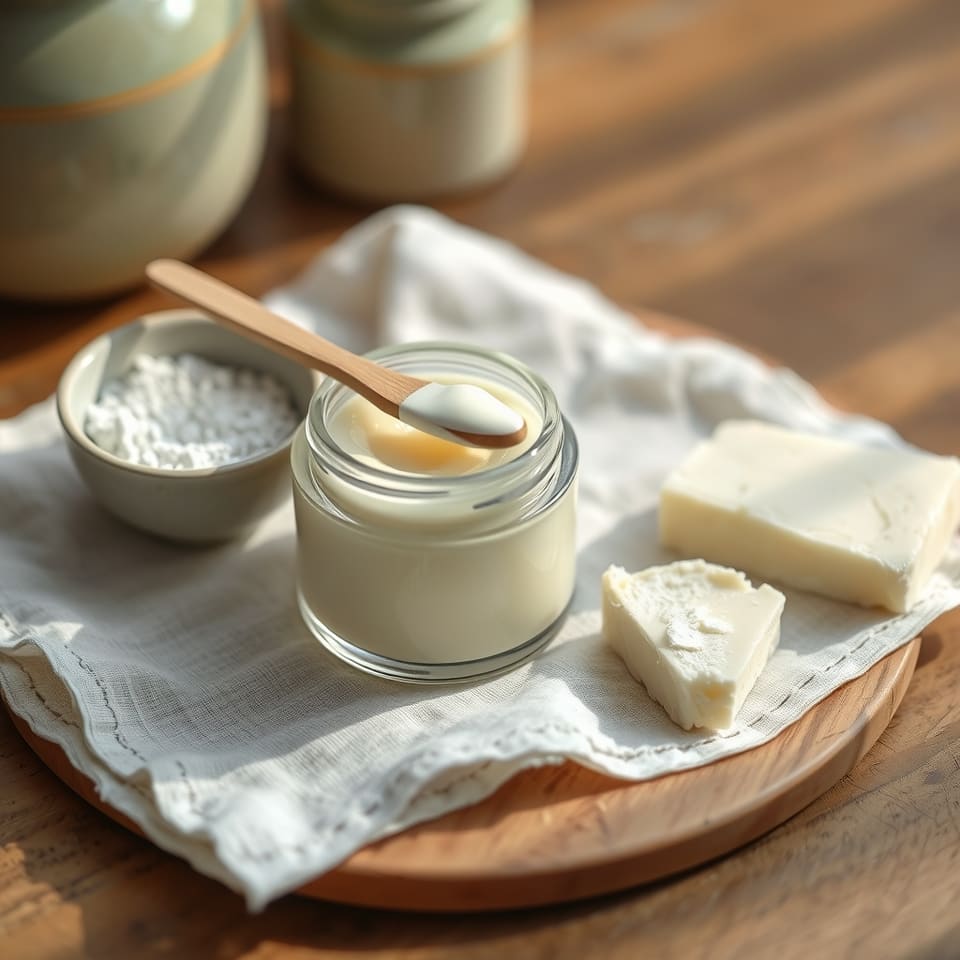
- unrefined shea butter25 g (2 tbsp)
- coconut oil15 g (1 tbsp)
- arrowroot powder or cornstarch20 g (2 to 3 tbsp)
Method
- Wash and dry a small glass jar and a spatula or teaspoon. Clean tools help keep the balm fresh.
- Put the shea butter and coconut oil in a heatproof bowl set over a pan of barely simmering water. Stir until just melted, then take the bowl off the heat.
- Sift in the starch and stir until completely smooth, with no lumps.
- Pour into the jar and leave at cool room temperature for about an hour, or in the fridge for 20 to 30 minutes, until set.
- To use, scoop out a pea-sized amount with the clean spatula, warm it between your fingertips and smooth it onto clean, dry underarms. Wash your hands afterwards.
Tips
- Use a clean spatula rather than dipping your fingers into the jar, so you do not carry bacteria into the balm.
- Make a small batch, keep the lid closed, store it somewhere cool and throw it away if it changes color, smell or texture.
- In hot weather the balm softens. Stir it and pop it in the fridge for a few minutes.
- Do not apply right after shaving. Wait until the next day to avoid stinging.
Deodorant or antiperspirant: know the difference
The two words are often used as if they mean the same thing, but they do different jobs. According to the 2023 review, a deodorant targets the smell, by working against odor-causing bacteria, absorbing odor or masking it with fragrance. An antiperspirant reduces the sweat itself: its aluminum salts form a gel plug in the sweat pores.
A homemade balm like the one below is a deodorant, not an antiperspirant. It will not keep you dry. If wetness is your main problem, a homemade product is unlikely to be the answer.
What the evidence says
Research on natural deodorant ingredients is thin. The 2023 review found that most alternative ingredients, such as plant extracts, have only been tested in small or early studies, and it calls for proper comparisons with standard products. Baking soda is mentioned as an odor absorber, but with no data on how well it works.
Many people choose homemade deodorant because they worry about aluminum and breast cancer. A 2016 systematic review searched for studies on this question and found too few to give a reliable answer. In short, the evidence does not prove a link, and it does not fully rule one out.
The most reliable odor control is still basic hygiene. The NHS advises washing your armpits at least twice a day with soap and drying them well, and choosing natural fabrics such as cotton, wool and silk over tight, synthetic clothing.
Why this recipe is unscented
Cleveland Clinic notes that deodorants and antiperspirants can cause itchy armpits, and lists fragrances, aluminum, lanolin, parabens and propylene glycol among common irritants. It suggests switching to unscented or hypoallergenic products if your underarms itch. That is why there is no perfume or essential oil here, and no baking soda.
Questions people ask
Will this homemade deodorant stop me sweating?
No. Only antiperspirants reduce sweat. This balm is a deodorant, so it may help with how you feel and smell, but you will still sweat.
Is aluminum in antiperspirant proven to cause breast cancer?
No. A 2016 systematic review found too few studies to give a reliable answer either way. If this worries you, talk to your doctor.
How long does the balm keep?
There is no fixed shelf life for a homemade balm. Make small batches with clean tools, use them up within a few weeks, and throw the balm away sooner if it looks, smells or feels different.
Sources
- Body odour (BO) — NHS
- Itchy Armpits: Common Causes and Treatments — Cleveland Clinic
- Deodorants and antiperspirants: New trends in their active agents and testing methods — International Journal of Cosmetic Science (via PubMed Central)
- Breast Cancer and Deodorants/Antiperspirants: a Systematic Review — Central European Journal of Public Health (via PubMed)
This article is for general information only and is not medical advice. Herbs can interact with medicines and health conditions. Talk to a doctor or pharmacist before trying a herbal remedy, especially if you are pregnant, breastfeeding, giving it to a child, or taking any medication.