Cutting Board Oil: Lemon-Fresh Care for Wooden Boards
A wooden board lasts for years with a monthly coat of the right oil. Here is which oil to use, a simple beeswax board cream, how lemon fits in, and how to keep the board clean and safe.
Wooden boards, spoons and salad bowls are kitchen classics in homes around the world. With time and washing they turn pale, rough and thirsty, and that is when they start to crack or hold on to smells.
The fix takes a few minutes a month. The surprise for many people is which oil to use: the olive oil you cook with is not the best choice. Here is what university food safety experts recommend, plus a gentle way to use lemon for a fresher smell.
Which oil to use, and which to avoid
University of Maine Cooperative Extension recommends a food-safe mineral oil or beeswax, applied about once a month, or more often if the board looks dry. Rub it evenly into the surface with a clean cloth and let it soak in for several hours or overnight.
The same guide advises avoiding cooking oils such as olive or vegetable oil on boards, because they can turn sticky and rancid over time. That is why the recipe below uses food-safe mineral oil, with a little beeswax if you want a thicker cream that sits on the surface longer.
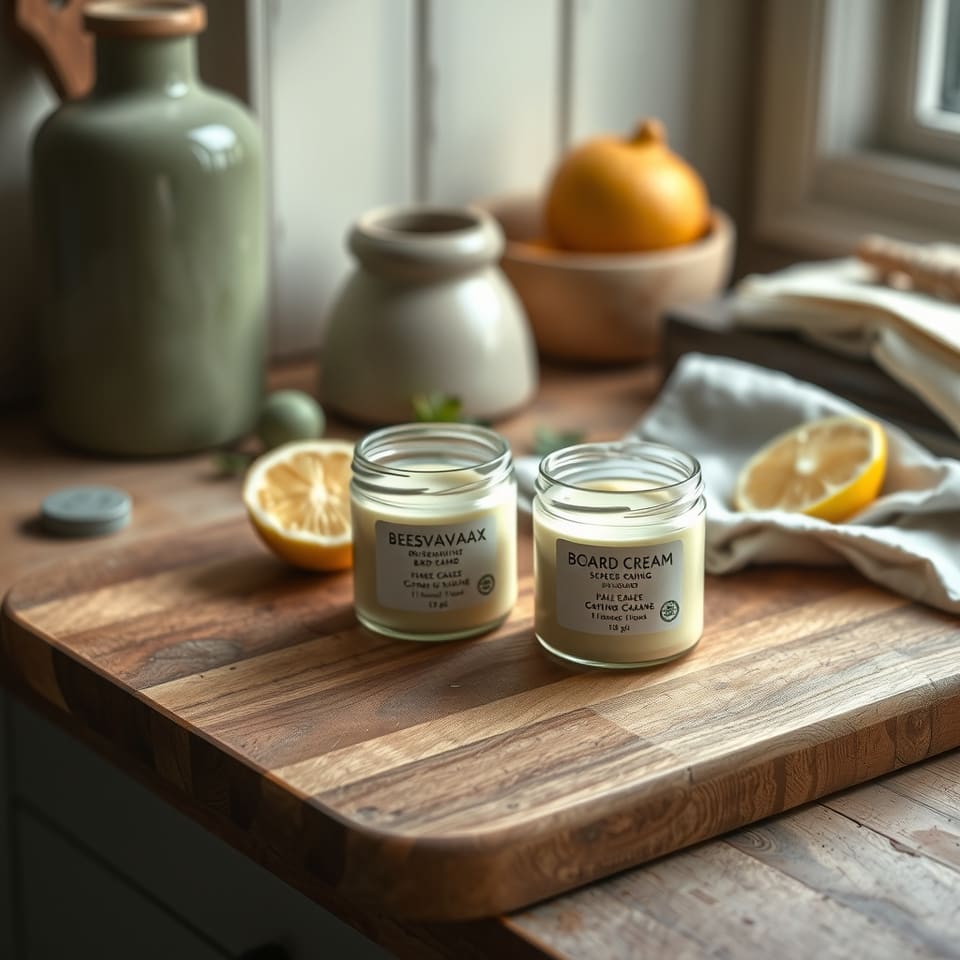
Beeswax Board Cream With a Lemon Wipe
You need
- food-safe mineral oil4 tbsp (60 ml)
- grated beeswax or beeswax pellets, optional1 tbsp (about 10 g)
- lemon, for the wipe1/2
- small clean glass jar with a lid1
- clean, lint-free cotton cloths2
Method
- Wash the board with warm water and a little unscented dish soap, scrub with a soft brush, rinse and dry it straight away with a clean towel.
- For a fresher smell, rub the cut side of the lemon over the board, rinse with clean water and let the board dry completely, ideally for a few hours.
- To make the cream, put the mineral oil and beeswax in a heat-proof jar or bowl set in a pan of gently simmering water. Stir until the wax melts. Watch it closely and never leave it unattended.
- Pour into the glass jar and let it cool until soft and creamy. If you skip the beeswax, simply use the mineral oil as it is.
- Rub a thin layer over every surface of the board, including the sides and ends, following the grain.
- Leave it to soak in for several hours or overnight.
- Buff off any excess with a clean cloth. Repeat about once a month, or whenever the wood looks pale and dry.
Tips
- Stand the board on its edge to dry, so air reaches both sides.
- The same cream works on wooden spoons, spatulas and salad bowls.
- Label the jar and store it with the lid on in a cool cupboard.
Where lemon fits in
Lemon is the fresh part of this routine. Utah State University Extension explains that lemon juice, like vinegar, is acidic and can act as a deodorizer. A quick wipe with a cut lemon may help freshen a board that smells of onion or garlic. Rinse it off and let the board dry fully before oiling.
For wooden furniture rather than food boards, University of Arkansas Extension gives a simple polish made with lemon, olive oil and water. It advises making it fresh each time, applying a thin coat, waiting 5 minutes and buffing with a soft cloth. Keep that one for tables and shelves, not for the board you chop on.
What the evidence says
Oil is about looking after the wood, not about killing germs. Oiling helps keep a board from drying out, but it does not make it safe after raw meat. Cleaning does that.
North Dakota State University Extension notes that wooden boards are safe to use as long as they are cleaned thoroughly right away. After raw meat or poultry, it advises washing with hot, soapy water and a brush, rinsing with hot water and using a sanitizing solution for a couple of minutes. University of Maine suggests keeping one board for raw animal products and another for ready-to-eat foods, and replacing boards with deep grooves or cracks that can no longer be cleaned properly, because those can trap bacteria.
Lemon helps with smell, but for sanitizing, University of Maine lists undiluted white vinegar, 3% hydrogen peroxide or a weak unscented bleach solution.
Questions people ask
Can I use olive oil on my cutting board?
It is better not to. University of Maine Cooperative Extension says cooking oils such as olive or vegetable oil can become sticky and rancid. Food-safe mineral oil or beeswax is the usual choice.
How often should I oil a wooden board?
About once a month, or more often if the wood looks dry and pale, according to University of Maine Cooperative Extension.
Does lemon disinfect a cutting board?
Lemon is mainly useful for smells. For sanitizing, University of Maine lists undiluted white vinegar, 3% hydrogen peroxide or a weak bleach solution. After raw meat, wash with hot, soapy water first.
Sources
- Bulletin 3108, Safe Cutting Boards: Materials, Usage, and Cleaning Tips — University of Maine Cooperative Extension
- Prairie Fare: Say Goodbye to Old Cutting Boards — North Dakota State University Extension
- Home Cleaning Chemistry — Utah State University Extension
- Clean and Green Homemade Cleaners — University of Arkansas Division of Agriculture Extension
This article is for general information only and is not medical advice. Herbs can interact with medicines and health conditions. Talk to a doctor or pharmacist before trying a herbal remedy, especially if you are pregnant, breastfeeding, giving it to a child, or taking any medication.