DIY Herb Candles: Pretty, Simple and Fire-Safe
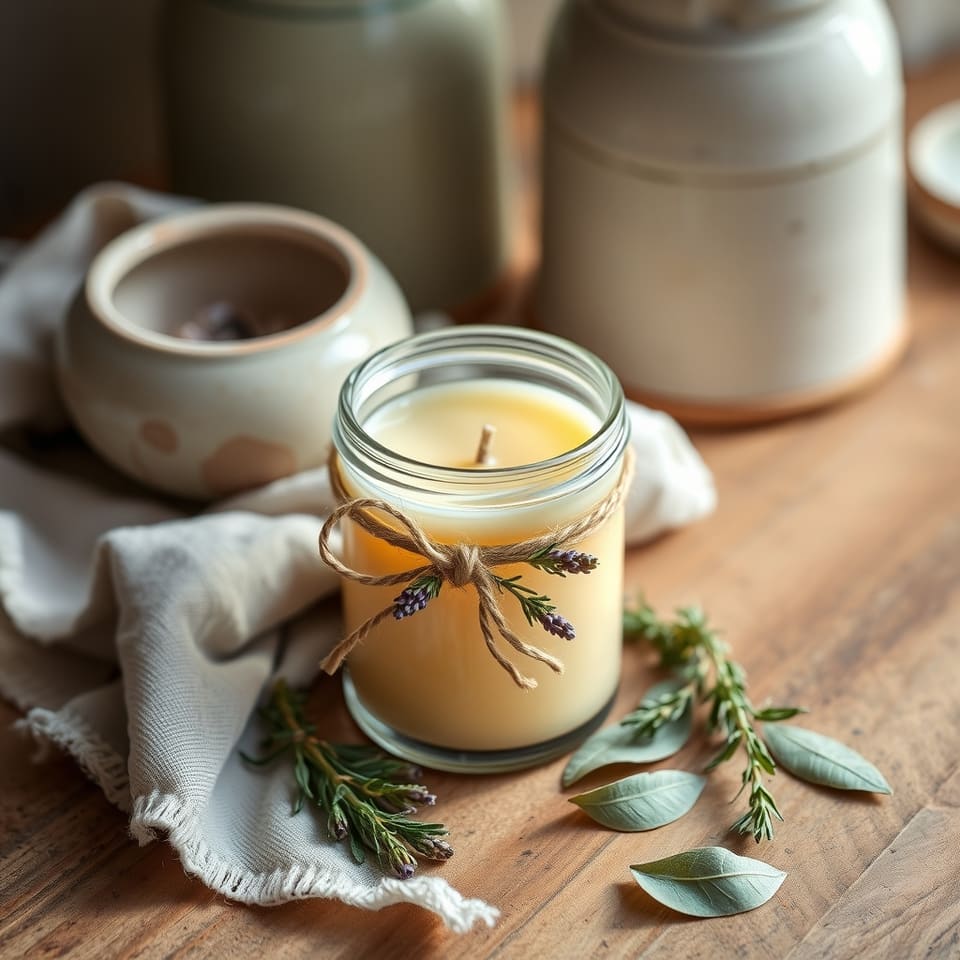
A beeswax candle in a glass jar, tied with a sprig of dried rosemary or lavender, makes a lovely handmade gift. Here is how to make one, and why the herbs belong on the outside, never in the wax.
Candles with dried flowers and herbs set into the wax look beautiful in photos. They are also one of the riskier crafts you can make at home, because dried plant material burns easily.
The good news is that you can still get the look. Make a plain beeswax candle in a sturdy glass jar, then use the herbs as decoration on the outside, as a gift tie you remove before lighting. You get the charm of the herbs without putting kindling next to the flame.
Why herbs do not belong in the wax
University of Georgia Extension advises never placing a candle near anything that could catch fire. Dried herbs and flowers are exactly that kind of material. When they sit in the wax or float near the wick, the flame can reach them as the candle burns down, and they can flare up or catch alight.
This is why this recipe keeps every leaf and sprig on the outside of the jar, and asks you to take the decoration off before the first burn. A plain candle is the safe base, and the herbs are part of the wrapping.
Beeswax Jar Candle With an Herb Tie
You need
- beeswax pellets or grated beeswaxabout 200 g (7 oz)
- cotton candle wick with a metal base, long enough to stand above the jar1
- sturdy heat-resistant glass jar, about 250 ml (1 cup), clean and dry1
- wooden skewer or clothes peg to hold the wick straight1
- dried sprigs of rosemary or lavender, or a bay leaf, for decoration only1 or 2
- natural twine1 length
Method
- Set up a double boiler: a heat-proof bowl or old pan resting over a pan of gently simmering water. Never heat wax directly over the burner, and never leave melting wax unattended.
- Melt the beeswax slowly, stirring now and then. University of Georgia Extension notes that beeswax has a high melting point of about 65 °C (150 °F), so be patient and watch it closely.
- While the wax melts, stand the wick in the center of the jar. Dip the metal base in a little melted wax to fix it in place, then rest the top of the wick against a skewer laid across the rim.
- Pour the melted wax slowly into the jar, leaving about 1 cm (1/2 inch) at the top. Keep the wick straight and centered.
- Let the candle cool and set completely at room temperature, ideally overnight.
- Trim the wick to about 6 mm (1/4 inch). Tie twine around the jar and tuck in a dried herb sprig as a gift decoration.
- Before lighting, remove the twine and herbs and place the candle on a heat-resistant surface.
Tips
- Add a small paper tag that reads: remove herbs before lighting.
- If the surface sinks or cracks as it cools, melt a little more wax and top it up.
- For scent without a flame, put a few dried herb sprigs in a small bowl on a shelf where pets cannot reach them.
Scent, essential oils and pets
Many people want a candle that smells of lavender or rosemary. Think about who shares your home before you add any scent. The ASPCA warns that concentrated essential oils can be dangerous to pets, that pets have a far better sense of smell than we do, and that just seven or eight drops of concentrated tea tree oil may cause problems.
Lavender itself is listed by the ASPCA as toxic to dogs, cats and horses, so keep dried lavender sprigs where pets cannot chew them. For birds, the ASPCA advises avoiding essential oil diffusers altogether because their airways are very sensitive. If you keep birds, an unscented beeswax candle is the cautious choice.
What the evidence says
Herb candles are a craft, not a remedy. None of the sources we checked show that burning a candle with herbs or herbal scent improves health, mood or air quality, so enjoy it simply for the light and the look.
What the evidence does support is basic fire safety. University of Georgia Extension recommends burning candles only in a holder on a stable, heat-resistant surface, trimming the wick to about 6 mm (1/4 inch) each time, keeping a lit candle in sight, and blowing it out before you sleep or leave the room. It also advises keeping candles away from drafts, fans and vents, and out of reach of children and pets. Battery candles are a safer option where those rules are hard to follow.
Questions people ask
Can I put dried flowers in the top of the candle if I remove them later?
It is safer not to. Once herbs are set in the wax they are hard to remove fully, and the flame can reach them as the candle burns down.
Do herbs make a candle smell?
Dried herbs tied on the outside are mainly there for looks. If you want a scented candle, remember that added fragrance and essential oils are worth skipping if you have pets or birds.
How short should I keep the wick?
University of Georgia Extension suggests trimming it to about 6 mm (1/4 inch) each time before you light the candle.
Sources
- Candle Safety: Prevent an Accidental Fire — University of Georgia Extension
- Green Cleaning recipe booklet — University of Georgia College of Family and Consumer Sciences
- The Essentials of Essential Oils Around Pets — ASPCA
- Toxic and Non-Toxic Plants: Lavender — ASPCA
This article is for general information only and is not medical advice. Herbs can interact with medicines and health conditions. Talk to a doctor or pharmacist before trying a herbal remedy, especially if you are pregnant, breastfeeding, giving it to a child, or taking any medication.