Home Remedy for Ants: Vinegar, Herbs and What Works
A vinegar or soapy wipe erases the scent trail ants follow, and a few kitchen habits keep them from coming back. Here is what herbs can and cannot do, and when a bait makes sense.
A line of tiny ants marching across the counter toward a drop of honey is a familiar sight in kitchens all over the world. The good news is that the first steps are simple and need nothing stronger than water, soap or vinegar.
The less good news is that wiping and sprinkling herbs will not get rid of the nest. Here is a plan that combines gentle home methods with what university pest experts actually recommend.
Why ants walk in a line
Ants that find food leave a chemical scent trail, and other ants follow it. Penn State Extension explains that wiping away this trail helps stop new ants from arriving. That is why a quick wipe often works better than squashing ants one by one.
The UC Statewide IPM Program advises wiping up ants with soapy water as soon as they come in, to remove the trail they leave behind. Penn State says soapy water or a mix of vinegar and water both work. Vacuuming them up is another option.
Vinegar and Mint Ant Trail Wipe
You need
- white vinegar250 ml (1 cup)
- water250 ml (1 cup)
- fresh mint, optional, for scent only3 to 4 sprigs
Method
- If using mint, bruise the sprigs lightly, put them in a clean glass jar and pour the vinegar over them. Close the jar and leave it overnight, then strain out the mint.
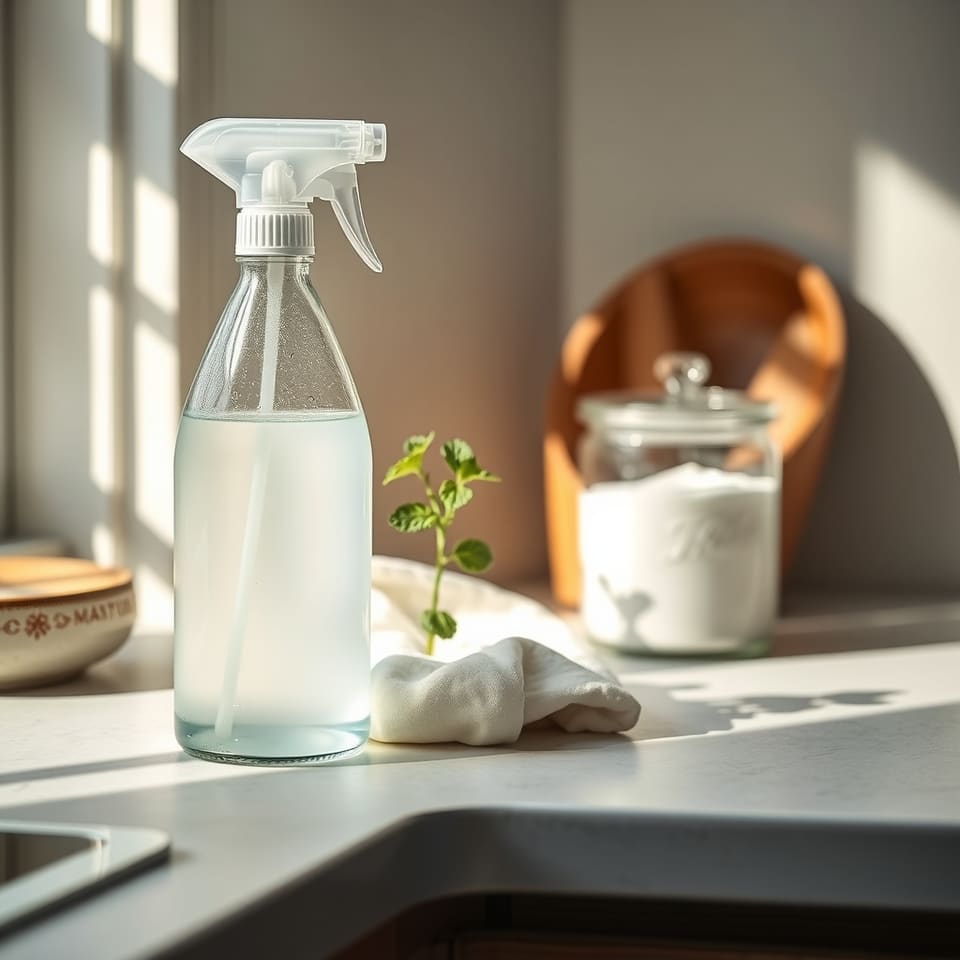
- Mix the vinegar with the water in a clean spray bottle and label it clearly.
- Follow the line of ants back to the spot where they enter and make a note of it.
- Spray the trail and wipe it with a damp cloth, going a little beyond each end of the line. Rinse the cloth often.
- Clean away whatever drew them in, such as crumbs, sticky jars or pet food.
- Seal the entry gap with caulk as soon as you can, or ask your landlord to do it.
Tips
- Soapy water works for trails too: stir about 1 teaspoon of dish soap into 500 ml (2 cups) of water. Use this version on marble or other natural stone counters.
- For ants in a potted plant, UC IPM suggests taking the plant outside and soaking the pot for at least 20 minutes in water mixed with 1 to 2 tablespoons of insecticidal soap per 1 liter (about 1 quart).
- Outdoors, Penn State notes that nests can be discouraged by digging them up or soaking them with hot, soapy water.
Cut off food, water and the way in
Ants come for food and water. UC IPM suggests keeping sugar, syrup, honey and pet food in closed containers that are clean on the outside, rinsing out soft drink cans and bottles, cleaning up grease and spills, taking out the trash daily and fixing dripping faucets.
Next, follow the line back to where the ants come in. Both UC IPM and Penn State advise sealing those gaps with caulk. UC IPM notes that ants often travel along wires and pipes, so check there. Outside, Penn State suggests keeping mulch and plants away from the walls and trimming branches that touch the house.
What about herbs and essential oils?
Many home tips suggest scattering mint leaves, cinnamon or bay leaves along the counter. None of the university pest guides we checked recommend dried herbs as a way to keep ants out. In this recipe, mint is there only to make the vinegar smell fresher.
Plant oils such as peppermint, rosemary, clove, orange and thyme are used in some ant sprays. UC IPM says these products kill ants on contact but have little lasting effect. If you use them, think of your pets: the ASPCA points out that pets have a far stronger sense of smell than people, and that just seven or eight drops of concentrated tea tree oil can cause problems for them.
What the evidence says
Wiping trails with vinegar or soapy water really helps, but it only deals with the ants you can see. The colony stays in its nest. If ants keep coming, UC IPM and Penn State both point to slow-acting baits as the main tool, because worker ants carry the bait back and share it with the colony. Boric acid is one common bait ingredient, and UC IPM notes it can take 5 to 10 days to see fewer ants.
Sprays do less than they seem to. UC IPM says spraying ants indoors does not stop more from coming in, and Penn State advises avoiding indoor sprays and foggers, which can irritate the lungs and leave residues. UC IPM also suggests using baits indoors only for serious problems where you cannot find the way in, since baits can draw ants inside.
Questions people ask
Does vinegar kill ants?
Vinegar removes the scent trail ants follow, but it does not reach the nest. UC IPM notes that soap products can kill ants on contact but leave no lasting effect, so cleaning and sealing matter more.
Do mint or cinnamon keep ants away?
None of the university pest guides we checked recommend them. Plant oil sprays kill ants on contact but do not last, so focus on food, water and entry points.
How long do ant baits take to work?
UC IPM says it can take 5 to 10 days to see fewer ants, and full control of a colony can take several weeks. Keep the bait fresh and do not spray insecticide near it.
Sources
- Ants — UC Statewide IPM Program
- Got Ants? Eliminate them with IPM. — Penn State Extension
- Homemade Household Cleaners (FCS3319) — UF/IFAS Extension
- Is the Latest Home Trend Harmful to Your Pets? What You Need to Know! — ASPCA
This article is for general information only and is not medical advice. Herbs can interact with medicines and health conditions. Talk to a doctor or pharmacist before trying a herbal remedy, especially if you are pregnant, breastfeeding, giving it to a child, or taking any medication.