Cinnamon for Plants: What Actually Works
Cinnamon sprinkled on seedlings is all over gardening videos. Here is what university guides say about damping-off and ants, what they leave out, and a simple routine that does work.
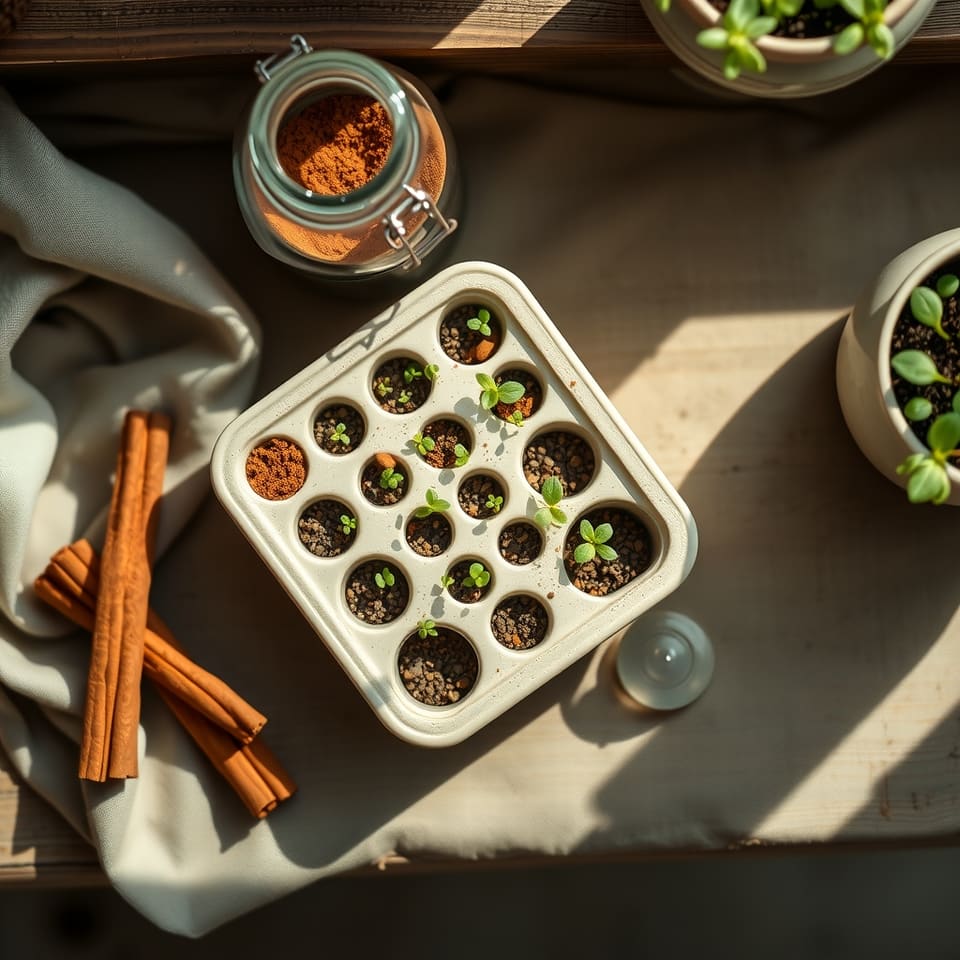
Scroll through gardening videos and you will see cinnamon dusted over seedlings, cuttings and ant trails. The promises are big: it stops fungus, helps cuttings root and keeps pests away. A cheap pantry spice that does all that sounds a little too good.
This guide goes through the popular claims one by one, checks them against what university extension guides actually say, and gives you a routine that protects seedlings whether or not you reach for the spice jar.
The claims, one by one
Four claims come up again and again. First, that cinnamon prevents damping-off, the disease that makes young seedlings collapse at the soil line. Second, that it works as a rooting aid for cuttings. Third, that a line of it stops ants. Fourth, that it stops mushrooms and mold on the surface of potting mix.
Each one sounds plausible, because cinnamon is strongly aromatic. But sounding plausible is not the same as being tested in a garden.
Clean Seedling Tray with an Optional Cinnamon Test
You need
- seed tray or small pots with drainage holes1
- household bleach, for a 10 percent soak (mixed into 900 ml / 4 cups of water)100 ml (1/2 cup)
- new seed-starting mix1 bag
- seeds1 packet
- ground cinnamon, optional, for one tray only1/4 tsp
- clean room-temperature wateras needed
Method
- Wash the tray and pots with soapy water, then rinse. Soak them in the bleach solution for 30 minutes, rinse well and let them dry.
- Fill the tray with new seed-starting mix. Moisten it until it feels like a wrung-out sponge, damp but not dripping.
- Sow the seeds at the depth on the packet. Do not bury them too deep.
- Optional: sift a very thin dusting of cinnamon over the surface of one tray. Leave a second tray without it.
- Place the trays somewhere warm, around 21 to 24 °C (70 to 75 °F), and under a grow light for 12 to 16 hours a day once seedlings appear.
- Water gently from the bottom or with a fine spray only when the surface starts to dry. Hold off on fertilizer until true leaves appear.
Tips
- Label your garden cinnamon jar so it does not end up back in the kitchen.
- Note the sowing date and the result on each tray. After a few weeks you will know whether cinnamon made any difference in your conditions.
- Good light and warmth do more for seedlings than any pantry spice.
What the evidence says
The University of Minnesota Extension explains that damping-off is caused mainly by three soil-living organisms, called Rhizoctonia, Fusarium and Pythium. They survive in soil and plant debris and spread on dirty tools, hands, hose ends and reused pots. The prevention advice centers on clean pots, fresh sterile mix and careful watering. The University of Wisconsin guide gives similar advice. Neither guide mentions cinnamon.
For ants, UF/IFAS Extension lists spinosad, boric acid or diatomaceous earth products, hot water on the colony, digging out the mound and natural enemies for fire ants. Cinnamon is not among them. We found no extension source showing that cinnamon roots cuttings, either.
That does not prove cinnamon does nothing. It means that the claims rest on gardeners' stories, not on tested guidance, so treat it as an unproven extra and never as a replacement for the steps that are known to work.
What actually prevents damping-off
The extension guides agree on a short list. Use new seed-starting mix each time and avoid garden soil and compost for seedlings. Wash pots and trays, then soak them in a 10 percent household bleach solution for 30 minutes. Clean tools too.
Keep the mix moist but not soggy, in pots with drainage holes. Do not sow seeds too deep, and give seedlings warmth so they grow quickly through their weakest stage. Minnesota suggests 12 to 16 hours of grow light, since window light is usually not enough, and indoor trays at 21 to 24 °C (70 to 75 °F). Wait to feed until several true leaves appear, and then use a quarter-strength fertilizer.
If you still want to try cinnamon
If you enjoy the idea, treat it as a small experiment. Use ground cinnamon from your pantry, sprinkle a very thin layer on the surface of the mix only, and keep one tray without it so you can compare. Do the clean-mix and careful-watering steps for both trays, or the test tells you nothing.
Dusting leaves or piling on a thick layer is not recommended, because we found no tested guidance on how much is safe for plants.
Questions people ask
Does cinnamon help cuttings root?
We found no extension source showing this. It is widely repeated online, but it remains unproven. Clean tools, a fresh mix and steady moisture matter more.
Will cinnamon keep ants away?
It is popular as a home remedy, but UF/IFAS Extension does not list it among its fire ant options. There is no tested evidence that it controls ants.
Is it safe to put cinnamon on soil?
It is a common kitchen spice, but we found no tested guidance on amounts for plants. If you try it, use a very thin dusting on the soil surface only.
Sources
- How to prevent seedling damping off — University of Minnesota Extension
- Damping Off — University of Wisconsin Horticulture Extension
- Fire Ants in the Garden — UF/IFAS Extension Leon County
This article is for general information only and is not medical advice. Herbs can interact with medicines and health conditions. Talk to a doctor or pharmacist before trying a herbal remedy, especially if you are pregnant, breastfeeding, giving it to a child, or taking any medication.