Cinnamon and Apple Tea: Cassia vs Ceylon
Simmered apple slices and a cinnamon stick make a sweet, warming tea with no added sugar. Here is how to make it, and why the type of cinnamon you use is worth a second look.
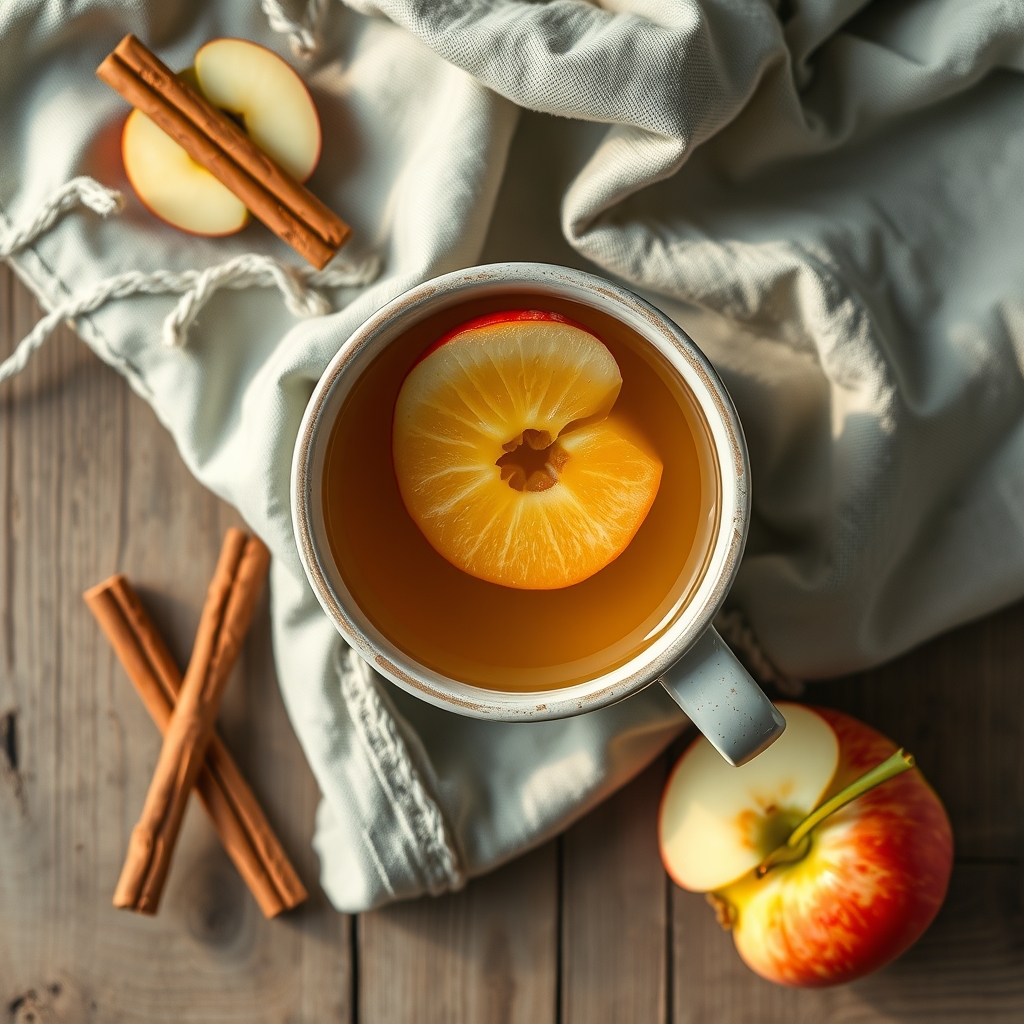
When the weather turns cold, a pan of apple slices and cinnamon on the stove smells like a holiday kitchen. This tea is one of the simplest ways to bring that feeling into an ordinary weekday.
It is naturally sweet from the fruit, caffeine free and easy to scale up for guests. The one thing worth knowing before you make it often is that not all cinnamon is the same. The common kind sold in North America contains a natural compound called coumarin, and that matters if you drink a lot of it.
Cassia and Ceylon: two kinds of cinnamon
Most cinnamon comes from one of two trees. Ceylon cinnamon, sometimes called true cinnamon, grows mainly in Sri Lanka. Cassia cinnamon grows in southeastern Asia, and NCCIH notes it is the most common type sold in North America.
You can often tell them apart by the sticks. Cassia sticks are usually thick, hard and rolled from a single layer of bark, with a strong, spicy flavor. Ceylon sticks are thinner and more fragile, made of many papery layers rolled together, with a softer, sweeter taste. Ground cinnamon is much harder to identify, and labels often do not say which type it is.
Cinnamon and Apple Tea
You need
- water600 ml (2 1/2 cups)
- medium apple, washed, cored and thinly sliced1
- cinnamon stick, about 8 cm (3 inches), preferably Ceylon1
- whole cloves, optional2 to 3
- thin strip of orange peel, optional1
Method
- Put the apple slices, cinnamon stick and any cloves or peel into a small pan with the water.
- Bring to a boil, then lower the heat and simmer gently, partly covered, for 15 minutes.
- Press the apple slices lightly with a spoon to release more flavor.
- Strain into two mugs, keeping a slice or two of apple to float on top if you like.
- Let it cool to a comfortable sipping temperature before drinking.
Tips
- Sweeter apples such as Fuji or Gala give a naturally sweet tea, while tart apples give a brighter, sharper cup.
- Do not throw away the simmered apple. It is soft and lightly spiced, and good stirred into yogurt or oatmeal.
- For a stronger cinnamon flavor, break the stick in half before simmering instead of adding more cinnamon.
Why coumarin matters
Coumarin is a natural chemical found mainly in cassia cinnamon. NCCIH reports that interactions between coumarin and the liver have been described, and that some cassia products contain high levels. Ceylon cinnamon may contain only a trace.
For most people, the amount in everyday cooking is not a problem. NCCIH says cinnamon is likely safe in the amounts usually used to flavor food. The concern is with large or long-term intake, especially for people with liver disease. If you plan to drink cinnamon tea every day, Ceylon cinnamon is the more cautious choice.
What the evidence says
Cinnamon is often promoted for blood sugar. Many studies have looked at this, but NCCIH says they are hard to interpret because the type of cinnamon tested is often unclear, and it remains uncertain whether cinnamon helps diabetes. Memorial Sloan Kettering describes the results as mixed and calls for larger, better studies.
So treat this tea as a comforting, naturally sweet drink. It is not a way to manage blood sugar, and it should never replace diabetes treatment.
Questions people ask
How do I know if my cinnamon is Ceylon?
Check the label for Ceylon or Cinnamomum verum. Ceylon sticks are thin and made of many soft, papery layers. If the label just says cinnamon, it is very likely cassia.
Is a cup of cassia cinnamon tea dangerous?
For most healthy adults, an occasional cup is a normal food amount. The concern is with regular, large intake, especially if you have liver problems.
Can I use apple juice instead of fresh apple?
Yes, but it adds a lot more sugar. Fresh slices give a lighter flavor with far less sugar in each mug.
Sources
- Cinnamon: Usefulness and Safety — NCCIH
- Cinnamon (About Herbs) — Memorial Sloan Kettering Cancer Center
This article is for general information only and is not medical advice. Herbs can interact with medicines and health conditions. Talk to a doctor or pharmacist before trying a herbal remedy, especially if you are pregnant, breastfeeding, giving it to a child, or taking any medication.