Chicken Soup for Colds: What the Science Says
A bowl of hot chicken soup is one of the world's oldest cold comforts. Here is what research has actually found, an easy soup packed with herbs, and how to keep a big batch safe.
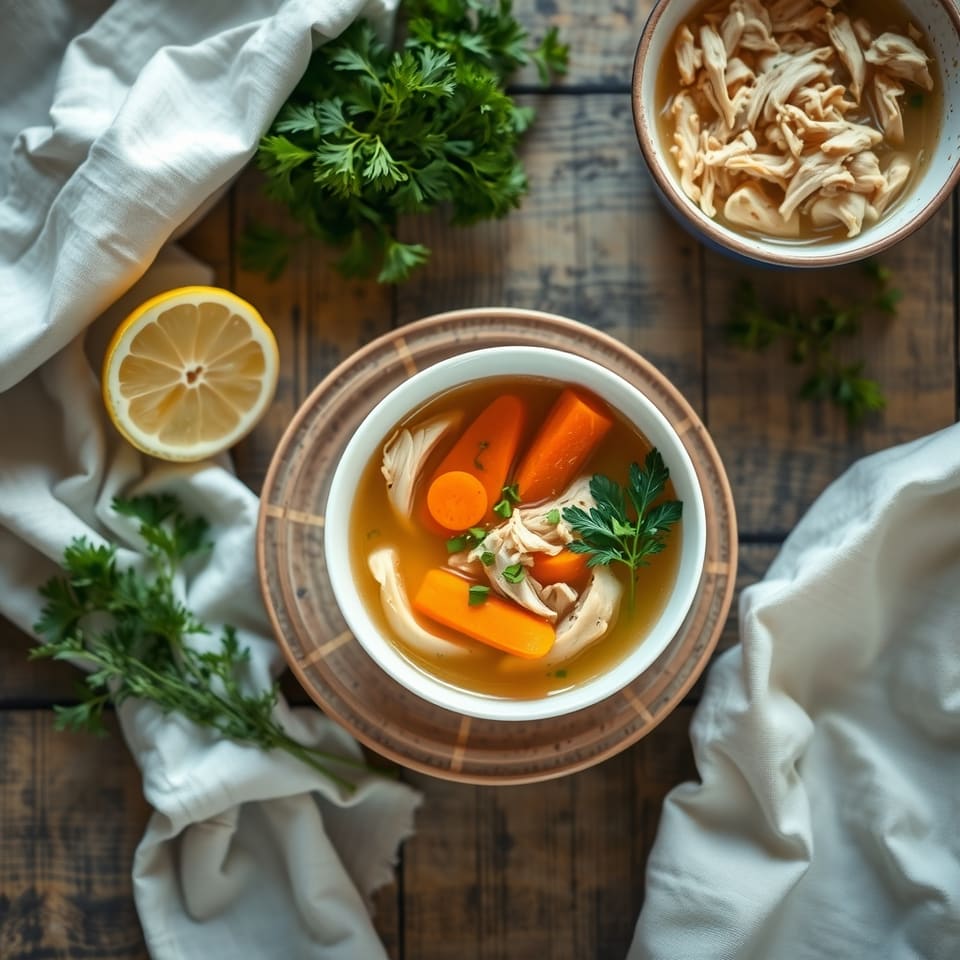
When a cold arrives, many families reach for the same thing: a pot of chicken soup. Around the world the recipe changes, from a clear broth with noodles to a lemony soup thickened with egg or a broth sharpened with ginger, but the idea is the same. Something hot, salty and gentle when you feel rotten.
Is there anything to it beyond comfort? Chicken soup will not cure a cold, but there are honest reasons it can help you feel a little better while your body fights it off.
Why chicken soup became a cold remedy
The tradition is old. A University of Nebraska Medical Center report on chicken soup research notes that the 12th-century physician Moshe ben Maimon, known as Maimonides, recommended chicken soup for respiratory symptoms, drawing on even older Greek writings.
Part of its appeal is practical. When you have a cold, you often do not feel like eating or drinking much. Soup gives you fluid, a little salt, some protein and soft vegetables in one easy bowl. The NHS advice for a cold is simple: rest, drink plenty of fluids and eat healthily. A bowl of soup ticks all three boxes.
Herb Chicken Soup
You need
- bone-in chicken thighs or legs, skin removed800 g (1 3/4 lb)
- cold water2.5 liters (10 cups)
- large onion, chopped1
- medium carrots, sliced3
- celery stalks, sliced2
- parsnip or small turnip, diced, optional1
- sprigs fresh thyme, or 1/2 tsp dried3
- bay leaf1
- salt, plus more to taste1 tsp
- fresh parsley, chopped1 small handful
- fresh dill, chopped2 tbsp
- lemon, juiced1/2
- black pepperto taste
Method
- Put the chicken and cold water in a large pot. Bring slowly to a boil and skim off any foam that rises to the top.
- Add the onion, carrots, celery, parsnip, thyme, bay leaf and salt. Lower the heat and simmer gently, partly covered, for about 1 hour, until the chicken is cooked through and falls easily from the bone.
- Lift out the chicken with a slotted spoon. When it is cool enough to handle, pull the meat into bite-size pieces and discard the bones. Remove the bay leaf and thyme stalks.
- Return the chicken to the pot. Stir in the parsley, dill and lemon juice, then taste and add pepper and a little more salt if needed.
- Serve hot, letting it cool to a comfortable temperature before eating.
Tips
- For a heartier bowl, cook a handful of small pasta or rice separately and add it to each bowl, so it does not go soggy in leftovers.
- To cool a big batch quickly, divide it into shallow containers. Refrigerate within 2 hours and use within 3 to 4 days, or freeze for 3 to 4 months.
- Reheat leftover soup to a rolling boil before serving. The USDA advises reheating leftovers to 74 °C (165 °F).
What the evidence says
The best known study came from Dr. Stephen Rennard at the University of Nebraska, published in the journal Chest in 2000. His team tested homemade and store-bought chicken soups on neutrophils, a type of white blood cell involved in inflammation, in the laboratory. The soups slowed the movement of these cells. The researchers suggested this might mean a mild anti-inflammatory effect, but this was a test on cells in a dish, not on people with colds, and they could not identify which ingredient was responsible.
Human studies are few. A 2025 systematic review in the journal Nutrients found only four small randomized trials, with 342 people in total, mostly testing chicken-based soups with vegetables and herbs for respiratory infections. The authors reported modest improvements in symptoms, and one trial found a shorter illness. But the studies were small and varied, three were done in Asia, and the reviewers, without a formal grading, estimated the certainty of the evidence as only low to moderate.
So the fair summary is this: chicken soup is a safe, comforting food that may ease symptoms a little. It does not kill cold viruses, and antibiotics do not either. The NHS notes that colds are caused by viruses, so antibiotics will not help, and that most people feel better within one to two weeks.
Why the herbs are worth adding
In the Nebraska study, the family recipe included onions, root vegetables, celery and parsley, and the researchers suspected the whole mix mattered more than any single ingredient. No herb in the pot has been shown to shorten a cold.
Herbs earn their place another way. A cold can dull your sense of taste and smell, and fresh parsley, dill, thyme and lemon make a bowl taste brighter. If that helps you eat and drink when you would rather not, it is doing a useful job.
Questions people ask
Does store-bought chicken soup work too?
In the Nebraska lab study, many supermarket soups had a similar effect on white blood cells to the homemade one. That was a lab test, though, and store-bought soups can be very salty, so check the label.
Is it the steam, the broth or the chicken that helps?
No one knows for sure. Fluids and warmth help you feel more comfortable, and the researchers suspected the combination of ingredients mattered more than any one item.
Can vegetable soup work instead?
It still gives you fluid and food when you feel unwell. The small trials mostly tested chicken-based soups, so there is even less evidence for other kinds.
Sources
- Were Our Grandmothers Right? Soup as Medicine: A Systematic Review of Preliminary Evidence for Managing Acute Respiratory Tract Infections — Nutrients (via PubMed Central)
- Mother approved, doctor tested: chicken soup study — University of Nebraska Medical Center
- Common cold — NHS
- Leftovers and Food Safety — USDA Food Safety and Inspection Service
This article is for general information only and is not medical advice. Herbs can interact with medicines and health conditions. Talk to a doctor or pharmacist before trying a herbal remedy, especially if you are pregnant, breastfeeding, giving it to a child, or taking any medication.