Calendula Salve: How to Make It at Home
Bright orange calendula petals, gently warmed in oil and set with beeswax, make a soft golden salve for dry hands and rough patches. Here is a reliable home method and what the evidence really says.
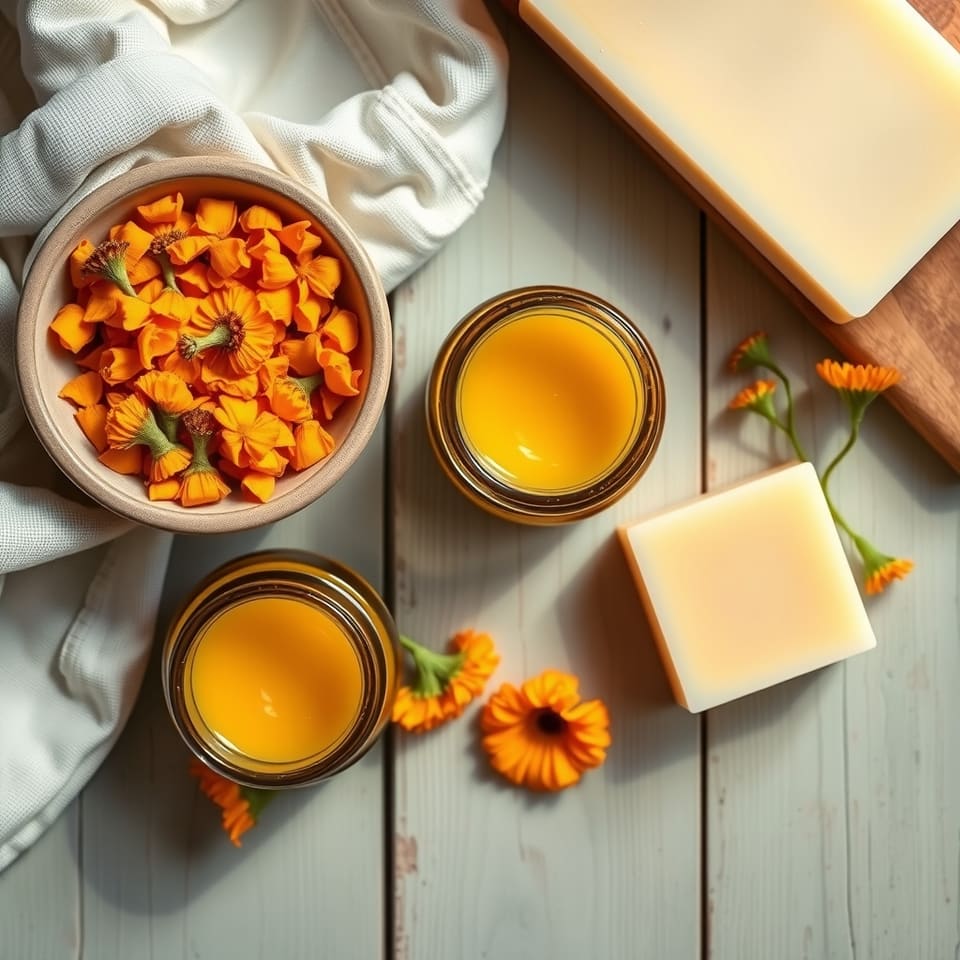
Calendula, also called pot marigold, is a cheerful orange flower that many home gardeners grow in a sunny pot or bed, and its petals have long been used in traditional skin care.
A calendula salve is simply oil that has been infused with the petals and thickened with beeswax. It keeps well, travels easily and is a classic first project for anyone who likes making things at home. If you have already tried a calendula wash, a salve is the version that stays on the skin.
Why people use calendula on the skin
Memorial Sloan Kettering Cancer Center's About Herbs guide notes that calendula creams and ointments are mainly used on the skin to calm irritation and inflammation, and for small cuts and burns.
In Europe, the European Medicines Agency (EMA) lists calendula as a traditional herbal medicine for minor skin inflammation, such as sunburn, and as an aid in healing minor wounds. Traditional means the use is accepted on the basis of long experience, not because large trials have proven it works.
Calendula Salve
You need
- dried calendula petals15 g (about 1 cup, loosely packed)
- olive oil or sunflower oil200 ml (3/4 cup plus 1 tbsp)
- beeswax20 g (about 2 tbsp grated or pellets)
Method
- Put the dried petals and oil in a heatproof bowl or jar and set it over a pan of barely simmering water. The oil should cover the petals completely.
- Keep the oil gently warm for 2 hours, stirring now and then and topping up the water in the pan. Do not let the oil bubble.
- Take it off the heat and strain the oil through a fine sieve lined with a clean cotton cloth. Squeeze the cloth to get out as much oil as possible.
- Measure 180 ml (3/4 cup) of the golden oil and return it to the clean bowl over the simmering water. Add the beeswax and stir until it melts completely.
- To check the texture, drop a little onto a cold plate and wait a minute. Add a few more beeswax pellets for a firmer salve, or a little more oil for a softer one.
- Pour into small clean, dry jars and leave to set uncovered at room temperature. Put on the lids once firm and label each jar with the name and date.
Tips
- For a slower method with no heat, cover the petals with oil in a clean, dry jar, close it and leave it in a warm spot out of direct sun for 2 to 4 weeks, shaking every few days, then strain.
- Store jars somewhere cool and dark. Throw the salve away if it smells sharp or rancid or if you see any spots of mold.
- Always use a clean, dry finger or a small spatula to take salve from the jar.
What the evidence says
Laboratory and animal studies suggest calendula has anti-inflammatory and antioxidant effects, according to Memorial Sloan Kettering. Some human studies of diabetic foot ulcers and leg ulcers look promising, but the guide stresses that larger studies are needed to confirm them.
The strongest human research is on skin reactions during radiation therapy for breast cancer, where a trial suggested benefit from calendula cream used early. That was a tested pharmacy product, though. A homemade salve has no standard strength: the EMA notes that approved calendula skin products contain anywhere from about 2 to 20 percent herbal preparation.
So think of your salve as a pleasant, rich balm for dry hands, elbows and rough patches. It is not a treatment for any skin disease, and it should never replace care advised by your doctor.
Getting the infused oil right
Use fully dried petals. Fresh flowers carry water into the oil, and a water-free oil and wax mixture keeps much better.
Warm the oil gently. You want it warm to the touch for a couple of hours, never bubbling or smoking. A double boiler, or a heatproof bowl set over a pan of barely simmering water, keeps the temperature low and safe. Never leave hot oil unattended.
Questions people ask
How long does homemade calendula salve keep?
Because it contains no water, it keeps longer than a cream, but the oil can still go rancid. Keep it cool and dark, make small batches and use your nose: throw it away if it smells off.
Can I use calendula salve on a baby's skin?
The EMA does not recommend calendula on the skin for children under 6. Ask your pediatrician before using any homemade product on a baby or young child.
Is calendula the same as the marigolds in my garden?
Not always. Calendula officinalis is known as pot marigold, but other garden plants are also sold as marigolds. Check for the botanical name Calendula officinalis on the label or seed packet before you pick.
Sources
- European Union herbal monograph on Calendula officinalis L., flos — European Medicines Agency
- Calendula (About Herbs) — Memorial Sloan Kettering Cancer Center
- How to test skin care products — American Academy of Dermatology
This article is for general information only and is not medical advice. Herbs can interact with medicines and health conditions. Talk to a doctor or pharmacist before trying a herbal remedy, especially if you are pregnant, breastfeeding, giving it to a child, or taking any medication.