Bay Leaf Tea: Is It Safe and How to Brew It
The same bay leaves you drop into soups can make a mild, savory-sweet tea. Here is how to brew it, and how to make sure you are using the right leaf.
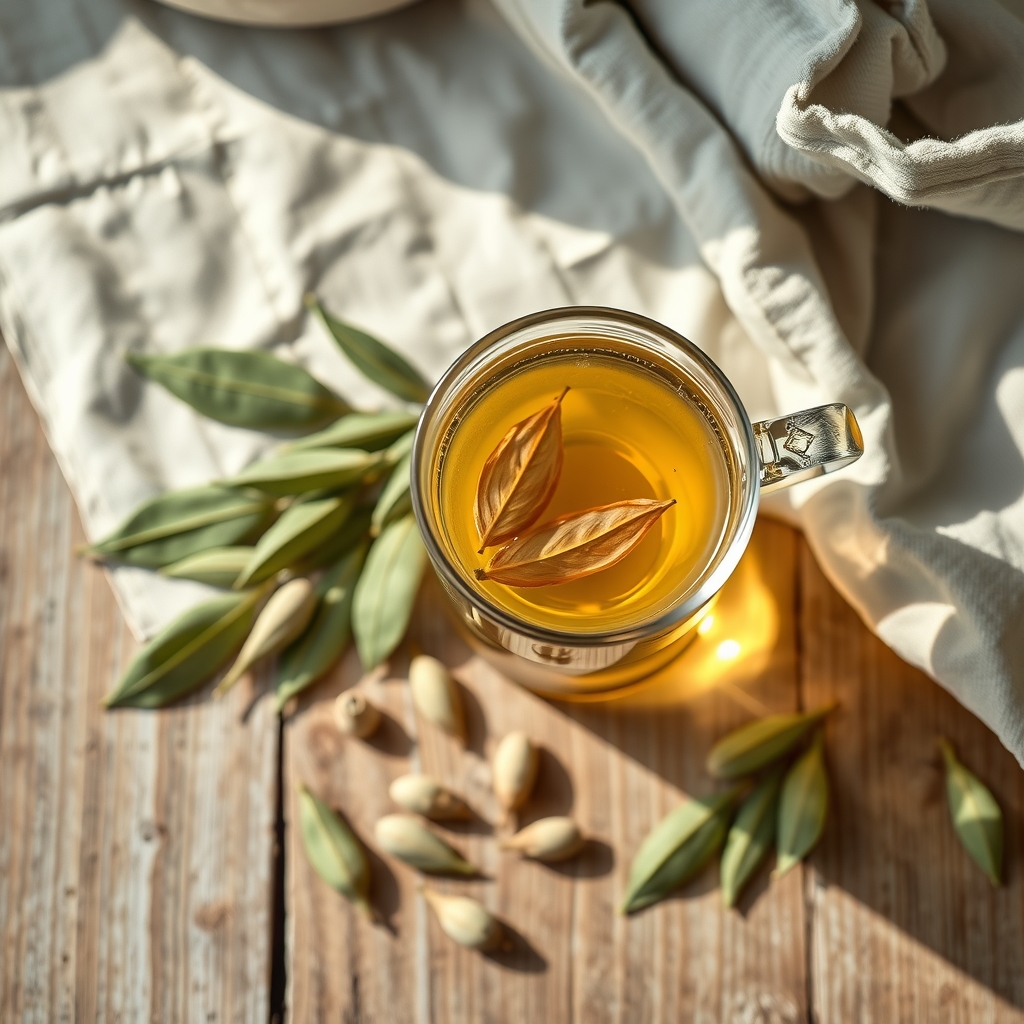
Bay leaves are a quiet staple of the kitchen. They go into stews, beans and stocks, and come out again before serving. Brewed on their own, they make a gentle, slightly herbal tea that some people enjoy after a meal.
Before you put the kettle on, there is one thing to get right: the plant. Culinary bay comes from the bay laurel tree, Laurus nobilis. Several other shrubs are also called laurel, and at least one common garden look-alike is poisonous. This guide covers how to tell them apart, what the research says, and how to brew a cup.
Is bay leaf tea safe?
Culinary bay laurel is generally considered non-toxic and has a long history as a food flavoring. Using a few leaves in a cup of tea is close to how you would use them in cooking.
The bigger risk is picking the wrong plant. A 2022 review in the journal Toxins describes how cherry laurel (Prunus laurocerasus), a very common hedge plant, is sometimes collected by mistake instead of bay laurel. Cherry laurel leaves contain compounds that can release cyanide in the body. Severe poisoning in people is rare, but children are more vulnerable.
The same review notes that taking in too much of the aromatic oil compounds from bay can cause confusion and other effects on the nervous system, especially in children. That is one reason to stick to a few leaves in a cup and never swallow bay essential oil.
Simple Bay Leaf Tea
You need
- water300 ml (1 1/4 cups)
- dried culinary bay leaves (Laurus nobilis)2 to 3
- lemon peel, optional1 thin strip
- honey, optional1 teaspoon
Method
- Rinse the bay leaves and tear each one in half to help release the flavor.
- Bring the water to a boil in a small pan, add the leaves and lemon peel, and turn the heat down.
- Simmer gently for 5 minutes, then take the pan off the heat and let it stand for another 5 minutes.
- Strain into a cup, making sure no leaf pieces end up in your drink.
- Let it cool until comfortably warm, then stir in honey if you like.
Tips
- Dried leaves give a rounder, sweeter flavor than fresh ones.
- A small cinnamon stick or a few slices of fresh ginger go well with bay.
How to tell bay laurel from cherry laurel
The easiest choice is to use dried bay leaves sold as a cooking herb. If you grow your own or are offered leaves from a garden, check these features described by researchers.
Bay laurel leaves are oblong and pointed, with a slightly wavy edge and often a reddish leaf stalk. Crushed between your fingers, they smell warm and camphor-like. Cherry laurel leaves tend to be wider toward the tip, have a green stalk and a finely toothed edge, and smell of bitter almonds when crushed. If you are not completely sure, do not use the leaf.
What the evidence says
Research on bay leaf as a remedy is thin. The best-known human study, published in 2009, gave 40 adults with type 2 diabetes capsules of 1 to 3 g of ground bay leaf a day for 30 days. Their blood sugar and cholesterol levels fell compared with a placebo group.
That study was small and short, used capsules rather than tea, and has not settled the question. It does not show that bay leaf tea treats diabetes or high cholesterol. What it does suggest is that bay leaf may lower blood sugar, which matters if you take medicine for diabetes. For now, think of bay leaf tea as a pleasant kitchen drink rather than a treatment.
Questions people ask
Can I use fresh bay leaves?
Yes, as long as you are certain they come from bay laurel. Fresh leaves taste greener and slightly more bitter, so start with one or two.
Does bay leaf tea lower blood sugar?
One small study in people with type 2 diabetes found that ground bay leaf capsules lowered blood sugar over 30 days. That is not enough to rely on, and it was not a tea. Do not use it in place of your treatment.
How many cups can I drink?
There is no research-based limit. A cup now and then, made with a few leaves, is close to normal cooking use. If you want to drink it daily, talk to your doctor, especially if you take any medicines.
Sources
- Risk of Poisoning from Garden Plants: Misidentification between Laurel and Cherry Laurel — Toxins (via PubMed Central)
- Bay leaves improve glucose and lipid profile of people with type 2 diabetes — Journal of Clinical Biochemistry and Nutrition (via PubMed)
- Are You Considering a Complementary Health Approach? — NCCIH
This article is for general information only and is not medical advice. Herbs can interact with medicines and health conditions. Talk to a doctor or pharmacist before trying a herbal remedy, especially if you are pregnant, breastfeeding, giving it to a child, or taking any medication.