Sweet Basil vs Holy Basil (Tulsi) Tea
Sweet basil and holy basil are cousins, but they taste different, have different research behind them and carry slightly different cautions. Here is how to tell them apart and brew each one sensibly.
Most of us know basil as the soft, fragrant leaf on a pizza or in a bowl of pesto. Fewer people know that the same family includes holy basil, or tulsi, a plant with a long history in traditional Indian practice that is now sold widely as a herbal tea.
Both make a pleasant, caffeine-free cup. But they are not the same plant, and they should not be treated as interchangeable. This guide explains the differences, what the evidence says about each, and who should be careful.
Two basils, two different cups
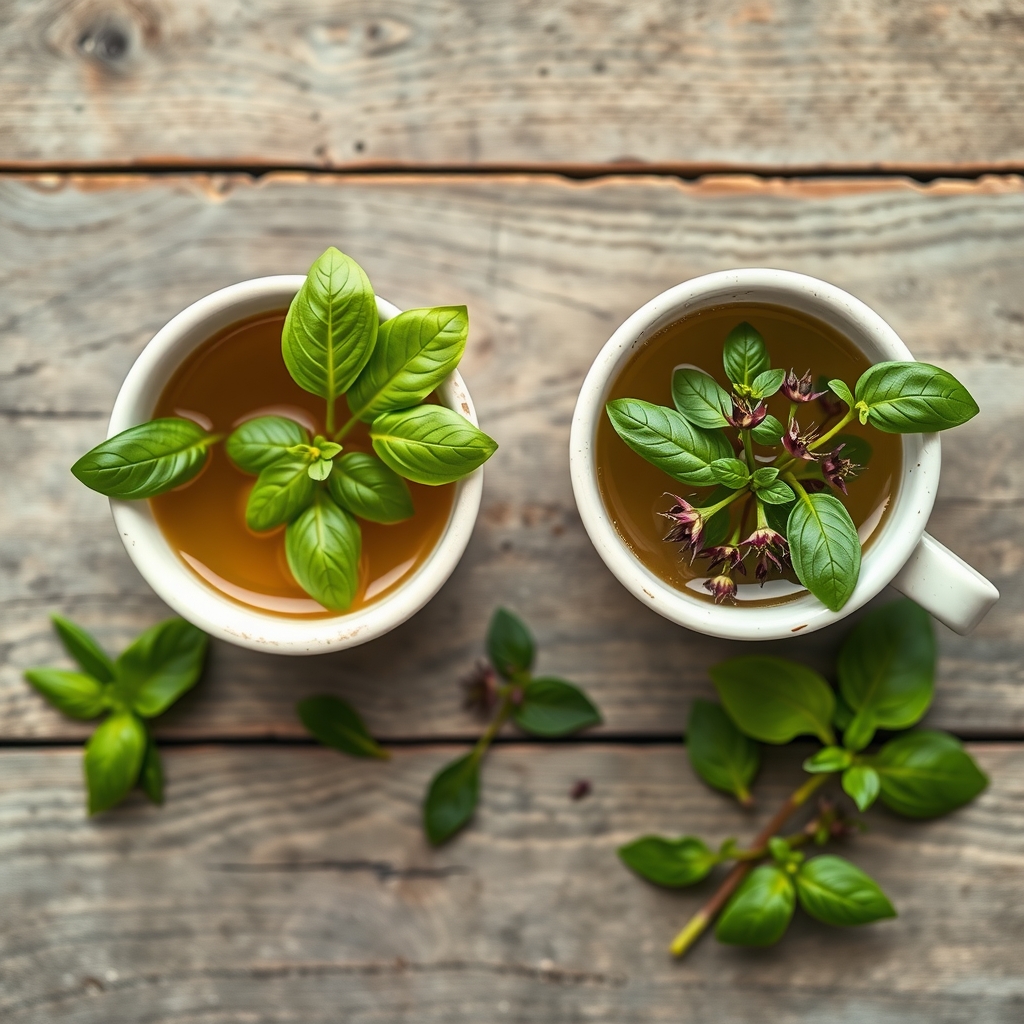
Sweet basil, Ocimum basilicum, is the familiar kitchen herb. Its tea is mild, sweet and slightly anise-like, a lot like the smell of the fresh leaves.
Holy basil, usually sold as Ocimum tenuiflorum or Ocimum sanctum, has a sharper, peppery and clove-like flavor. In traditional Indian practice it has long been taken as a tea, and it is the one most often promoted for stress and general well-being.
When you buy dried basil tea, check the botanical name on the label so you know which plant you have.
Simple Basil Tea (Sweet or Holy)
You need
- water, just off the boil250 ml (1 cup)
- fresh sweet basil or fresh holy basil, or 1 teaspoon dried holy basil8 to 10 leaves
- lemon1 thin slice (optional)
Method
- Rinse fresh leaves under running water and pat dry.
- Tear the leaves gently to release the aroma and put them in a cup or small teapot.
- Pour over the water, which should be just off the boil, and cover.
- Steep for 5 minutes. Holy basil can take up to 10 minutes if you like a stronger, spicier cup.
- Strain, add a slice of lemon if you like, and drink warm.
Tips
- Keep your tea light. A handful of leaves in a cup is plenty, and there is no need to brew it extra strong.
- Holy basil grows easily in a sunny pot, but it does not like cold, so bring it indoors in winter.
- Treat basil tea as an occasional cup rather than something to drink by the pot every day.
What the evidence says
For holy basil, a systematic review found 24 human studies with about 1,100 participants. Studies reported favorable effects on blood sugar, blood fats, blood pressure and stress. However, most trials were small and short, many were not double-blind, and the authors warned the effects may have been overestimated. The trials also used capsules, powders and extracts, not tea.
Memorial Sloan Kettering Cancer Center similarly notes that small clinical studies suggest holy basil may help lower stress and improve sleep quality, and that more research is needed to confirm these findings.
For sweet basil tea, there is little clinical research in people. It is best thought of as a culinary herb that also makes a nice drink, not a remedy.
The estragole question with sweet basil
Sweet basil naturally contains estragole, a compound that has caused liver tumors in animal studies at high doses. The European Medicines Agency recommends keeping exposure from herbal medicinal products as low as practical, especially for children, pregnant women and breastfeeding women.
This does not mean basil in your food is a worry. Basil is generally recognized as safe as a food, and people already take in small amounts of estragole every day from herbs and spices. It is simply a reason not to drink very strong basil tea in large amounts, day after day.
Questions people ask
Is holy basil the same as the basil I cook with?
No. Kitchen basil is sweet basil, Ocimum basilicum. Holy basil, or tulsi, is a related but different plant, Ocimum tenuiflorum, with a spicier, clove-like taste.
Does tulsi tea reduce stress?
Some small studies suggest holy basil may help lower stress, but most were short and of limited quality, and they used capsules or extracts rather than tea. It is reasonable to enjoy as a calming ritual, not as a treatment.
Is it safe to eat basil in food if I am pregnant?
Yes, basil in normal cooking amounts is considered safe as a food. The caution is about strong, regular basil teas or supplements taken as a remedy, where exposure to estragole is higher.
Sources
- The Clinical Efficacy and Safety of Tulsi in Humans: A Systematic Review of the Literature — Evidence-Based Complementary and Alternative Medicine (via PubMed Central)
- Holy Basil — Memorial Sloan Kettering Cancer Center
- Public statement on the use of herbal medicinal products containing estragole, Revision 1 — European Medicines Agency
- Basil (Drugs and Lactation Database, LactMed) — National Library of Medicine
This article is for general information only and is not medical advice. Herbs can interact with medicines and health conditions. Talk to a doctor or pharmacist before trying a herbal remedy, especially if you are pregnant, breastfeeding, giving it to a child, or taking any medication.