Aniseed Tea After Meals
Small seeds with a sweet licorice scent, brewed into a warm after-dinner cup. Here is how to make aniseed tea and use it sensibly.
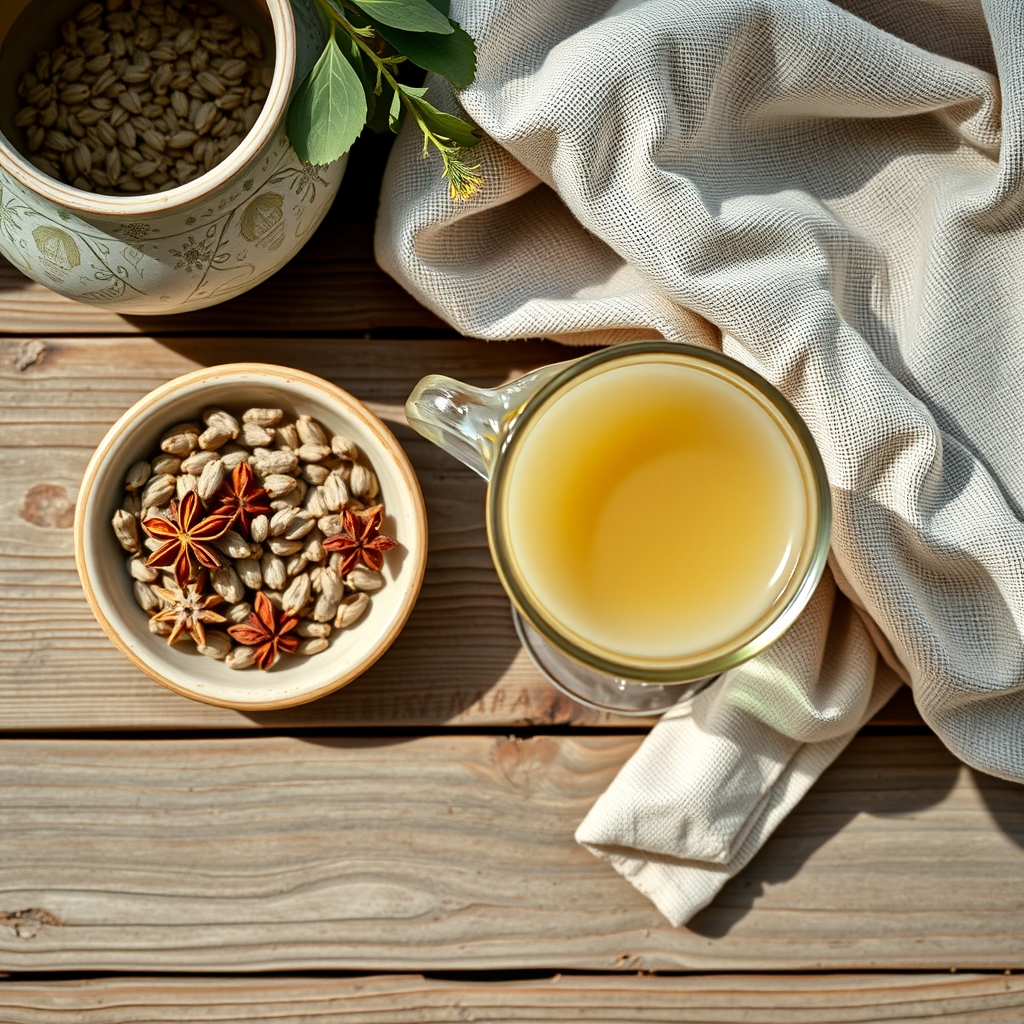
In many Mediterranean and Middle Eastern homes, a small cup of something warm and aromatic follows a big meal. Aniseed tea is one of the classic choices.
Aniseed comes from Pimpinella anisum, a plant in the same family as fennel, dill and caraway. It is not the same as star anise, which is the star-shaped pod of an unrelated tree. This article covers aniseed only: how to brew it, what the evidence says, and who should not drink it.
Why people use it
The main traditional use is for mild indigestion that comes with bloating and wind, the full, gassy, crampy feeling that can follow a rich or rushed meal.
Aniseed is also traditionally used to help loosen phlegm when you have a cough with a cold. That is a separate use, and this article focuses on digestion.
Indigestion itself is very common. The NHS describes it as a feeling of fullness or bloating, burping, wind, heartburn or feeling sick, usually soon after eating or drinking.
Aniseed Tea
You need
- whole aniseed1 to 3.5 g (about 1/2 to 1 1/2 teaspoons)
- freshly boiled water150 ml (about 2/3 cup)
Method
- Crush the aniseed lightly in a mortar and pestle, or press it with the flat side of a knife, just until the seeds crack and smell sweet.
- Put the crushed seeds in a cup or small teapot.
- Pour over 150 ml (about 2/3 cup) of water at a full boil, about 100°C (212°F).
- Cover the cup with a saucer and steep for 10 minutes, so the aroma stays in the tea.
- Strain and sip slowly after your meal.
Tips
- The European monograph for adults and teens over 12 uses 1 to 3.5 g of crushed seed in 150 ml of boiling water, up to three times a day.
- Start at the lower end. The flavor gets strong quickly.
- Crush the seeds just before brewing. Pre-ground aniseed loses its aroma fast.
- Do not drink it every day for more than two weeks in a row.
What the evidence says
The European Medicines Agency's herbal committee accepts aniseed as a traditional herbal medicine for mild indigestion with bloating and flatulence. That decision rests on long, safe use, at least 30 years, rather than on proof from clinical trials.
The committee says clinical evidence is not enough to show it works, but the effect is plausible. Laboratory studies suggest aniseed preparations can relax the muscles of the gut and airways.
In plain terms: aniseed tea may help with occasional bloating after a meal, but the evidence is limited. It is a comfort drink, not a treatment for reflux, ulcers or any digestive disease.
Simple habits that help digestion
The NHS suggests cutting down on caffeine and alcohol, going easier on rich, spicy and fatty foods, and not eating in the 3 to 4 hours before bed.
If heartburn wakes you at night, raising your head and shoulders in bed can help keep stomach acid down. A pharmacist can also suggest suitable indigestion remedies if you need more than a warm drink.
Questions people ask
Is aniseed the same as star anise?
No. They have a similar sweet, licorice-like taste, but aniseed is a small seed from a plant related to fennel, while star anise is a star-shaped pod from a tree. The guidance in this article applies only to aniseed.
Can I drink aniseed tea every day?
For short spells, yes, within the European adult dose of up to three cups a day. It is not meant for ongoing daily use, so take a break after two weeks and speak to a doctor if you still need it.
Does aniseed tea help with heartburn?
Its traditional use is for bloating and wind, not acid reflux. If heartburn is your main problem, the self-help steps above and advice from a pharmacist are a better place to start.
Sources
- Aniseed: summary for the public — European Medicines Agency
- Community herbal monograph on Pimpinella anisum L., fructus — European Medicines Agency
- Indigestion — NHS
This article is for general information only and is not medical advice. Herbs can interact with medicines and health conditions. Talk to a doctor or pharmacist before trying a herbal remedy, especially if you are pregnant, breastfeeding, giving it to a child, or taking any medication.