Rosemary Oil for the Scalp: Dilution and Evidence
Rosemary oil is everywhere online as a hair growth secret. The research is one small trial with modest results, and the oil must always be diluted. Here is what is known and how to use it carefully.
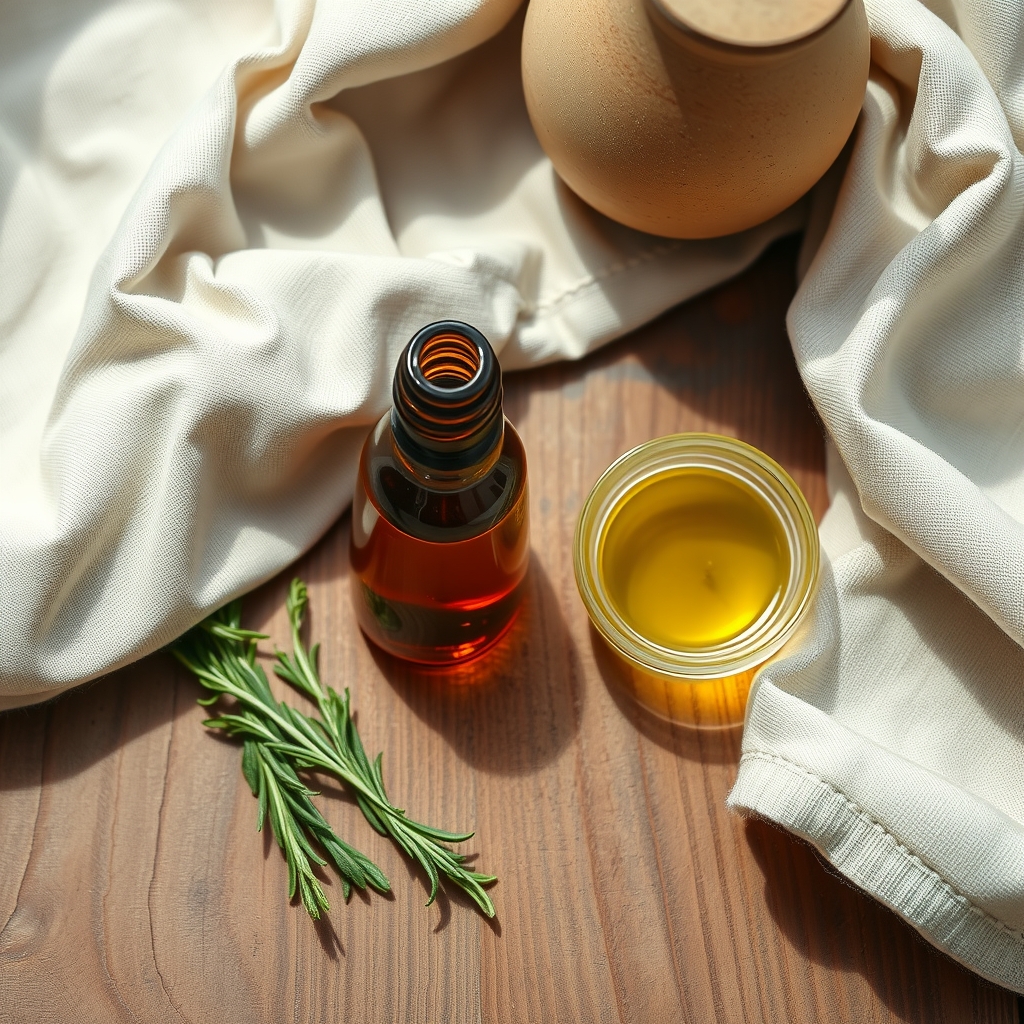
Rosemary is a fragrant kitchen herb, and its essential oil has become one of the most talked-about home treatments for thinning hair. Social media is full of before-and-after photos.
The real picture is quieter. There is one small study that looked promising, but it is far from proof, and rosemary essential oil is a concentrated product that should never go on your skin neat. This guide explains the evidence, a safe dilution, how to patch test and why hair loss deserves a proper diagnosis.
What the evidence says
The study most people quote was published in 2015. It included 100 adults with androgenetic alopecia, the common pattern type of hair loss, who used either rosemary oil or 2 percent minoxidil for six months. After three months, neither group had a meaningful change in hair count. After six months, both groups had more hair than at the start, with no significant difference between them. Scalp itching was common in both groups, and more common with minoxidil.
That is interesting, but it is one fairly small trial, and it has not been confirmed by larger, high-quality studies. A Cleveland Clinic dermatologist describes the likely benefit as modest rather than dramatic, and notes that it took about six months to show any effect.
So it is possible rosemary oil helps a little with pattern hair loss, but because the trial had no untreated comparison group, we cannot say for sure that it works. It is not proven to regrow hair, and it is not a replacement for treatments with stronger evidence.
Diluted Rosemary Scalp Oil (about 2.5 percent)
You need
- plain carrier oil, such as sunflower, olive or jojoba oil10 ml (2 tsp)
- rosemary essential oil, with no added fragrance5 drops (about 0.25 ml)
Method
- Add the carrier oil to a small, clean glass bottle with a dropper or tight lid. Add 5 drops of rosemary essential oil, close it and shake well. Drop sizes vary, so this is approximate. Label the bottle.
- Patch test first. Rub a few drops of the diluted oil on the inside of your forearm and leave it for at least 48 hours. If you see redness, itching, swelling or a rash, do not use it.
- Part your dry hair into sections. Use about 1 ml, roughly a quarter teaspoon, and massage it gently into your scalp with your fingertips. That is enough for most of the scalp.
- Leave it on for a few hours, or overnight with an old pillowcase, then wash it out with your usual shampoo.
- Use it two or three times a week. If it helps at all, expect to wait around six months to judge.
Tips
- Keep the bottle tightly closed, away from heat and light, and make a fresh small batch every month or two.
- Fine or oily hair can look greasy after oil, so overnight use with a morning wash may suit you best.
- Take a photo of your parting in the same light every month so you can judge honestly.
Get your hair loss checked first
Hair loss has many causes, from pattern hair loss and alopecia areata to illness, pregnancy, tight hairstyles and low iron. The American Academy of Dermatology (AAD) says treatment starts with finding the cause, and that the earlier treatment starts, the better the chance of regrowth.
Proven options include minoxidil, which can help early hair loss but usually takes 6 to 12 months to show results and must be continued to keep them. A dermatologist can tell you what is causing your hair loss and whether rosemary oil is worth adding.
Why dilution matters
Johns Hopkins Medicine warns that essential oils are highly concentrated, can irritate skin when used undiluted, can cause allergic reactions and burns, and can be toxic if swallowed. It gives a guide range of 2.5 to 5 percent for people over 15, taken from a standard essential oil safety reference.
We suggest staying at the low end, about 2.5 percent, for a scalp oil you may use several times a week. Choose a plain rosemary essential oil without added fragrance, since added fragrance can irritate the scalp.
Questions people ask
Is rosemary oil as good as minoxidil?
One small six-month study found similar hair counts with the two, but it has not been confirmed by larger studies. Minoxidil has much more evidence behind it.
Can I put rosemary oil straight on my scalp?
No. Undiluted essential oils can irritate and even burn skin. Dilute it in a carrier oil to about 2.5 percent and patch test first.
How long does rosemary oil take to work?
In the study, no meaningful change showed at three months, and results appeared at six months. If it helps you at all, it will be slow and modest.
Sources
- Rosemary oil vs minoxidil 2% for the treatment of androgenetic alopecia: a randomized comparative trial — Skinmed (PubMed)
- Rosemary Oil: The Secret Ingredient for Hair Growth with Shilpi Khetarpal, MD — Cleveland Clinic
- Are Essential Oils Safe for Children? — Johns Hopkins Medicine
- Hair loss: Diagnosis and treatment — American Academy of Dermatology
- Rosmarini folium (rosemary leaf) — European Medicines Agency
This article is for general information only and is not medical advice. Herbs can interact with medicines and health conditions. Talk to a doctor or pharmacist before trying a herbal remedy, especially if you are pregnant, breastfeeding, giving it to a child, or taking any medication.