Apple Cider Vinegar Hair Rinse: Dilution and Safety
An apple cider vinegar rinse is a popular home hair ritual. It must always be well diluted, it is not a proven dandruff treatment, and it is not for an irritated scalp. Here is how to make it gently and safely.
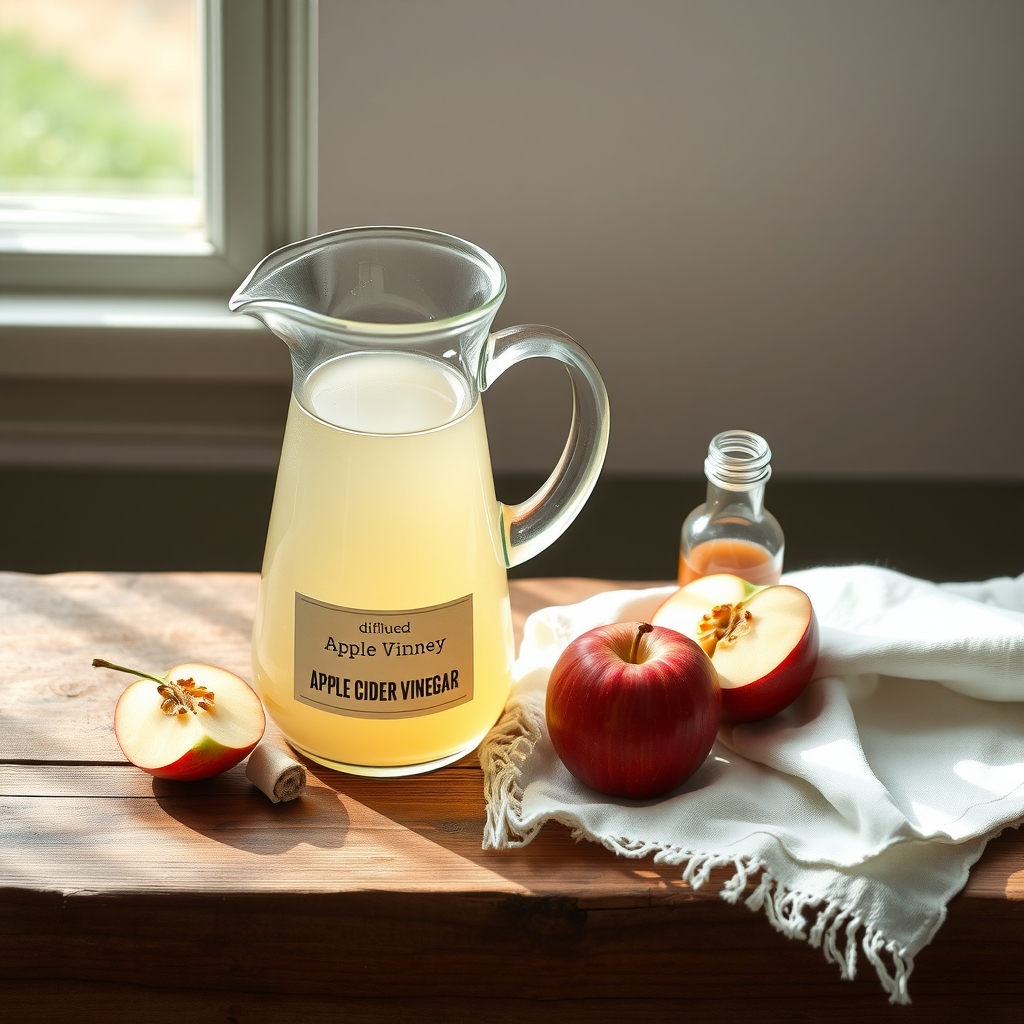
Rinsing hair with diluted apple cider vinegar after shampoo is an old home habit that has become popular again online. People say it leaves hair feeling smoother and less weighed down by product.
Vinegar is an acid, though, and it is not a gentle herbal tea. Used too strong, or on a scalp that is already sore, it can sting and irritate. This guide explains what is and is not known, how to dilute it, how to patch test it first, and when a scalp problem needs proper treatment instead.
Why people use it
Most people use a vinegar rinse as a final step after shampoo, mainly for how it makes their hair feel. Some hope it will help with buildup from styling products, a smelly scalp or flakes.
Cleveland Clinic mentions apple cider vinegar among the home remedies some people try for a scalp yeast infection. Being popular, though, is not the same as being proven.
Gentle Apple Cider Vinegar Hair Rinse
You need
- apple cider vinegar (no more than 30 ml / 2 tbsp)15 ml (1 tbsp)
- cool or lukewarm water500 ml (2 cups)
Method
- Patch test first. Dab a little of the diluted rinse on the inside of your forearm and leave it for at least 48 hours. The AAD suggests testing a new product on the inner arm or the bend of the elbow twice a day for 7 to 10 days. If you see redness, itching or swelling, do not use it.
- Mix the vinegar into the water in a clean jug or bottle. Start with the weaker mix of 1 tbsp to 2 cups. Never use vinegar undiluted on your hair or scalp.
- Shampoo as usual and rinse well.
- Tilt your head back, close your eyes and pour the rinse slowly over your hair, working it gently through with your fingers. Do not rub or scrub your scalp.
- Leave it for 1 to 2 minutes, then rinse thoroughly with plain water. Condition afterward if you normally do.
- Use it no more than once a week to start.
Tips
- If your scalp tingles, stings or feels tight afterward, use a weaker mix or stop.
- Mix a fresh batch each time and throw away any leftover.
- The vinegar smell usually fades as your hair dries.
What the evidence says
Honestly, there is very little. We could not find good clinical studies showing that an apple cider vinegar rinse treats dandruff, an itchy scalp or any scalp condition. Cleveland Clinic notes that home remedies for scalp yeast infections have not been researched as thoroughly as medical treatments, and advises asking a health care provider before trying one.
What does have evidence is ordinary dandruff care. The American Academy of Dermatology (AAD) says regular washing helps mild dandruff, and if that is not enough, a dandruff shampoo with an ingredient such as zinc pyrithione, salicylic acid, selenium sulfide, ketoconazole, sulfur or coal tar. Some need to stay on the scalp for 5 to 10 minutes before rinsing, so check the label.
So treat a vinegar rinse as a cosmetic step for how your hair feels, not as a treatment. If you have real flaking or itching, a medicated shampoo is the better-supported choice.
When to skip it
Harvard Health explains that an itchy scalp can come from many things: a dry scalp, dandruff and seborrheic dermatitis, reactions to hair products, eczema, psoriasis, lice or a fungal infection. An acid rinse will not fix most of these, and on inflamed or broken skin it is likely to sting and make things worse.
Skip the rinse if your scalp is red, raw, cracked, scratched or has open sores, and if you are already reacting to a hair product. Harvard Health suggests taking a break from products you suspect, choosing gentle or moisturizing shampoos and avoiding very hot water and hard scrubbing.
Questions people ask
Does an apple cider vinegar rinse get rid of dandruff?
There is no good evidence that it does. Dermatologists recommend regular washing and, if needed, a dandruff shampoo with an active ingredient such as zinc pyrithione or ketoconazole.
How much vinegar should I put in the water?
Start with 15 ml (1 tbsp) in 500 ml (2 cups) of water, and do not go above 30 ml (2 tbsp). Stronger is not better, and it is more likely to irritate.
Can I leave the rinse in my hair?
It is gentler to rinse it out with plain water after a minute or two, especially the first few times or if you have sensitive skin.
Sources
- How to treat dandruff — American Academy of Dermatology
- What could be causing your itchy scalp? — Harvard Health Publishing
- Scalp Yeast Infection — Cleveland Clinic
- How to test skin care products — American Academy of Dermatology
This article is for general information only and is not medical advice. Herbs can interact with medicines and health conditions. Talk to a doctor or pharmacist before trying a herbal remedy, especially if you are pregnant, breastfeeding, giving it to a child, or taking any medication.