Homemade Dry Shampoo with Starch and Herbs
A pinch of starch can soak up oil at the roots between washes. Dermatologists actually prefer store-bought dry shampoo, so if you make your own, use very little and wash it out soon. Here is how.
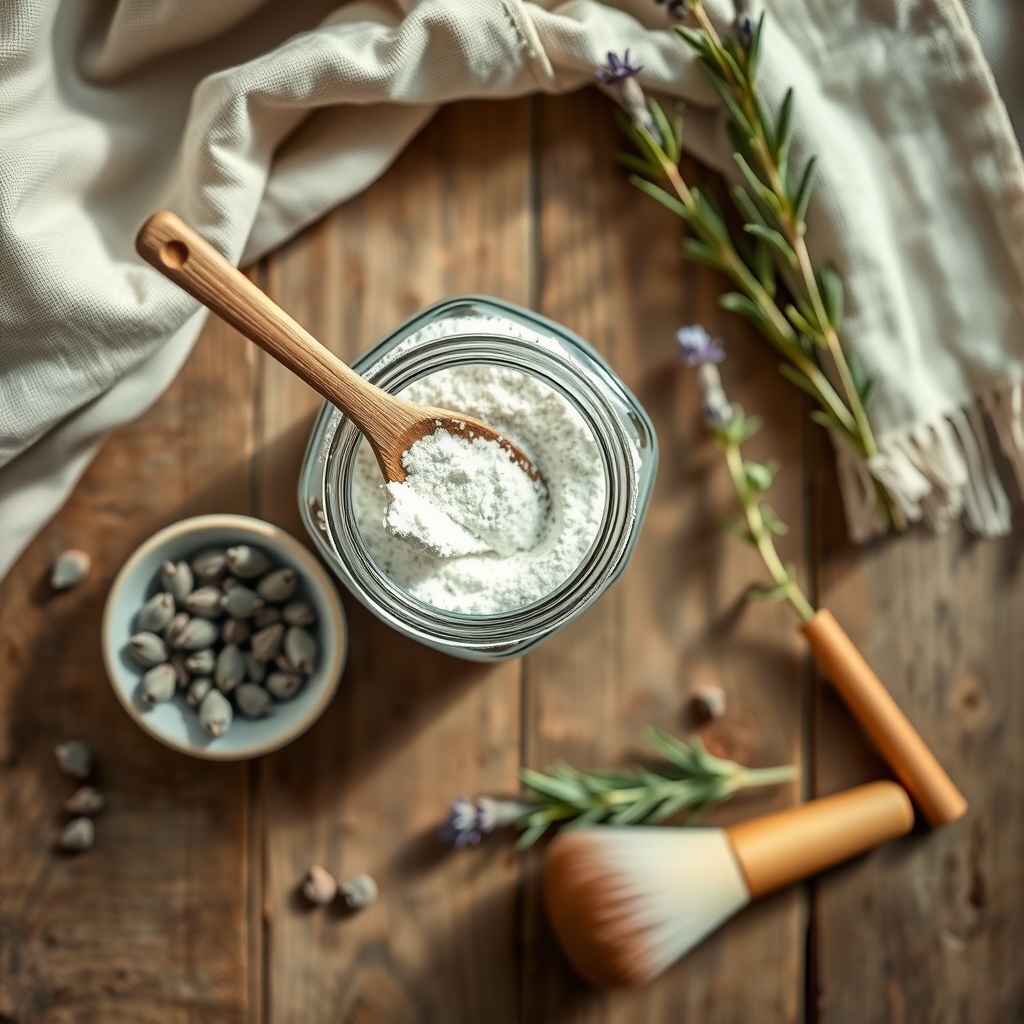
Dry shampoo is a powder or spray that absorbs oil at the roots, so your hair looks fresher on a day you cannot wash it. Many home recipes use a kitchen starch such as arrowroot or cornstarch, sometimes with dried herbs for a gentle scent.
It is cheap and simple, but it comes with a real caveat: dermatologists say homemade versions can cause problems, and no dry shampoo actually cleans your hair. This guide gives you the honest picture and a careful way to use a homemade mix if you still want to try one.
What the evidence says
Starch powders can absorb some oil, which is why they make roots look less greasy. But there is no research showing that homemade dry shampoo is good for your scalp, and dermatologists are cautious.
The American Academy of Dermatology (AAD) recommends using a store-bought dry shampoo rather than a homemade one. It warns that homemade mixes made with cornstarch, cocoa powder or baking soda can clump and clog pores, and that with cornstarch, bacteria can cause odor. Arrowroot is a similar kitchen starch, so it is sensible to treat it with the same caution.
Dried herbs add scent, not cleaning power. We could not find evidence that lavender or rosemary in a dry shampoo does anything for the scalp.
Simple Starch and Herb Dry Shampoo
You need
- arrowroot powder or cornstarch2 tbsp (about 15 g)
- dried lavender buds or dried rosemary, ground to a very fine powder and sifted1/2 tsp (optional)
Method
- Patch test first. Dab a little of the powder on the inside of your forearm and leave it for at least 48 hours. If you notice itching, redness or a rash, do not use it.
- Grind the dried herb as finely as you can in a clean spice grinder or mortar, then push it through a fine sieve. Mix it well with the starch in a small, dry, lidded jar. Leave out the herb if you prefer it unscented.
- Make a small batch only, keep it dry and throw it away if it gets damp or smells off.
- Dip a soft, clean brush into the powder, tap off the extra and dust a very small amount onto the oily roots only. Keep it away from your face and do not breathe in the powder.
- Wait a few minutes, then massage gently with your fingertips and brush or comb it out thoroughly.
- Wash your hair with shampoo and water after one or two uses.
Tips
- Less is more. Too much leaves hair dry, stiff and gritty, with visible white specks, especially on dark hair.
- We leave out baking soda and cocoa powder, which the AAD lists among homemade ingredients that can clump and clog pores.
- Clean your brush often so old powder and oil do not build up.
Dry shampoo is not a wash
The AAD stresses that dry shampoo only absorbs oil. It does not remove dead skin, microorganisms or the powder itself. Only shampoo and water do that, which helps prevent dandruff, infection and odor.
So the AAD suggests washing with regular shampoo and water after using dry shampoo once or twice. Relying on dry shampoo alone, without washing, can lead to seborrheic dermatitis, an itchy, scaly scalp rash. Leaving it in the hair can also contribute to breakage and shedding.
Wash as often as your scalp needs
How often you need to wash depends on your hair. The AAD says people with straight hair and an oily scalp may need to shampoo daily, while dry, curly, coily or thick hair often needs washing less often. If you need dry shampoo every day, your hair may simply need washing more often.
When you do wash, the AAD advises putting shampoo on your scalp rather than the full length of your hair, then using conditioner.
Questions people ask
Is arrowroot better than cornstarch for dry shampoo?
There is no research comparing them. Both are fine starches that absorb oil, and the same cautions apply: use very little and wash it out soon.
Can I use dry shampoo every day?
It is better not to. Dermatologists suggest washing with shampoo and water after one or two uses, because dry shampoo does not clean the scalp.
Will the herbs help my scalp?
Not as far as anyone knows. Ground lavender or rosemary only adds a light scent, so you can leave them out.
Sources
- Dry shampoo: Dermatologists' tips for getting your best results — American Academy of Dermatology
- Tips for healthy hair — American Academy of Dermatology
- Toxic and Non-toxic Plants: Lavender — ASPCA
This article is for general information only and is not medical advice. Herbs can interact with medicines and health conditions. Talk to a doctor or pharmacist before trying a herbal remedy, especially if you are pregnant, breastfeeding, giving it to a child, or taking any medication.