Passionflower Tea for Winding Down
A mild, grassy evening tea with a long history as a calming herb. Here is what the research shows, how to brew it, and the cautions that matter.
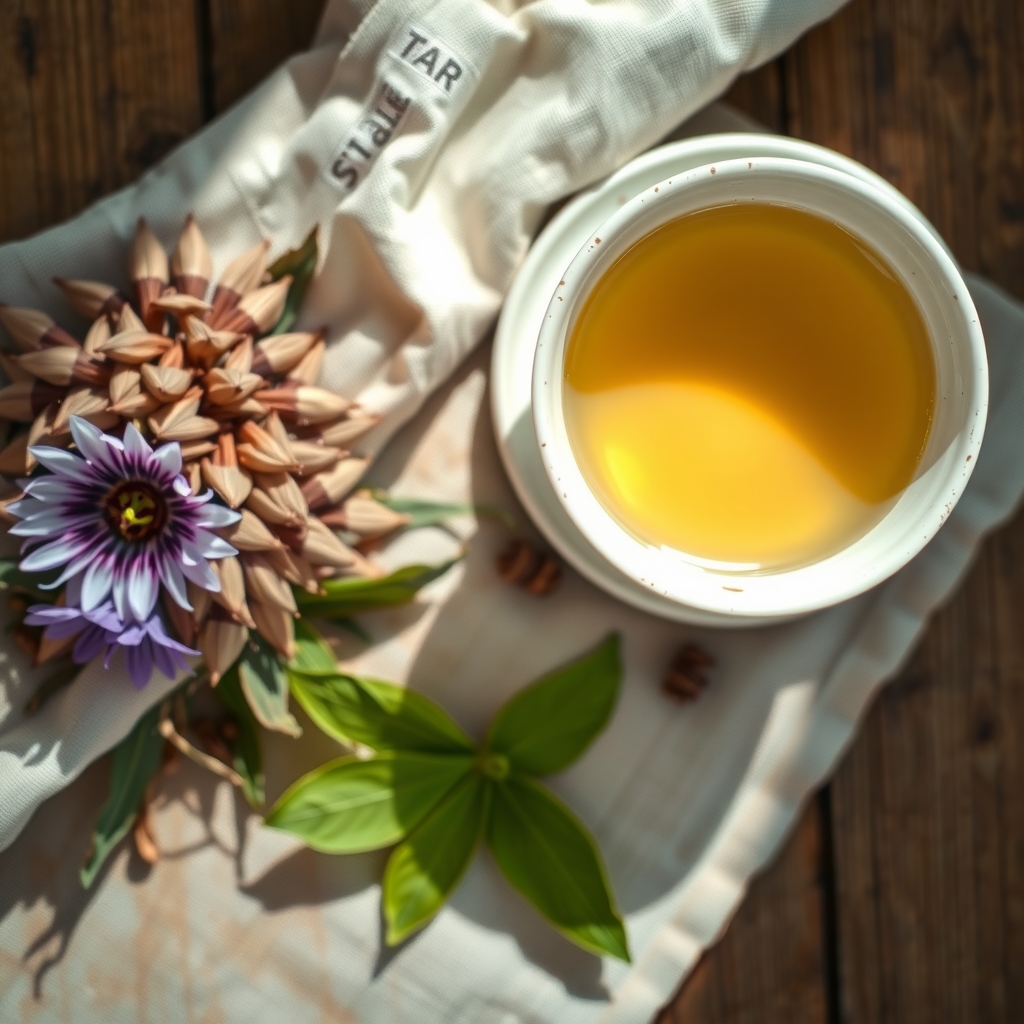
Passionflower is a climbing vine with striking purple and white flowers. It grows wild in the southeastern United States and in Central and South America, and it has a long history as a calming herb.
The tea is made from the dried leaves, stems and flowers. It tastes mild and slightly grassy, which makes it an easy addition to a wind-down routine. Here is what the evidence says, how to make it, and who should leave it alone.
Why people use it
Passionflower has traditionally been used as a sedative. Today it is most often used for feeling stressed or anxious and for trouble sleeping.
In Europe, the dried herb is recognized as a traditional herbal medicine for relief of mild symptoms of mental stress and to aid sleep, in adults and teenagers over 12.
Evening Passionflower Tea
You need
- dried, cut passionflower herb1 to 2 g (about 1 to 2 teaspoons)
- freshly boiled water150 ml (about 2/3 cup)
Method
- Put the dried passionflower in a cup or small teapot.
- Pour over 150 ml (about 2/3 cup) of water at a full boil, about 100°C (212°F).
- Cover and steep for 10 minutes.
- Strain and drink in the hour or so before bed, somewhere calm and dim.
Tips
- The European monograph for adults and teens over 12 uses 1 to 2 g of herb in 150 ml of boiling water, one to four times a day.
- For sleep, one cup in the evening is plenty to start with.
- The NCCIH says passionflower tea may be safe for up to 7 nights, so use it for short spells rather than every night.
- Buy dried passionflower sold as a herbal tea ingredient, and store it in a sealed jar away from light.
What the evidence says
The US National Center for Complementary and Integrative Health says passionflower has not been studied much. A small amount of research suggests it may increase total sleep time in adults with insomnia, but results on how fast people fall asleep and how well they stay asleep are mixed.
Some small studies also suggest it may ease anxiety, including nerves before surgery or dental work, but the conclusions are not definite.
The European Medicines Agency's herbal committee reached a similar view. Its approval rests on at least 30 years of safe traditional use. It found the published clinical studies too small and not well enough designed to draw firm conclusions.
So passionflower tea may help some people relax in the evening, but the evidence is limited. It is not a treatment for insomnia or an anxiety disorder.
Building a better wind-down
A cup of tea works best as one part of a routine. The NCCIH points to habits that support sleep: keeping a regular sleep schedule, avoiding caffeine, nicotine, alcohol and bright screens close to bedtime, getting outside in daylight, and sleeping in a quiet, cool, dark room.
Relaxation techniques before bed can be part of that plan too. Most adults need at least 7 to 8 hours of sleep a night.
Questions people ask
Does passionflower tea make you sleepy straight away?
Not reliably. Some people find it relaxing, but studies on how quickly it helps people fall asleep have had mixed results. Treat it as a calm part of your routine rather than a sleeping pill.
How long can I keep drinking it?
Keep it short. The NCCIH says the tea may be safe for up to 7 nights, and European guidance says to see a doctor if symptoms last more than 2 weeks. If you need help sleeping most nights, that is worth a conversation with your doctor.
Can I drink it with chamomile or other calming teas?
European guidance covers passionflower on its own, so there is no official dose for blends. If you combine several calming herbs, keep amounts modest and do not drive afterward.
Sources
- Passionflower: Usefulness and Safety — National Center for Complementary and Integrative Health
- Passion flower: summary for the public — European Medicines Agency
- Community herbal monograph on Passiflora incarnata L., herba — European Medicines Agency
- Sleep Disorders and Complementary Health Approaches — National Center for Complementary and Integrative Health
This article is for general information only and is not medical advice. Herbs can interact with medicines and health conditions. Talk to a doctor or pharmacist before trying a herbal remedy, especially if you are pregnant, breastfeeding, giving it to a child, or taking any medication.