Lavender Laundry Rinse: A Gentle Scented Final Rinse
A cooled lavender infusion added to the final rinse can leave towels and sheets lightly scented. It is a pleasant touch, not a disinfectant, and a few safety points are worth knowing first.
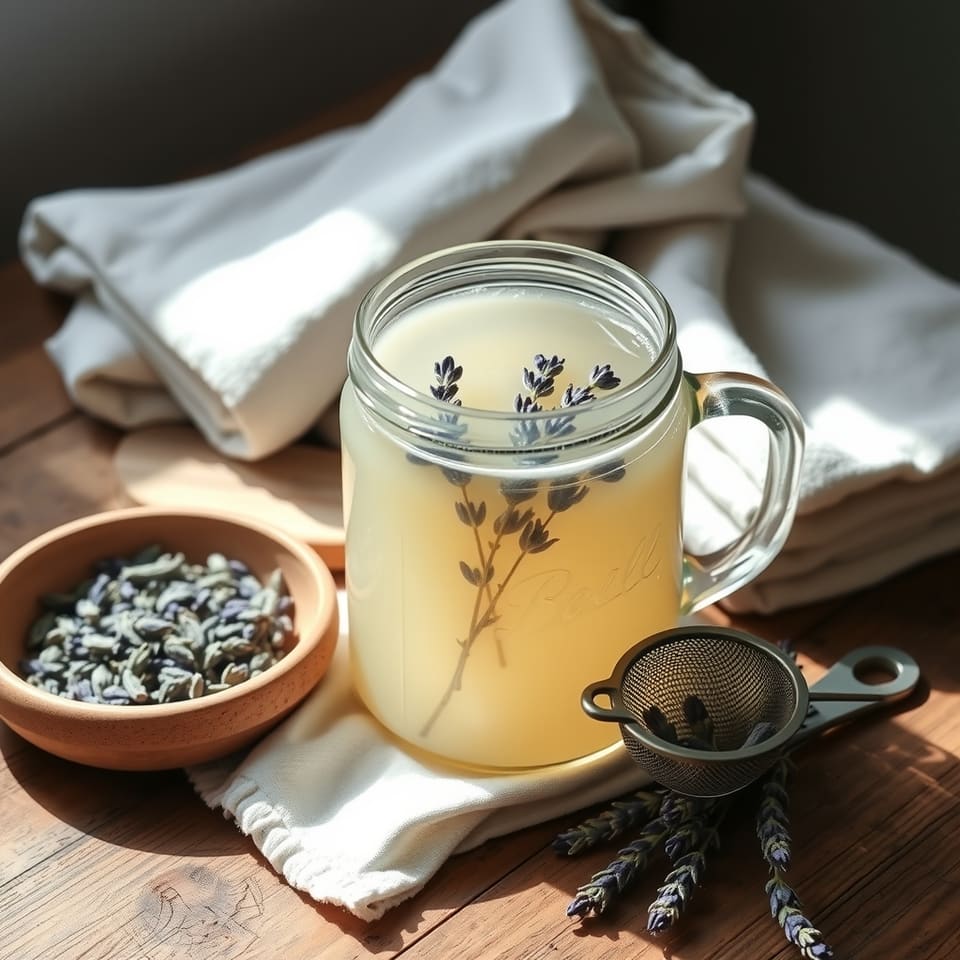
Many people love the soft smell of lavender on freshly washed sheets. You can get a light version of it at home with dried lavender buds, hot water and a fine strainer, with no need for heavily perfumed products.
This rinse is simple, but it has limits. It scents laundry gently and does nothing to sanitize it. Here is how to make it, what the research does and does not say, and who should leave it out.
How a lavender rinse works
You steep dried lavender in hot water, much like making tea, then strain the liquid very well and let it cool. A small amount goes into the final rinse or the fabric softener compartment of your washing machine, after the detergent has done the cleaning.
The scent that stays on fabric is faint and fades within days. Use it on towels, sheets and pillowcases rather than on delicate or light-colored items until you have tested it on a hidden corner.
Lavender Laundry Rinse
You need
- dried culinary lavender buds, food-grade and free of pesticides2 tablespoons (about 4 g)
- water, just off the boil500 ml (2 cups)
- fine strainer, coffee filter or clean cotton cloth1
Method
- Place the dried lavender buds in a heatproof jar and pour in the hot water.
- Cover and steep for 20 minutes, then strain through a fine strainer lined with a coffee filter or clean cloth. Strain twice if any bits remain.
- Let the liquid cool completely.
- Add 60 to 120 ml (1/4 to 1/2 cup) to the fabric softener compartment of a full load, or to the final rinse by hand.
- Dry the laundry as usual. Make a fresh batch each time and pour away any leftovers.
Tips
- Start with the smaller amount. The scent is faint, and more liquid can leave a slight tint on white fabric.
- Strain well. Fine plant bits can stick to towels and clog small machine parts.
- Never mix the rinse with bleach, and check your washing machine manual before adding anything to the softener compartment.
What the evidence says
We found no study showing that a lavender rinse cleans, disinfects or removes odor-causing germs from laundry. Do not rely on it for that. Wash soiled laundry with detergent as the garment care label says.
Lavender is often linked with sleep and calm. NCCIH says studies suggest an oral lavender oil product might be beneficial for anxiety, but those studies had limits such as small size. For sleep, NCCIH says it is unclear whether aromatherapy with lavender oil helps sleep quality or insomnia. A faintly scented pillowcase may feel relaxing, but it is not a sleep treatment.
Who should skip it
NCCIH states that topical products containing lavender may cause allergic skin reactions in some people, and it reports a few cases of breast tissue swelling in children who used topical lavender products. The cause is unclear, but it is a good reason to keep lavender rinse away from baby and children's clothes.
If you have eczema, very sensitive skin or a known fragrance allergy, skip the rinse or test it first. Little is known about lavender in pregnancy and breastfeeding, so if you are pregnant, ask your health care provider before using lavender products on items that touch your skin.
Questions people ask
Can I put dried lavender straight into the dryer?
We do not recommend it. Loose buds can stick to fabric and hot dried herbs are a fire risk. Use a rinse, or keep a sachet in the linen cupboard instead.
Does lavender rinse replace fabric softener?
It does not soften fabric in any proven way. It only adds a light scent, so use it for fragrance, not for performance.
How long does the lavender scent last on sheets?
Usually a few days, and it is faint. For a stronger smell, store a sachet of dried buds with the folded linens.
Sources
This article is for general information only and is not medical advice. Herbs can interact with medicines and health conditions. Talk to a doctor or pharmacist before trying a herbal remedy, especially if you are pregnant, breastfeeding, giving it to a child, or taking any medication.