Hops Tea for Sleep: What to Know
The same green cones that flavor beer have a long history as a bedtime herb. Here is how to brew hops tea, what the research shows, and who should skip it.
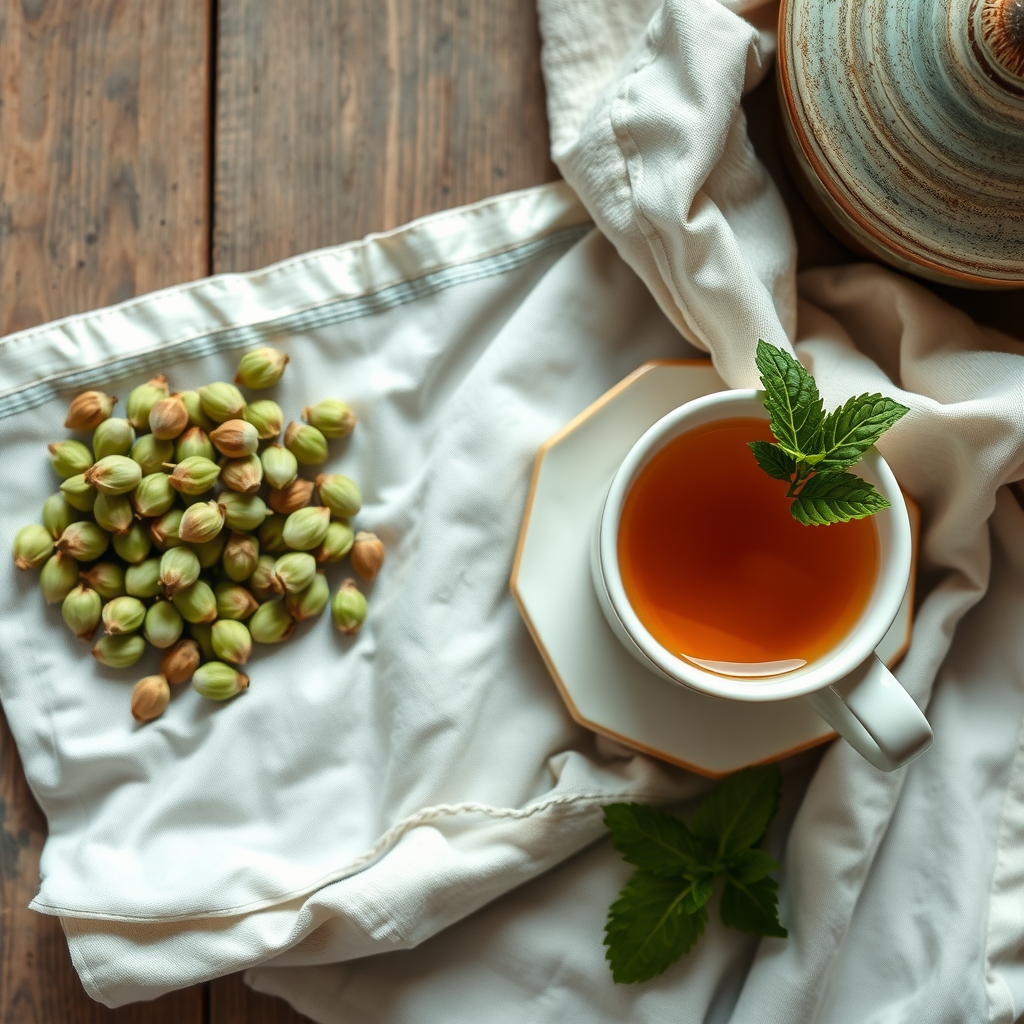
Hops are the papery green cones of the hop plant, Humulus lupulus. Most of the world's hops go into beer, where they add bitterness and aroma. The dried cones also have a long history as a calming herb.
Brewed as a tea, hops taste bitter and floral, a little like a very light beer without the alcohol. Here is how to make a bedtime cup, what the evidence really says, and the cautions to know first.
Why people use it
In Europe, hop strobiles, the dried cones, are recognized as a traditional herbal medicine for relief of mild symptoms of mental stress and as an aid to sleep. That recognition is based on long-standing use.
Hops are also promoted for menopausal symptoms, joint pain and blood sugar control, but the research for those uses is small and early.
Bedtime Hops Tea
You need
- dried, cut hop cones0.5 to 1 g (about 1 to 2 teaspoons, loosely packed)
- freshly boiled water200 ml (about 3/4 cup)
- fresh mint or lemon balm, to soften the bitterness2 or 3 leaves (optional)
Method
- Put the dried hops, and the mint or lemon balm if using, in a cup or small teapot.
- Pour over 200 ml (about 3/4 cup) of water at a full boil, about 100°C (212°F).
- Cover and steep for 10 minutes, then strain well.
- Drink it 30 to 60 minutes before bed.
Tips
- For sleep, the European monograph uses 0.5 to 1 g of hops in 150 to 200 ml of boiling water, 30 to 60 minutes before bedtime.
- Hops are light and fluffy, so a gram fills more of the spoon than you might expect. Weigh it once if you can.
- Hops lose their aroma over time. Store them in a sealed jar in a cool, dark place.
- If the bitterness is too much, a small spoon of honey is fine for adults.
What the evidence says
Hops are rarely studied on their own. Most sleep research has used hops combined with valerian. Memorial Sloan Kettering Cancer Center notes that this combination may improve sleep in people with mild insomnia, but calls the evidence preliminary and says more studies are needed.
For hops alone, the same source says data for insomnia are too limited to draw conclusions. The European approval rests on traditional use rather than strong clinical trials.
So a cup of hops tea may help you feel ready for bed, but there is little proof it improves sleep by itself. It is not a treatment for insomnia.
Habits that do more than any tea
The NCCIH highlights steps that support sleep for most people: going to bed and getting up at regular times, avoiding caffeine, nicotine, alcohol and bright artificial light close to bedtime, and spending time outside during the day.
A quiet, cool, dark bedroom helps too, as do relaxation techniques as part of a regular routine. Adults generally need 7 or more hours of sleep a night.
Questions people ask
Is drinking beer the same as drinking hops tea?
No. Beer contains alcohol, and the NCCIH advises avoiding alcohol close to bedtime. Hops tea is alcohol-free.
Should I combine hops with valerian?
Most of the research has used that pairing, but it has been studied as specific prepared products, not homemade tea. If you want to try both, read our valerian guide first and check with a pharmacist if you take any medicines.
Why does hops tea taste so bitter?
The same compounds that give beer its bite end up in your cup. Adding mint or lemon balm, or a little honey, makes it easier to drink.
Sources
- Community herbal monograph on Humulus lupulus L., flos — European Medicines Agency
- Hops — Memorial Sloan Kettering Cancer Center
- Sleep Disorders and Complementary Health Approaches — National Center for Complementary and Integrative Health
This article is for general information only and is not medical advice. Herbs can interact with medicines and health conditions. Talk to a doctor or pharmacist before trying a herbal remedy, especially if you are pregnant, breastfeeding, giving it to a child, or taking any medication.