Green Tea Hair Rinse: What Is Known
Green tea rinses are often promoted for thicker, healthier hair. The idea comes mostly from lab research on one green tea compound, not from studies of people using a rinse. Here is what is known and a simple, gentle way to try it.
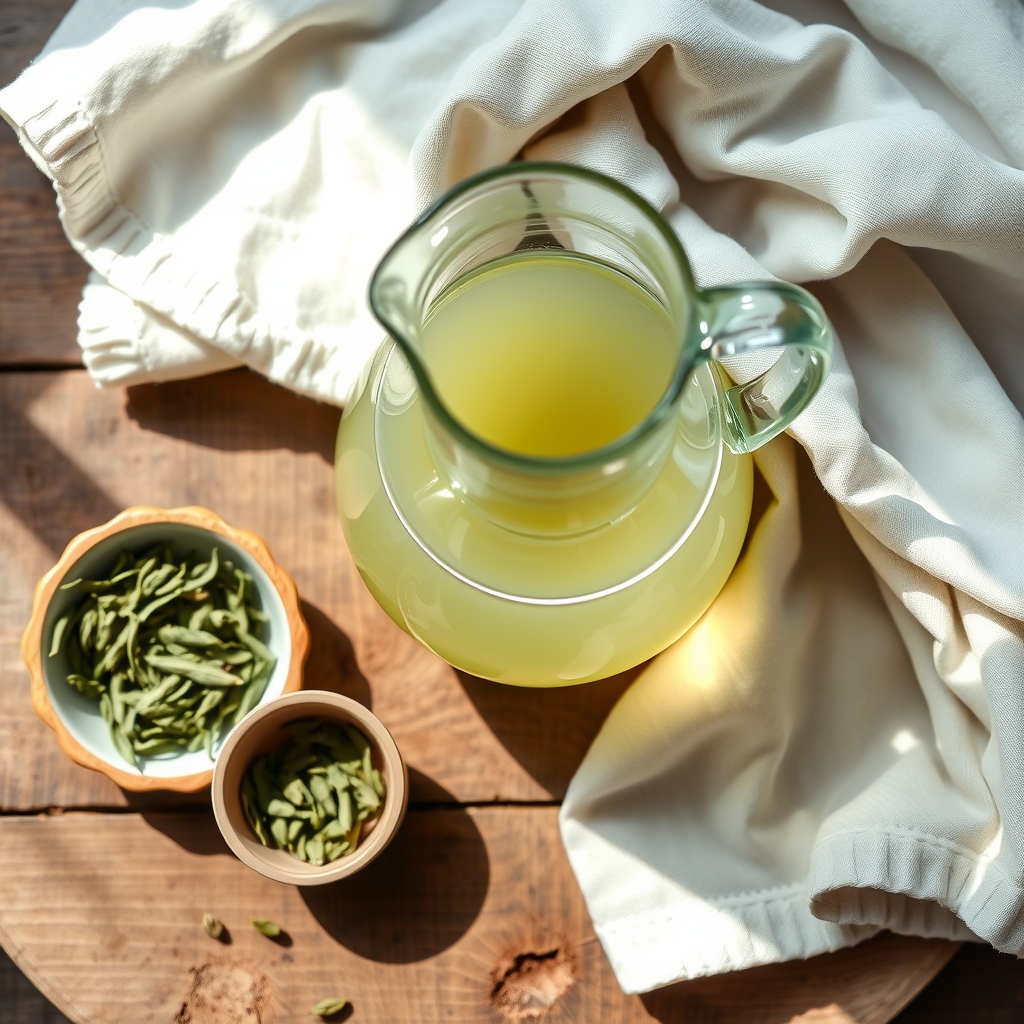
Green tea is one of the world's favorite drinks, and it has found its way into many hair products. At home, some people brew a pot, let it cool and pour it over their hair after shampoo.
A cool tea rinse is pleasant and low risk for most people, but the claims around it go far beyond the evidence. This guide explains where the hair idea comes from, what has and has not been shown, how to make a rinse, and why thinning hair is worth a visit to a dermatologist.
Where the idea comes from
Green tea is rich in plant compounds called catechins. The best known is EGCG (epigallocatechin gallate). Researchers have been curious about whether EGCG affects hair follicles.
A 2024 review of natural options for pattern hair loss describes EGCG as a major green tea compound that may stimulate hair growth and may block an enzyme, 5-alpha-reductase, involved in pattern hair loss. These ideas come from laboratory and early research, not from tested results in people using a tea rinse.
Cool Green Tea Hair Rinse
You need
- water500 ml (2 cups)
- plain green tea2 tsp loose leaves or 2 tea bags
Method
- Heat the water until it is hot but not boiling, around 80 °C (175 °F).
- Pour it over the tea and steep for 3 to 5 minutes, then strain or remove the bags.
- Let it cool completely to room temperature or a little cooler. Never pour hot liquid on your scalp.
- Patch test the cooled tea on the inside of your forearm and leave it for at least 48 hours. If you see redness, itching or swelling, do not use it.
- Shampoo as usual and rinse. Tilt your head back, close your eyes and pour the cooled tea slowly over your hair and scalp.
- Leave it for a few minutes, then rinse with plain water, or leave it in if your scalp feels comfortable. Use it once or twice a week.
Tips
- Make a fresh batch each time and throw away any leftover after a day in the fridge.
- If you have very light or bleached hair, try it on a small hidden strand first.
- Do not add essential oils to the rinse.
What the evidence says
There is no good clinical evidence that rinsing your hair with green tea makes it grow, stops it falling out or makes it thicker. Early lab findings on a purified compound do not tell us what happens when you pour diluted tea over your head for a minute.
The US National Center for Complementary and Integrative Health (NCCIH) does not list any proven hair or skin use for green tea. The one green tea product it mentions for the skin is a specific prescription ointment for genital warts, which is unrelated.
So enjoy a green tea rinse as a cosmetic ritual if you like it, but do not rely on it for hair loss.
What actually helps hair loss
The American Academy of Dermatology (AAD) says treating hair loss starts with finding the cause, ideally with a board-certified dermatologist, and that starting early gives the best chance of regrowth. Some hair loss, such as after pregnancy or illness, settles on its own.
Treatments with real evidence include minoxidil, which can help early hair loss but usually takes 6 to 12 months to show results, and finasteride for male pattern hair loss. The AAD also advises taking vitamins such as biotin, iron or zinc only if a blood test shows you lack them.
Questions people ask
Does a green tea rinse make hair grow?
There is no good evidence that it does. Interest comes from early research on one green tea compound, EGCG, not from studies of people using a rinse.
Is drinking green tea good for my hair?
No study we found shows that drinking green tea helps hair loss. It can be part of a healthy diet, but get thinning hair checked by a dermatologist.
Can a green tea rinse harm my hair or scalp?
For most people a cool, plain tea rinse is low risk, but anyone can react to a new product. Patch test first and stop if you notice irritation.
Sources
- Green Tea: Usefulness and Safety — NCCIH
- An Overview of Commonly Used Natural Alternatives for the Treatment of Androgenetic Alopecia, with Special Emphasis on Rosemary Oil — Clinical, Cosmetic and Investigational Dermatology (PMC)
- Hair loss: Diagnosis and treatment — American Academy of Dermatology
This article is for general information only and is not medical advice. Herbs can interact with medicines and health conditions. Talk to a doctor or pharmacist before trying a herbal remedy, especially if you are pregnant, breastfeeding, giving it to a child, or taking any medication.