Fruit Fly Trap: How to Make One That Actually Works
A jar of cider vinegar will catch fruit flies in a day or two. But the trap is only half the job. Here is how to make one, and how to find the forgotten onion or damp mop that is breeding them.
You leave a few bananas on the counter, and suddenly there is a small cloud of tiny flies over the fruit bowl. Fruit flies turn up in kitchens all over the world, especially in late summer and fall when there is plenty of ripe produce around.
A homemade trap is cheap, easy and does catch them. University pest experts are clear, though, that a trap on its own rarely ends the problem. The real fix is finding where they breed.
Why fruit flies appear so fast
The common fruit fly is about 3 mm long, tan to brownish black, usually with bright red eyes. Females lay their eggs on the surface of overripe or fermenting food. According to University of Kentucky entomologists, one female can lay around 500 eggs, and the step from egg to adult takes about a week, a little longer when it is cool.
The larvae feed for five to six days, often near the surface of the fruit, then crawl somewhere drier to turn into adults. That is why a small problem can become a big one in a couple of weeks. Flies often arrive on produce brought home from the shop or garden, or slip in through ordinary window screens.
Cider Vinegar Fruit Fly Trap
You need
- apple cider vinegar60 to 90 ml (1/4 to 1/3 cup)
- liquid dish soap1 drop
- small glass jar or glass1
- plastic wrap or a small plastic bag1 piece
- rubber band1
- toothpick or skewer1
Method
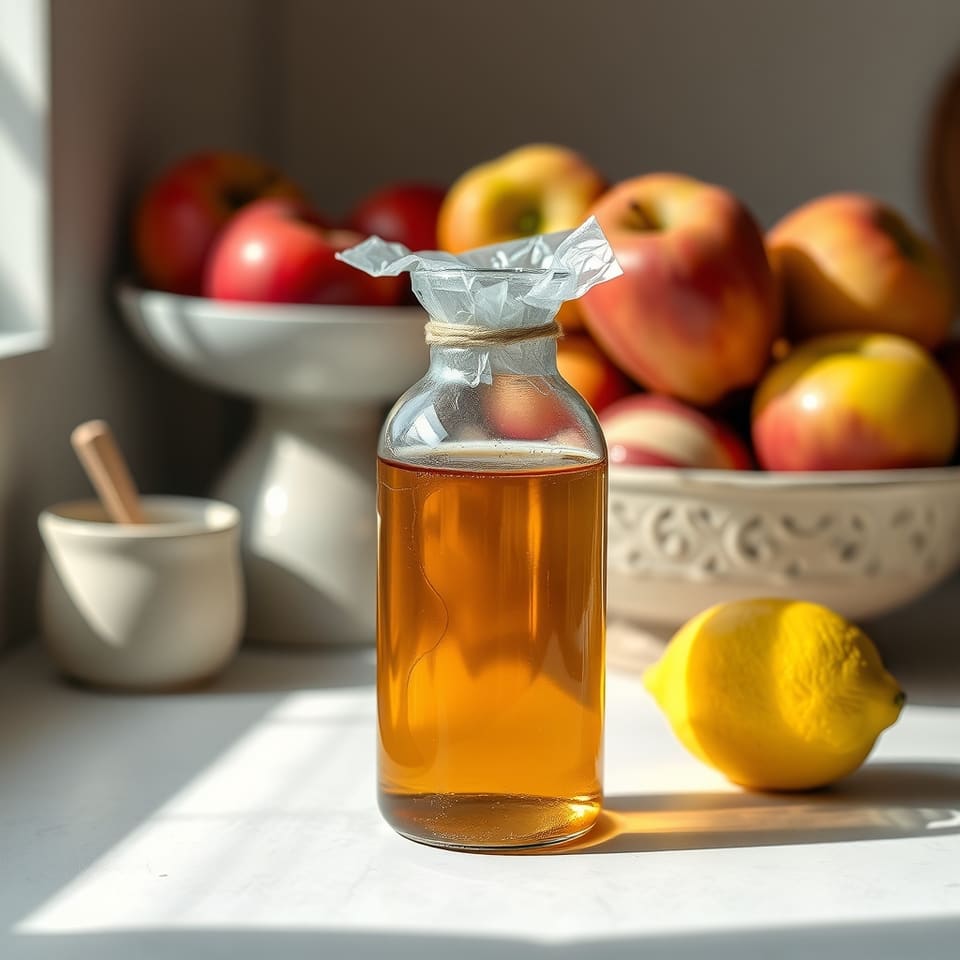
- Pour the cider vinegar into the jar and add one drop of dish soap. Stir gently so it does not foam.
- Stretch plastic wrap tightly over the top and secure it with the rubber band.
- Poke a few tiny holes in the wrap with a toothpick. Flies can find their way in, but struggle to get out.
- Set the trap where you see the most flies, such as beside the fruit bowl or near the sink.
- Check it daily. Empty, rinse and refill it every few days, or sooner if it is full.
Tips
- No plastic wrap? Roll a sheet of paper into a cone, leave a small opening at the tip, and set it in the jar with the narrow end pointing down.
- A splash of leftover wine or a little fruit juice also works as bait, since fruit flies are drawn to both.
- Make two or three traps if flies are spread around the kitchen.
- Keep fruit in the fridge once it is ripe, cut away damaged spots, and rinse bottles and cans before they go into recycling.
Find the breeding spot
Fruit flies are drawn to ripe fruit, but also to wine, beer, fruit juice and vinegar. They can breed in any moist film of fermenting food. Look beyond the fruit bowl: drains and garbage disposals, recycling bins with unrinsed bottles and cans, trash cans, compost caddies, damp mops and cleaning cloths.
Small things matter. Kentucky extension notes that a single forgotten potato or onion, or some spilled juice under the fridge, can produce large numbers of flies. Check the back of cupboards, under appliances and inside wastebaskets for fruit cores.
To test a drain, tape a clear plastic bag over the opening overnight. If flies are breeding there, newly emerged adults will be caught in the bag by morning.
What the evidence says
Vinegar traps work in the sense that they catch adult flies, which is why university extension services suggest them. The University of New Hampshire Extension is frank, however, that traps are far less effective than good sanitation, because new flies keep hatching from any breeding spot you have missed.
The same goes for sprays. Kentucky extension explains that insecticides aimed only at adults will not solve the problem while breeding continues. Remove the source first. Then use traps to mop up the remaining adults.
Questions people ask
Do I really need the dish soap?
The University of Maryland Extension recipe includes one drop of dish soap, and it is worth adding. Use only a drop, though. More can make the mixture foam and smell of soap rather than vinegar.
How long until the fruit flies are gone?
Their life cycle is short, about a week from egg to adult, so once every breeding spot is gone you should see far fewer flies within a week or two. If new flies keep appearing, there is still a source somewhere.
Are fruit flies harmful?
They are mainly a nuisance, but they can carry bacteria onto food. Keep food covered or refrigerated and throw away anything they have been breeding in.
Sources
- Fruit Flies (Entfact-621) — University of Kentucky Entomology
- Fruit Flies — UNH Cooperative Extension
- Common Fruit Fly — University of Maryland Extension
This article is for general information only and is not medical advice. Herbs can interact with medicines and health conditions. Talk to a doctor or pharmacist before trying a herbal remedy, especially if you are pregnant, breastfeeding, giving it to a child, or taking any medication.