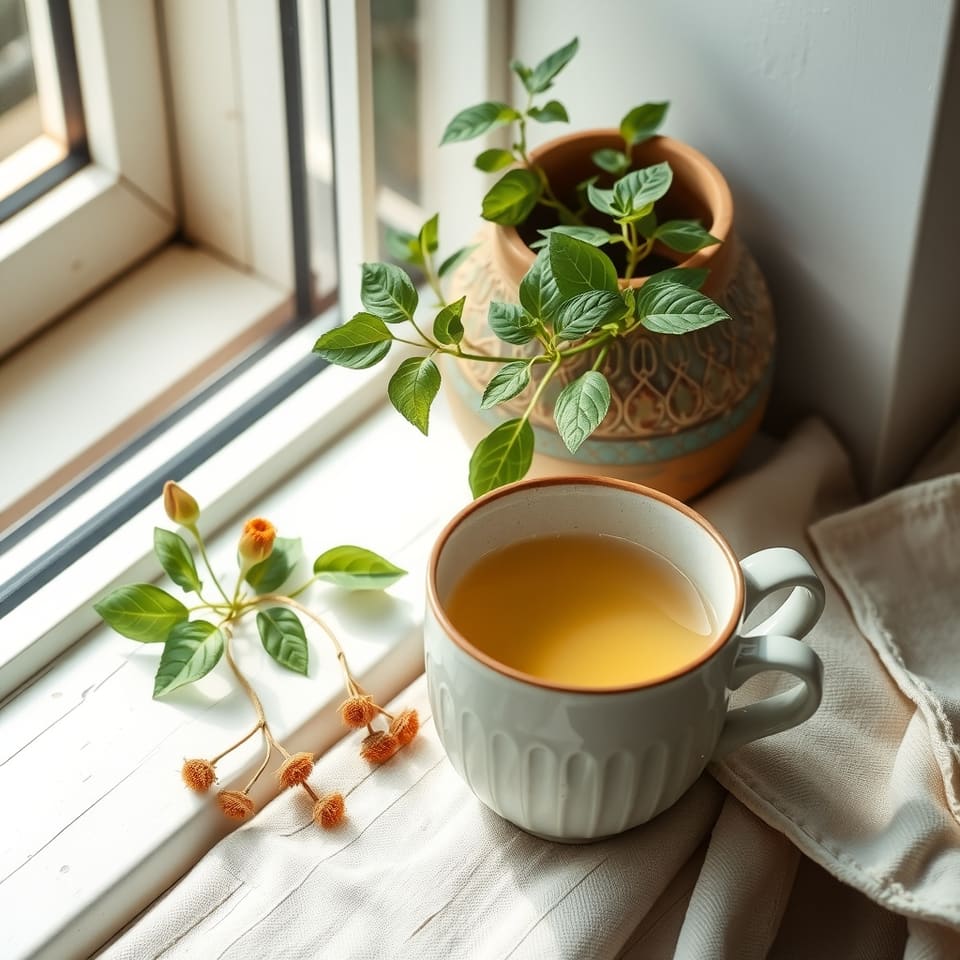
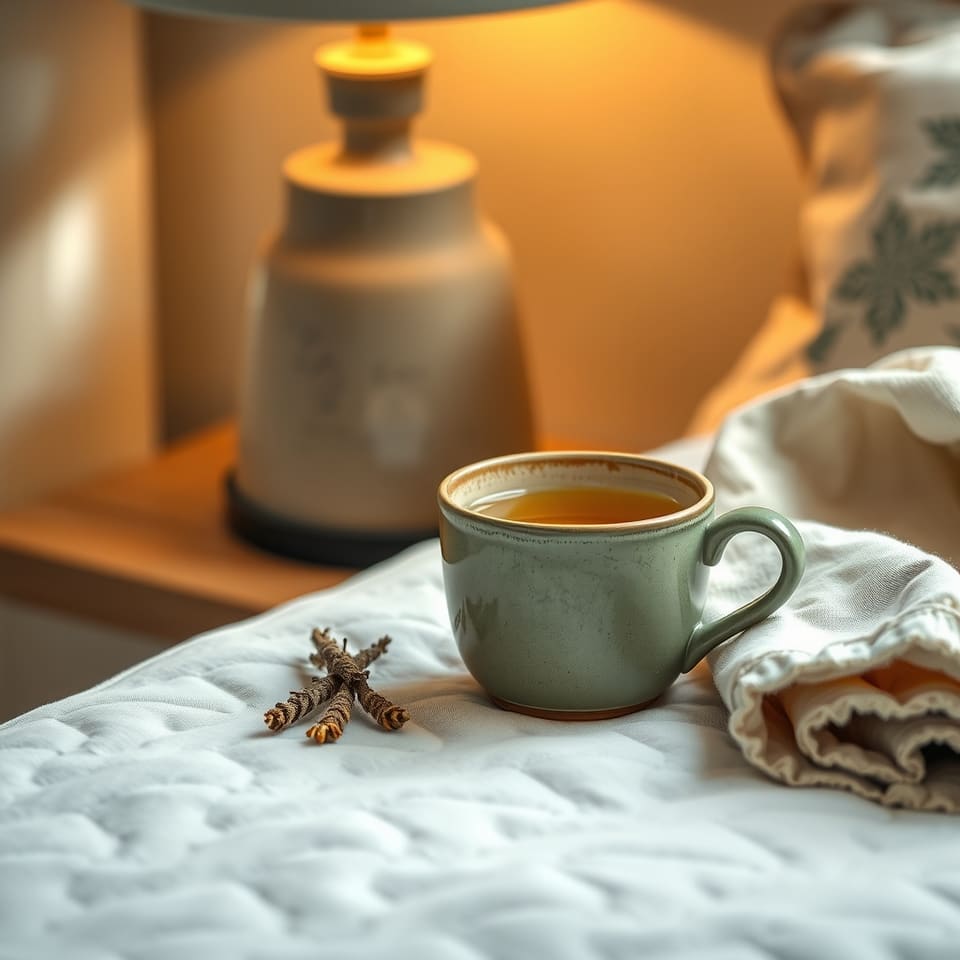
Evening Relaxation Routine: 10 Minutes of Tea and Breath
You do not need an hour or an app to unwind. Use the few minutes your tea needs to steep for slow breathing and gentle movement, then sit down with the cup.
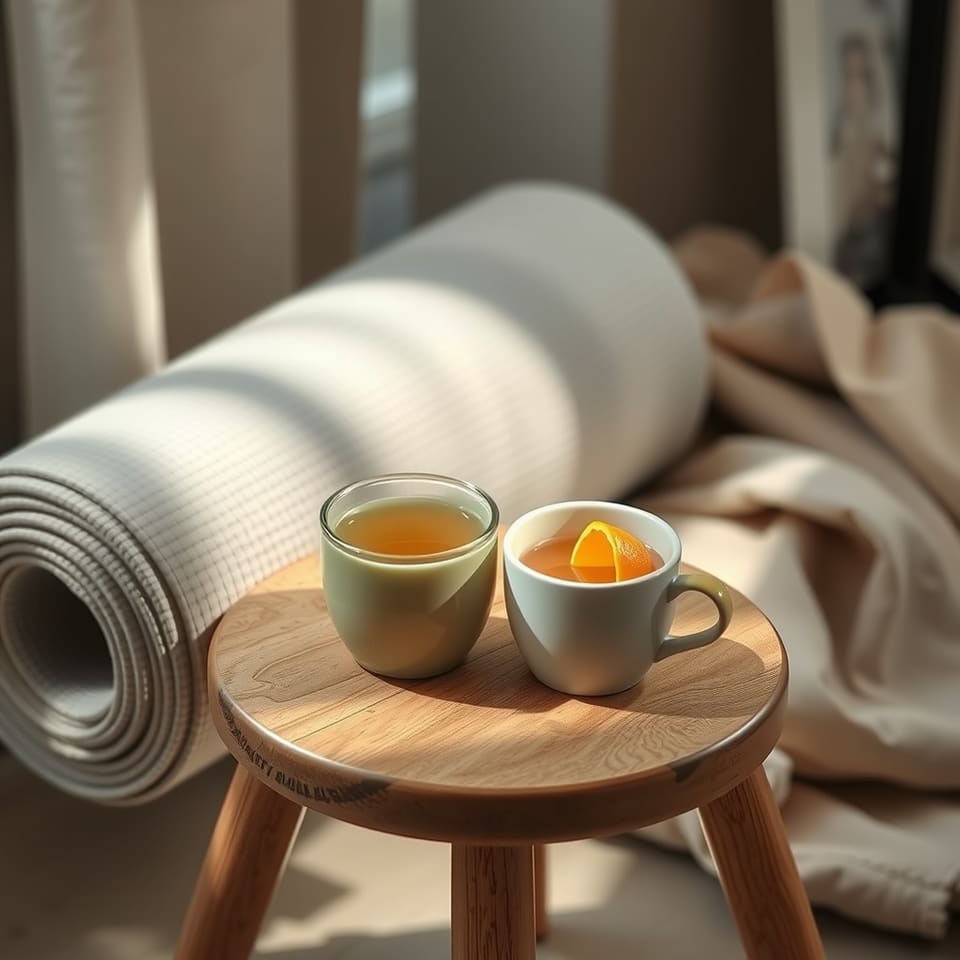
Most evenings end in a rush: dishes, messages, tomorrow's plans. Then we expect our minds to switch off the moment the light goes out. A short, repeatable routine can act as a bridge between the busy part of the day and bed.
This one takes about ten minutes and fits into the time a cup of herbal tea needs to steep. It borrows from the relaxation methods sleep specialists teach, plus a few slow stretches of the kind you might know from a gentle Pilates class. It is not a sleep treatment, but it is an easy habit to start tonight.
The 10-minute routine, step by step
Minutes 0 to 1: put the kettle on, dim the main lights and put your phone in another room or face down. The NHS advises against using screens right before bed.
Minutes 1 to 6: while the tea steeps, sit or lie down comfortably and breathe slowly. Johns Hopkins Medicine describes a simple version: close your eyes if you like, and let each breath travel down into your belly for about five minutes. Some people silently repeat a short calming phrase as they breathe.
Minutes 6 to 8: progressive muscle relaxation. Starting with your face and neck and moving down to your feet, tense one group of muscles as you breathe in, then let it go as you breathe out. Johns Hopkins Medicine recommends repeating any area that still feels tight.
Minutes 8 to 10: two or three slow, gentle stretches you already know well, such as lying on your back and hugging your knees, or a slow roll down through the spine, as many people learn in Pilates. Move slowly, breathe out as you stretch and keep everything comfortable. Then strain your tea and sit with it.
Chamomile and Orange Peel Cup
You need
- water, just off the boil220 ml (scant 1 cup)
- dried chamomile flowers, or 1 chamomile tea bag1 to 2 tsp
- thin strip of unwaxed orange peel, white pith removed1
Method
- Put the chamomile and orange peel into a cup or small teapot.
- Pour over the hot water, cover with a saucer to keep the aroma in, and start your breathing.
- After about 8 to 10 minutes, strain the tea. It will have cooled to a comfortable sipping temperature.
- Sit down and drink it slowly, without screens.
Tips
- A longer steep gives a stronger, slightly more bitter cup. If you prefer it lighter, strain it after 5 minutes and let it rest while you finish the routine.
- Keep the cup small if night time trips to the toilet wake you.
- Swap the orange peel for a few thin slices of fresh apple for a softer, sweeter flavor.
Keep it gentle, not a workout
The NHS advises against exercising in the 4 hours before bed, so this is not the time for a hard session. Think small, slow movements that leave you warmer and looser, not out of breath.
The same NHS advice suggests winding down for at least an hour before bed, getting up at the same time every day and avoiding tea, coffee and alcohol in the 6 hours before bed. Your ten minutes can be the start of that wind-down hour, followed by a book, a bath or quiet music.
What the evidence says
Relaxation techniques are widely used, but the evidence that they help on their own is limited. NCCIH, the US National Center for Complementary and Integrative Health, says there is a small amount of low-quality evidence that relaxation techniques alone help chronic insomnia. They are also often included in cognitive behavioral therapy for insomnia (CBT-I), which NCCIH calls the most strongly recommended treatment for insomnia.
Practice seems to matter. Johns Hopkins Medicine suggests doing slow breathing and progressive muscle relaxation every day for two weeks, in sessions of 20 to 25 minutes, and rating your stress from 0 to 10 before and after. Ten minutes is a good start, and you can lengthen it on evenings when you have time.
For gentle movement, NCCIH says yoga may help sleep quality, but not necessarily insomnia, and tai chi may improve sleep quality, especially in older adults. The sources we checked do not report on Pilates and sleep, so treat the stretches as a way to release the day rather than a sleep cure.
Chamomile is a traditional bedtime tea in many countries, but NCCIH says trials have not shown conclusively that it helps insomnia. Enjoy it as a warm, caffeine-free part of the ritual.
Questions people ask
Can I do the routine in bed?
Yes. The breathing and muscle relaxation work well lying down. Do the stretches on the floor or bed if that is comfortable, and drink your tea before you settle down.
What if my mind wanders while I breathe?
That is normal. Notice it, then gently bring your attention back to the breath in your belly. Over time it usually gets easier.
Do I have to use chamomile?
No. Any caffeine-free drink you enjoy works. The routine is the point, not the herb.
Sources
- Sleepless Nights? Try Stress Relief Techniques — Johns Hopkins Medicine
- Sleep Disorders and Complementary Health Approaches — NCCIH
- Insomnia — NHS
This article is for general information only and is not medical advice. Herbs can interact with medicines and health conditions. Talk to a doctor or pharmacist before trying a herbal remedy, especially if you are pregnant, breastfeeding, giving it to a child, or taking any medication.