Chamomile vs Linden vs Lemon Verbena: Which to Choose?
Three gentle evening teas, three different personalities. Here is how chamomile, linden and lemon verbena compare, what Europe's herbal medicine experts actually recognize each one for, and who should skip which.

Look along the tea shelf in shops from Europe to the Americas and you will often find the same three calming herbs. Chamomile is the best known. Linden blossom is a favorite evening cup in many European homes. Lemon verbena, with its sharp lemon scent, is grown in gardens in many warm countries.
They are often sold as if they do the same job. They do not quite. They taste different, they are recognized for different things, and their safety notes are not the same. This guide puts them side by side so you can choose with your eyes open.
Three cups, three personalities
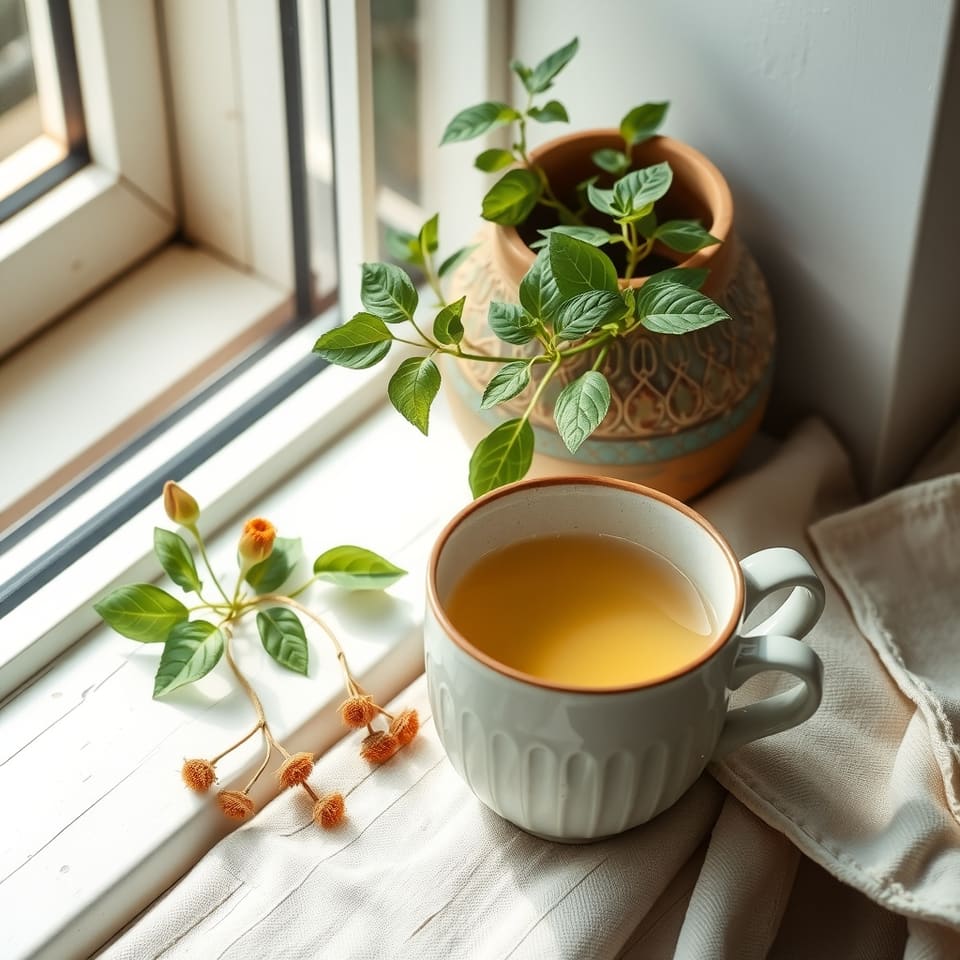
Chamomile is made from small, daisy-like flower heads. It tastes soft, slightly sweet and a little like apples, and it turns pale yellow in the cup.
Linden, also called lime flower, is made from the dried flowers of the linden tree. It brews into a golden tea with a mild, honeyed, floral taste.
Lemon verbena is made from the leaves of a shrub. It smells and tastes strongly of lemon, without the sourness, and is the brightest of the three.
Choose-Your-Herb Calming Infusion
You need
- water, freshly boiled150 to 200 ml (2/3 to 3/4 cup)
- dried lemon verbena leaves in 200 ml, for an evening cup1 to 2 g (1 to 2 tsp)
- dried linden flowers in 150 ml, for a stressful dayor 1.5 g (1 to 2 tbsp, it is light)
- dried chamomile flowers in 150 ml, after a mealor 1.5 to 3 g (1 to 2 tsp)
Method
- Pick one herb. Put it in a cup or small teapot.
- Pour over the boiling water and cover with a saucer so the aroma stays in the cup.
- Steep for 5 to 10 minutes, then taste. A longer steep gives a stronger cup.
- Strain and let it cool to a comfortable temperature before drinking.
- For sleep, the EMA's traditional lemon verbena use is one cup about half an hour before bed.
Tips
- Weigh the herb on a small kitchen scale if you can. Light, fluffy flowers like linden are hard to measure by the spoon.
- Try a mix: a pinch of lemon verbena brightens the softer taste of linden.
- Store dried herbs in a closed jar away from light, heat and steam.
What each one is traditionally used for
In Europe, a committee of the European Medicines Agency (EMA) reviews herbs with a long history of use and lists what each one is traditionally used for. These are traditional uses based on long experience, not proof from clinical trials.
Surprisingly, chamomile's EMA listing is not about sleep or stress at all. The EMA recognizes chamomile tea for minor stomach complaints such as bloating and mild cramps, for cold symptoms, and as a rinse for minor mouth and throat irritation.
Linden is listed for two uses: relief of common cold symptoms and relief of mild symptoms of mental stress.
Lemon verbena is the only one of the three listed to aid sleep. The EMA lists it for mild symptoms of mental stress, to aid sleep, and for mild digestive complaints such as bloating and wind.
So, as a rough guide: choose lemon verbena for a bedtime cup, linden for a stressful day or the start of a cold, and chamomile after a heavy meal.
What the evidence says
For all three, good human studies are scarce. The EMA listings rest on traditional use, not on proof that they work.
Chamomile has had the most research, and the results for sleep are disappointing. The US National Center for Complementary and Integrative Health (NCCIH) reports that a 2019 review found only one study of chamomile for insomnia, and it showed no benefit. Some early studies suggest a chamomile supplement might help generalized anxiety, but that is not the same as a cup of tea.
Enjoy any of these teas as a calm evening ritual, and do not expect them to fix a sleep problem.
Who should choose which, or none
Chamomile belongs to the daisy family. NCCIH notes a higher risk of allergic reactions in people allergic to ragweed, chrysanthemums, marigolds or daisies, and the EMA lists allergy to this plant family as a reason not to use it. It is also the only one of the three with listed drug interactions.
Lemon verbena is the only one the EMA warns may affect your ability to drive or use machines, so keep it for the evening. Linden has no listed interactions or known side effects, but the EMA does not recommend it for stress in children under 12.
Questions people ask
Which of the three is best for sleep?
None is proven to help, but lemon verbena is the only one the EMA lists as traditionally used to aid sleep. Chamomile's sleep reputation is not backed by its official European listing.
Can I mix chamomile, linden and lemon verbena?
Many traditional blends do. Keep the total amount of dried herb modest, and check the cautions for each herb in the mix.
Why is chamomile not listed for sleep in Europe?
The EMA only lists uses that are backed by long, well-documented tradition for that herb. For chamomile tea, those are stomach complaints, colds and mouth or throat irritation. Its bedtime reputation has not earned an official listing.
Sources
- Chamomile: Usefulness and Safety — NCCIH
- European Union herbal monograph on Matricaria recutita L., flos — European Medicines Agency
- Community herbal monograph on Tilia cordata, Tilia platyphyllos, Tilia x vulgaris, flos — European Medicines Agency
- European Union herbal monograph on Aloysia citrodora Paláu, folium — European Medicines Agency
This article is for general information only and is not medical advice. Herbs can interact with medicines and health conditions. Talk to a doctor or pharmacist before trying a herbal remedy, especially if you are pregnant, breastfeeding, giving it to a child, or taking any medication.