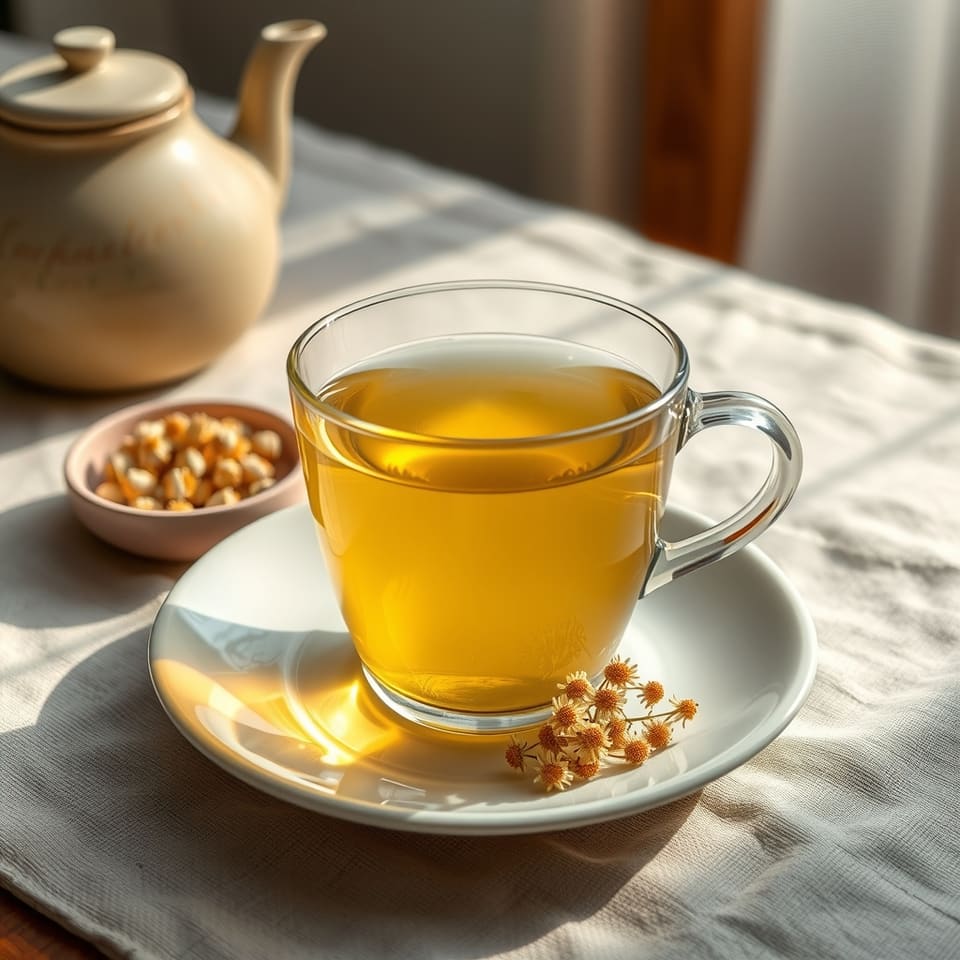
Chamomile Tea for the Stomach: What It Can and Cannot Do
From Europe to the Middle East and the Americas, a cup of chamomile is a familiar answer to a heavy, bloated stomach. Here is what it is traditionally used for, where the evidence stops, and the signs that need more than a cup of tea.

In many homes around the world, chamomile is the first thing someone reaches for after a meal that sits badly. It goes by many names, Kamille in German, manzanilla in Spanish and babunaj in Arabic, but the small, daisy-like flowers and their sweet, apple-like smell are the same everywhere.
It is gentle and easy to make. But it helps to know what chamomile is actually trusted for, and what it cannot do, so that a warm cup comforts you without hiding a problem that needs a doctor.
What chamomile is traditionally used for
The European Medicines Agency (EMA) reviews herbs that have been used safely for a long time. For chamomile flower, its experts accept traditional use for the symptoms of minor stomach and gut complaints, such as bloating and minor spasms.
That wording matters. It means mild, passing discomfort, the kind you might feel after a large or rich meal. The EMA approval is based on long-standing use, not on strong clinical trials. It also says to see a doctor if symptoms last more than a week or get worse while you are using it.
After-Meal Chamomile Tea
You need
- dried chamomile flowers, or 1 chamomile tea bag1 to 2 tsp (about 1.5 to 3 g)
- freshly boiled water150 to 200 ml (2/3 to 3/4 cup)
- thin slice of lemon or a few fennel seeds, optional1
Method
- Put the chamomile flowers in a cup or small teapot.
- Pour over the freshly boiled water and cover with a saucer so the fragrant steam stays in the cup.
- Steep for 5 to 10 minutes. A longer steep gives a fuller, slightly more bitter taste.
- Strain, add the lemon or fennel if you like, and sip slowly once it has cooled enough to drink comfortably.
Tips
- Sip it slowly after a meal rather than drinking a large mug quickly, which can make a full stomach feel fuller.
- Whole dried flower heads usually have more aroma than finely cut tea, so smell your chamomile: it should smell sweet and apple-like, not dusty.
- Store dried flowers in a closed jar away from light and heat, and replace them once the scent fades.
What it cannot do
Chamomile is not a treatment for ulcers, reflux disease, infections or any other stomach illness. Memorial Sloan Kettering lists upset stomach as a popular use, but the only ulcer research it describes was done in animals, not people.
It is also not a fix for babies with colic or children with diarrhea. The US National Center for Complementary and Integrative Health (NCCIH) notes that some combination products containing chamomile were studied for these problems, but chamomile on its own has not been shown to help.
What the evidence says
Put simply, the evidence for chamomile and the stomach is mostly tradition. NCCIH says research has not produced enough reliable evidence to rate how useful chamomile is for most conditions, and many studies mixed it with other herbs, which makes its own effect hard to judge.
The good news is that, for most adults, a cup of chamomile tea is low risk. NCCIH describes it as likely safe in the amounts found in tea, with uncommon side effects such as nausea, dizziness or allergic reactions. So it is reasonable to try a cup for mild after-meal discomfort, as long as you keep your expectations modest.
Habits that help a sensitive stomach
For ordinary indigestion, the NHS suggests practical steps that often do more than any tea: cut down on coffee, tea, cola and alcohol, avoid eating in the few hours before bed, go easy on rich, spicy or fatty food, and prop up your head and shoulders in bed.
Painkillers such as ibuprofen and aspirin can make indigestion worse. If you take them regularly, ask a pharmacist or doctor for advice rather than stopping a prescribed medicine on your own.
Questions people ask
How many cups of chamomile tea can I drink for my stomach?
For adults, the EMA describes chamomile tea taken three to four times a day for minor stomach complaints. If you still need it after a week, see a doctor rather than drinking more.
Is chamomile good for acid reflux?
There is no good evidence that chamomile treats reflux. Practical steps, such as smaller meals, not eating late and raising your head in bed, are more useful. Frequent heartburn needs a doctor's advice.
Can I give chamomile tea to a baby with colic?
No, not without a doctor's advice. Chamomile alone has not been shown to help colic, the EMA says its use as a tea in babies under 6 months has not been established, and young babies need milk, not tea.
Sources
- Chamomile — NCCIH
- Chamomile (About Herbs) — Memorial Sloan Kettering Cancer Center
- European Union herbal monograph on Matricaria recutita L., flos — European Medicines Agency
- Indigestion — NHS 111 Wales
This article is for general information only and is not medical advice. Herbs can interact with medicines and health conditions. Talk to a doctor or pharmacist before trying a herbal remedy, especially if you are pregnant, breastfeeding, giving it to a child, or taking any medication.