Warm Carob Drink: A Caffeine-Free Cocoa Alternative
Roasted carob powder makes a naturally sweet, chocolate-like drink with no caffeine. Here is a simple recipe, a little Cypriot history, and an honest look at the nutrition.
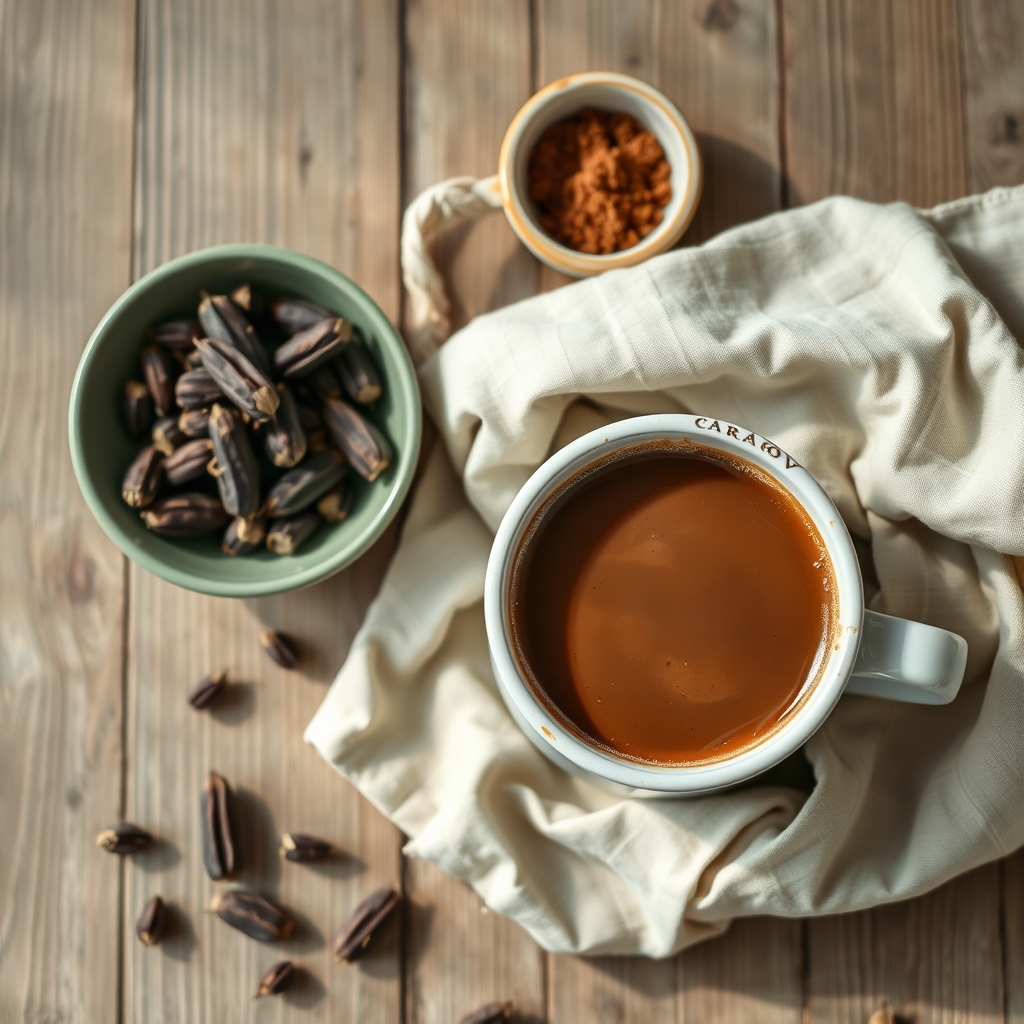
If you love a mug of hot chocolate in the evening but not the caffeine that comes with it, carob is worth a try. Ground from the dried, roasted pods of the carob tree, it has a mellow, caramel-like sweetness and a gentle cocoa feel.
Carob trees grow all around the Mediterranean, and in Cyprus they were once so important to the economy that the pods were nicknamed black gold. Here is how to make a warm carob drink, and what research does and does not say about it.
A Cyprus tradition
Cypriots have turned carob into food for generations. The pods are pressed and boiled into a thick, dark carob syrup, which is still made on the island and exported to many countries. Carob also turns up in local sweets, carob powders, and a roasted carob coffee.
A 2018 study from the University of Cyprus and the State General Laboratory in Nicosia analyzed Cypriot carob pods and traditional carob products, from syrups and powders to chocolates and candies. It gives a useful picture of what you are actually drinking.
Warm Carob Drink
You need
- milk or an unsweetened plant milk250 ml (1 cup)
- roasted carob powder1 to 2 tablespoons
- ground cinnamon1 pinch
- carob syrup or honey, for adults and children over 12 months only1 teaspoon (optional)
Method
- Put the carob powder and cinnamon in a mug. Add 2 tablespoons of the milk and stir to a smooth paste, so no lumps form.
- Warm the rest of the milk in a small pan over medium heat until steaming but not boiling, about 70 to 80°C (160 to 175°F).
- Pour the warm milk into the mug a little at a time, stirring well.
- Taste before sweetening. Carob is naturally sweet, so many people find it needs nothing extra.
- Sip while warm. Stir again halfway, as the powder can settle.
Tips
- Use roasted carob powder for a deeper, more cocoa-like flavor. Raw carob powder tastes lighter and fruitier.
- A small strip of orange peel warmed in the milk pairs well with carob.
- Store carob powder in a sealed jar in a cool, dry cupboard so it does not clump.
What the evidence says
Caffeine: in the Cypriot study, caffeine and theobromine were below detectable levels in carob pulp, carob powders, and carob coffee. That makes plain carob a genuinely caffeine-free swap for cocoa. Cocoa beans, by contrast, naturally contain caffeine, and MedlinePlus lists unsweetened baking chocolate at about 58 mg per ounce.
Sugar and fiber: carob is naturally sweet. The pulp of Cypriot carobs was more than half sugar, and carob powders were about 30 to 37 percent fiber. The syrup was mostly sugar too, but also notably high in potassium. Carob powders were a source of minerals such as calcium, magnesium, and iron.
Health claims: a 2023 review shows that much of the research on carob and conditions like diabetes or high cholesterol has been done in test tubes or animals, and human trials are few and small. So enjoy carob as a tasty, caffeine-free food, not as a remedy for any disease.
Carob, sleep and caffeine
MedlinePlus lists difficulty sleeping as a possible side effect of caffeine, and suggests people prone to sleep problems may want to limit it. Swapping an evening cocoa for carob is one easy way to cut late caffeine without giving up a warm, comforting drink.
If you are pregnant, MedlinePlus advises keeping caffeine under 200 mg a day. Carob gives you a chocolate-style drink that adds nothing to that total.
Questions people ask
Does carob taste like chocolate?
It is similar but not identical. Carob is sweeter and less bitter than cocoa, with a caramel, slightly fruity note. Roasted carob tastes closest to chocolate.
Is carob safe for children?
Plain carob is a common food and is caffeine-free, which makes it a popular cocoa swap for kids. Keep added sugar low and skip honey for babies under 12 months.
Can I drink carob at night?
Yes. Plain carob powder had no detectable caffeine in testing, so it is a good evening alternative to cocoa or coffee.
Sources
- Nutritional characterization of carobs and traditional carob products — Food Science & Nutrition, via PubMed Central (NCBI)
- Nutritional, biochemical, and clinical applications of carob: A review — Food Science & Nutrition, via PubMed Central (NCBI)
- Caffeine in the diet — MedlinePlus
- Sugar: the facts — NHS
This article is for general information only and is not medical advice. Herbs can interact with medicines and health conditions. Talk to a doctor or pharmacist before trying a herbal remedy, especially if you are pregnant, breastfeeding, giving it to a child, or taking any medication.