How to Store Fresh Ginger: Fridge, Freezer and Paste
Fresh ginger keeps for weeks in the fridge and for months in the freezer if you store it the right way. Here is how long each method lasts, how to handle ginger paste safely, and the signs that mean it belongs in the bin.
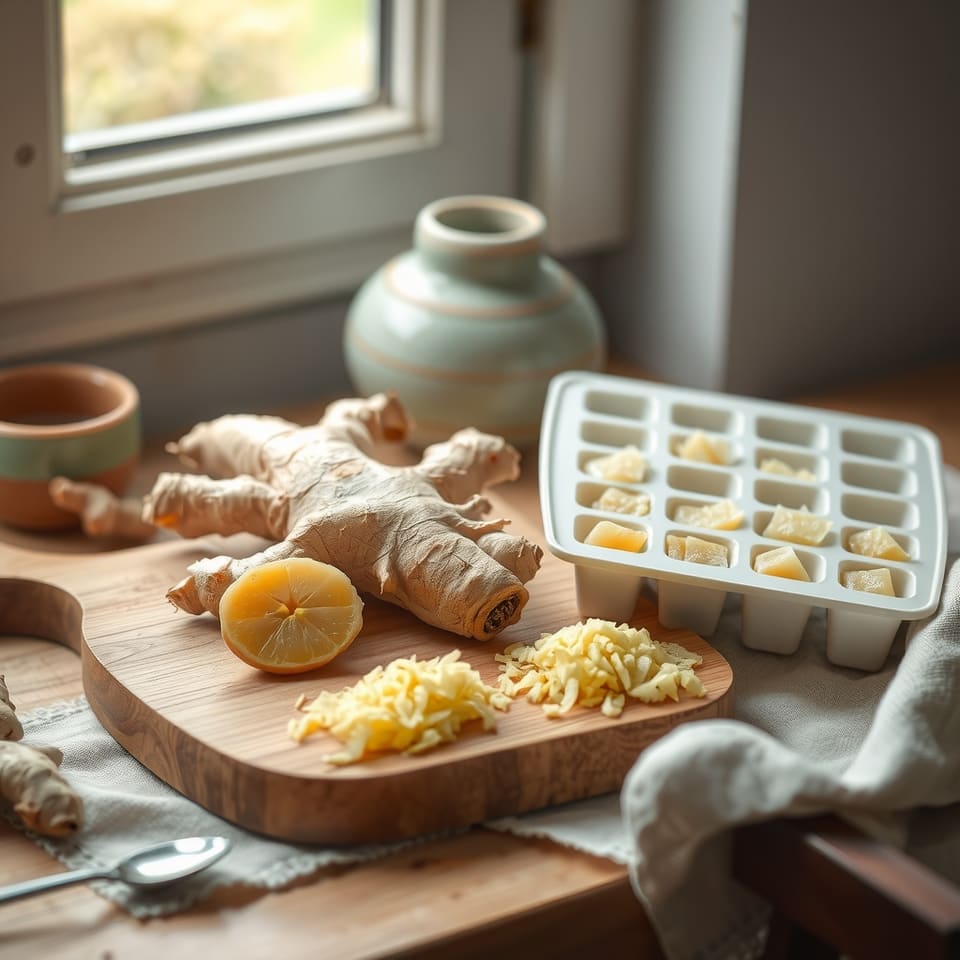
A knob of fresh ginger rarely gets used in one go. You grate a little into a stir-fry or a cup of tea, and the rest is forgotten in the fruit bowl. With a few simple habits, that leftover piece can stay useful for weeks, or for months in the freezer.
This guide covers the counter, the fridge and the freezer, safe ginger paste, and how to tell when ginger has gone off. The storage times come from university food-safety extension services.
Counter or fridge?
Whole, unpeeled ginger can sit on the counter at room temperature for about 1 to 2 weeks, according to food-safety specialists at Iowa State University and Kansas State University. That is fine if you plan to use it soon.
For longer, the fridge is better. Put the unpeeled root in an airtight bag or container in the crisper drawer, where it lasts about 4 to 6 weeks. Iowa State says leftover peeled ginger keeps for about 2 to 3 weeks if tightly wrapped. Kansas State's food scientist also suggests buying only as much as you need, so it keeps its best flavor.
Frozen Ginger Paste Cubes
You need
- fresh ginger, firm, with no mold or soft spots150 g (5 oz)
- water, only if needed for blending1 to 2 tbsp
Method
- Wash the ginger and dry it well. Scrape off the skin with the edge of a teaspoon.
- Chop it roughly, then blend it to a paste or grate it finely. Add a little water only if the blender needs it.
- Spoon the paste into an ice cube tray, about 1 teaspoon per section, or in small mounds on a tray lined with baking paper.
- Freeze for a few hours until solid.
- Move the cubes into a freezer bag, press out the air, and write the date on the bag. Use within about 3 months for the best flavor.
Tips
- Drop a cube straight into a hot pan, a soup or a teapot. There is no need to thaw it first.
- Keep oil out of the paste you freeze. A ginger-garlic paste with oil belongs in the fridge, used within 4 days.
Freezing ginger and making paste cubes
The freezer is the best home for ginger you will not use within a few weeks. Iowa State suggests scraping off the skin, slicing the ginger and packing the slices into a freezer bag with as much air pressed out as possible. Grated or finely chopped ginger can be frozen in small mounds on a tray lined with baking paper, or in an ice cube tray, and then moved into a bag once solid.
Frozen ginger keeps its best quality for about 3 months. Iowa State notes that ginger kept constantly at -18 °C (0 °F) stays safe indefinitely, although its flavor slowly fades. You can grate frozen slices straight into a pan or a cup.
Iowa State also describes covering scraped, sliced ginger with vodka or another spirit in a clean glass jar and keeping it in the fridge for 1 to 2 months. That ginger then contains alcohol.
Food safety: ginger paste and ginger in oil
Homemade ginger paste is handy, but take care when oil is involved. Oregon State University Extension explains that fresh herbs and low-acid vegetables can carry Clostridium botulinum, the bacteria behind botulism, and that covering them in oil creates the oxygen-free conditions these bacteria need. Its rule for homemade herbs, garlic or vegetables in oil is to refrigerate them and use them within 4 days, or freeze them. Room-temperature storage is only for commercially acidified products or tested acidification methods followed exactly.
The Oregon State guidance does not name ginger, but a homemade ginger-and-oil or ginger-garlic paste is safest treated the same way: refrigerate it, label it with the date, use it within 4 days, or freeze it. A paste of ginger alone, or with a little water, is simplest to freeze in cubes.
What the evidence says: how to tell ginger has gone bad
Kansas State University's food scientist explains that fresh ginger contains enzymes that can make it go moldy, turn soft, change color or develop off odors, and that ginger showing these signs of spoilage should not be used. Iowa State gives the same list.
You may have heard that mold can be cut off firm vegetables. The USDA Food Safety and Inspection Service allows this for small spots on some firm, low-moisture produce such as carrots and cabbage, cutting at least 2.5 cm (1 inch) around and below the spot. But the ginger-specific advice from both extension services is to discard moldy ginger, which is the safer choice. The USDA also says not to sniff moldy food, because this can cause breathing problems.
Ground ginger is a different product. Kansas State suggests keeping it at room temperature and using it within about a year for the best flavor.
Questions people ask
Should I peel ginger before I store it?
Not for the fridge. Unpeeled ginger keeps longer there than peeled pieces. For the freezer, scraping off the skin first makes slicing and grating easier.
Can I freeze a whole piece of ginger?
Yes. Kansas State gives up to 3 months in the freezer for the best quality. Slices or paste cubes are easier to use, because you take out only what you need.
Can I just cut the moldy part off?
For ginger, the university extension advice is to throw it away if it has mold. The USDA allows trimming small spots from some firm vegetables, but discarding moldy ginger is safer.
Sources
- Storing Fresh Ginger — Iowa State University Extension and Outreach (AnswerLine)
- In any form, ginger is 'workhorse' ingredient in many foods — Kansas State University Research and Extension
- Herbs and vegetables in oil — Oregon State University Extension Service
- Molds on Food: Are They Dangerous? — USDA Food Safety and Inspection Service
This article is for general information only and is not medical advice. Herbs can interact with medicines and health conditions. Talk to a doctor or pharmacist before trying a herbal remedy, especially if you are pregnant, breastfeeding, giving it to a child, or taking any medication.