Fresh Rosemary Tea: What Is and Isn't Known
A sprig from the garden and a cup of hot water make a fragrant, piney tea. Here is an honest look at what rosemary tea can and cannot be expected to do.
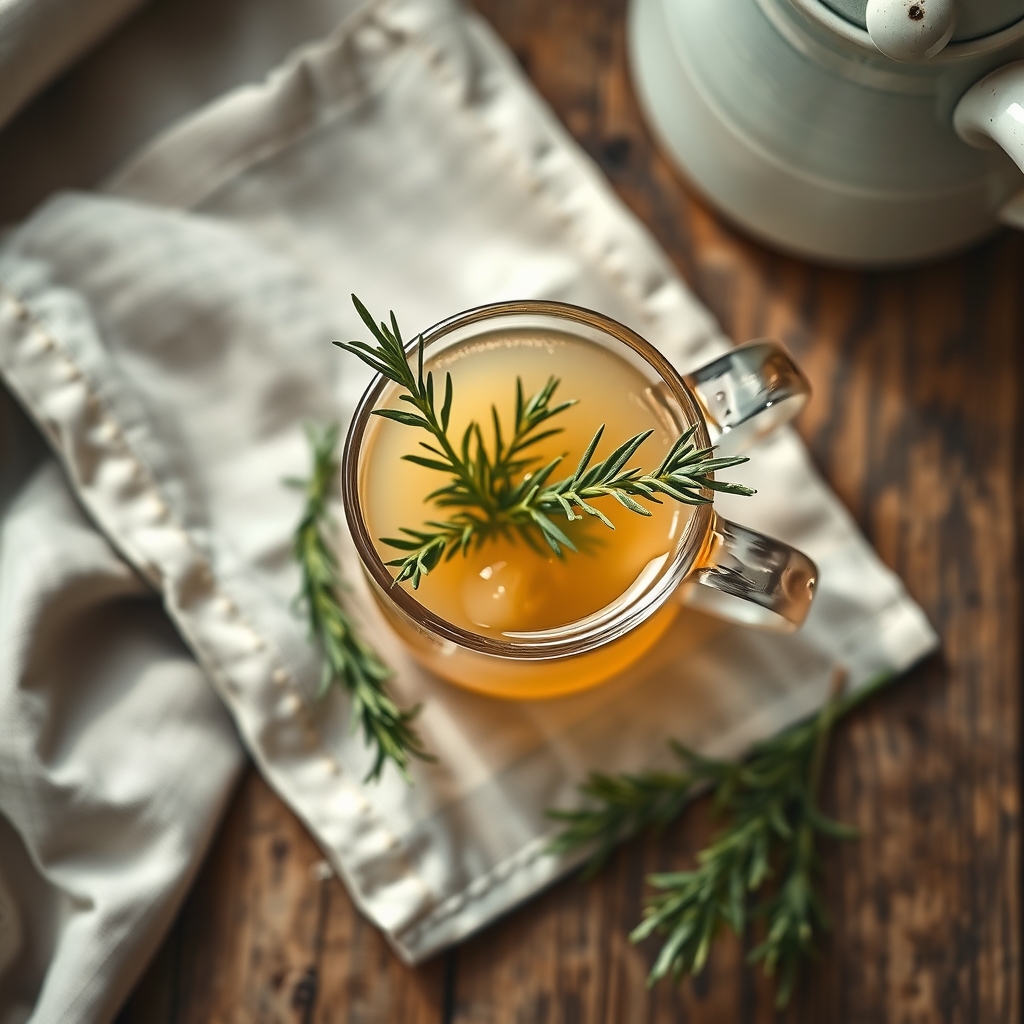
If you grow rosemary, you already have the makings of a quick herbal tea. One fresh sprig steeped in hot water gives a fragrant, slightly piney cup that many people enjoy after a meal.
Rosemary has a long folk reputation, especially around digestion and memory. The research is thinner than the reputation, so this guide sorts out what is traditional, what has actually been studied, and who should not drink it.
Why people use it
Rosemary leaf has been used for generations as a gentle after-meal drink. It is also added to baths for tired muscles and joints.
Many people simply like the taste. It is a caffeine-free option with more character than most herbal teas.
Fresh Rosemary Tea
You need
- fresh rosemary, rinsed1 sprig, about 10 cm (4 in)
- water, just off the boil250 ml (1 cup)
- lemon (optional)1 slice
Method
- Lightly bruise the rosemary sprig between your fingers to release its aroma.
- Put it in a mug and pour over the hot water.
- Cover the mug with a saucer and steep for 5 to 10 minutes. Taste after 5 minutes, since it gets stronger and more bitter the longer it sits.
- Remove the sprig, add lemon if you like, and sip warm.
Tips
- Try it after a meal, when its traditional digestive use fits best.
- One or two cups a day is plenty. Do not brew it extra strong in the hope of a bigger effect.
What the evidence says
The European Medicines Agency (EMA) has reviewed rosemary leaf. It accepts traditional use for relief of indigestion and mild cramping of the gut, and, used in baths, for minor muscle and joint pain and minor circulation problems. This recognition rests on long-standing use, not on results from clinical trials.
Memory is where rosemary gets the most attention. In one small study, 28 older adults took single doses of dried rosemary leaf powder. The lowest dose, 750 mg, slightly improved speed of memory compared with placebo, while the highest dose, 6,000 mg, made it worse. That was a short-term study of capsules, not tea, and it does not show that rosemary tea improves memory.
On safety, the EMA review found no interactions with other medicines described in the literature. The main reported side effects were allergic reactions, such as skin rashes, and how often they happen is not known.
The takeaway: rosemary tea is a pleasant traditional drink that may help settle mild indigestion. Claims beyond that are not well supported, and more is not better.
Fresh or dried
Fresh sprigs give a brighter, greener flavor. Dried rosemary works too, but use about half as much because it is more concentrated by weight.
Choose rosemary that has not been sprayed with garden chemicals, and rinse it well.
Rosemary pairs well with a slice of lemon or a few mint leaves if you find it too strong on its own. Keep it simple, though: the point is a light, pleasant cup, not a concentrated brew.
Questions people ask
Does rosemary tea improve memory?
There is no good evidence that it does. One small, short study of rosemary powder found a slight effect at a low dose and a negative effect at a high dose. It did not test tea.
Is cooking with rosemary safe if I am pregnant?
The pregnancy caution here is about rosemary used as a medicinal tea. Ask your doctor or midwife if you are unsure about any herb during pregnancy.
Can I use dried rosemary from my spice rack?
Yes. Use about half a teaspoon of dried leaves per cup, steep, and strain well.
Sources
- Rosmarini folium - herbal medicinal product — European Medicines Agency
- Short-term study on the effects of rosemary on cognitive function in an elderly population — PubMed (Journal of Medicinal Food)
This article is for general information only and is not medical advice. Herbs can interact with medicines and health conditions. Talk to a doctor or pharmacist before trying a herbal remedy, especially if you are pregnant, breastfeeding, giving it to a child, or taking any medication.