Rose Petal Tea from Unsprayed Edible Roses
A handful of scented rose petals makes a delicate, pale pink tea for a slow evening. Here is how to choose safe petals, brew a cup, and what the evidence does and does not show.
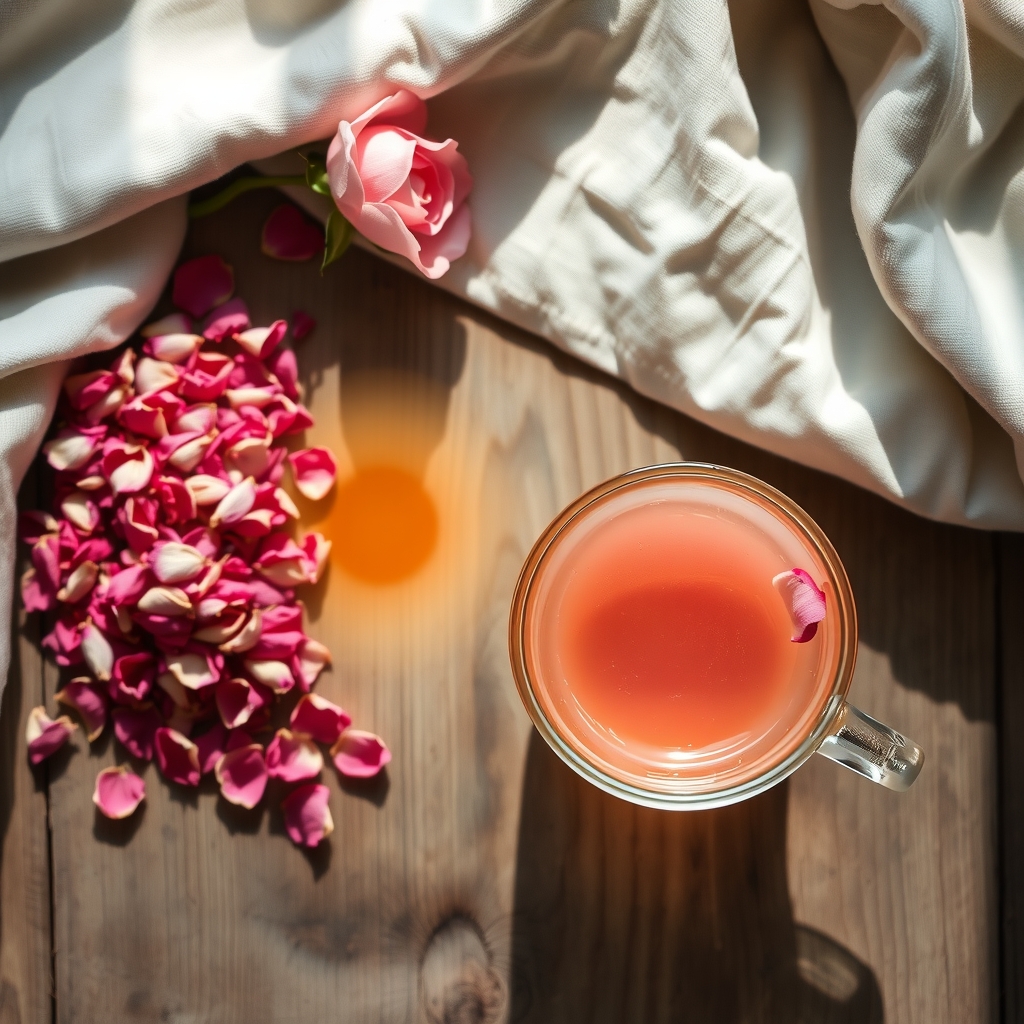
Few things smell as lovely as an old-fashioned garden rose. Its petals have been used in food and drink for thousands of years, from rose syrups and jams to the rose water that flavors sweets around the Mediterranean and the Middle East.
Rose petal tea is the simplest of these: dried or fresh petals steeped in hot water. It is light, floral, and caffeine-free, which makes it a nice cup to wind down with. Here is how to make it safely and what the science says.
Choose the right roses
This is the most important step. Use only roses you know have not been sprayed with products meant for ornamental plants rather than food. Roses from florists and garden centers are usually grown for looks, not for eating, so they are not a safe choice for tea.
The traditional tea roses are the strongly scented old varieties: the damask rose, the cabbage rose, and the apothecary's rose. These are the species European herbal regulators assessed. Your own unsprayed garden roses with a good scent, or petals sold as a food or tea ingredient, are the safest options.
Pick petals in the morning once the dew has dried, from freshly opened flowers. Shake off any insects and snip away the pale base of each petal, which can taste bitter.
Simple Rose Petal Tea
You need
- dried unsprayed rose petals, or a small handful of fresh petals1 to 2 g (about 1 to 2 tablespoons)
- freshly boiled water200 ml (about 3/4 cup)
- honey, for adults and children over 12 months only1 teaspoon (optional)
Method
- Rinse fresh petals gently in cool water and pat dry. Dried petals need no rinsing.
- Put the petals in a cup or small teapot.
- Pour the hot water over them, cover, and steep for 5 to 10 minutes. The petals will lose their color as the water turns pale pink or gold.
- Strain, let it cool a little, and sweeten lightly if you like.
- Enjoy one or two cups in the evening.
Tips
- Darker red and pink petals usually give a deeper color.
- To dry your own, spread petals in a single layer on paper in a warm, airy, shaded spot until crisp, then store in a sealed jar away from light.
- Rose petals blend nicely with chamomile, lemon balm, or a little green cardamom.
A very old tradition
According to the European Medicines Agency, roses have been used medicinally since ancient times. Rose water is mentioned in Assyrian texts, and Greek and Roman writers described the petals' astringent uses.
In European herbal tradition, an infusion of the petals was used as a mouth rinse for mild inflammation of the mouth and throat, and on the skin for minor irritation. The agency accepts both as traditional uses, based on long use rather than proof.
What the evidence says
Evidence is limited. The European assessment found only a few clinical studies, mostly on rose mouthwashes or on mixed herbal products, and none on rose petal tea for relaxation or sleep. Most of the other research is from test tubes or animals.
Safety data are also thin. The agency notes a lack of formal toxicity studies on rose flower, although no side effects have been reported at traditional doses and no drug interactions are known.
So rose petal tea is best enjoyed as a fragrant, caffeine-free part of your evening routine, not as a sleep treatment. If sleep is a struggle, regular habits such as fixed wake-up times and skipping coffee late in the day are more likely to help.
Questions people ask
Can I use any rose for tea?
Choose strongly scented roses you can identify, ideally the traditional damask, cabbage, or apothecary's rose, and only flowers you know are unsprayed. Scent is a good guide to flavor.
Will rose petal tea help me sleep?
There is no research showing that it does. It is a calming ritual and caffeine-free, which may make it a better evening choice than regular tea or coffee.
Is rose hip tea the same as rose petal tea?
No. Rose hips are the fruits that form after the flower fades. They make a tart, red tea, while petals give a light, floral cup.
Sources
- Rosae flos - herbal medicinal product — European Medicines Agency
- Community herbal monograph on Rosa gallica L., Rosa centifolia L., Rosa damascena Mill., flos — European Medicines Agency
- Assessment report on Rosa gallica L., Rosa centifolia L., Rosa damascena Mill., flos — European Medicines Agency
- Insomnia — NHS
This article is for general information only and is not medical advice. Herbs can interact with medicines and health conditions. Talk to a doctor or pharmacist before trying a herbal remedy, especially if you are pregnant, breastfeeding, giving it to a child, or taking any medication.