Marinated Feta with Oregano and Thyme
Cubes of feta in olive oil with oregano, thyme and lemon zest make an easy starter that gets better overnight. Here is the recipe and the simple fridge rule that keeps it safe.
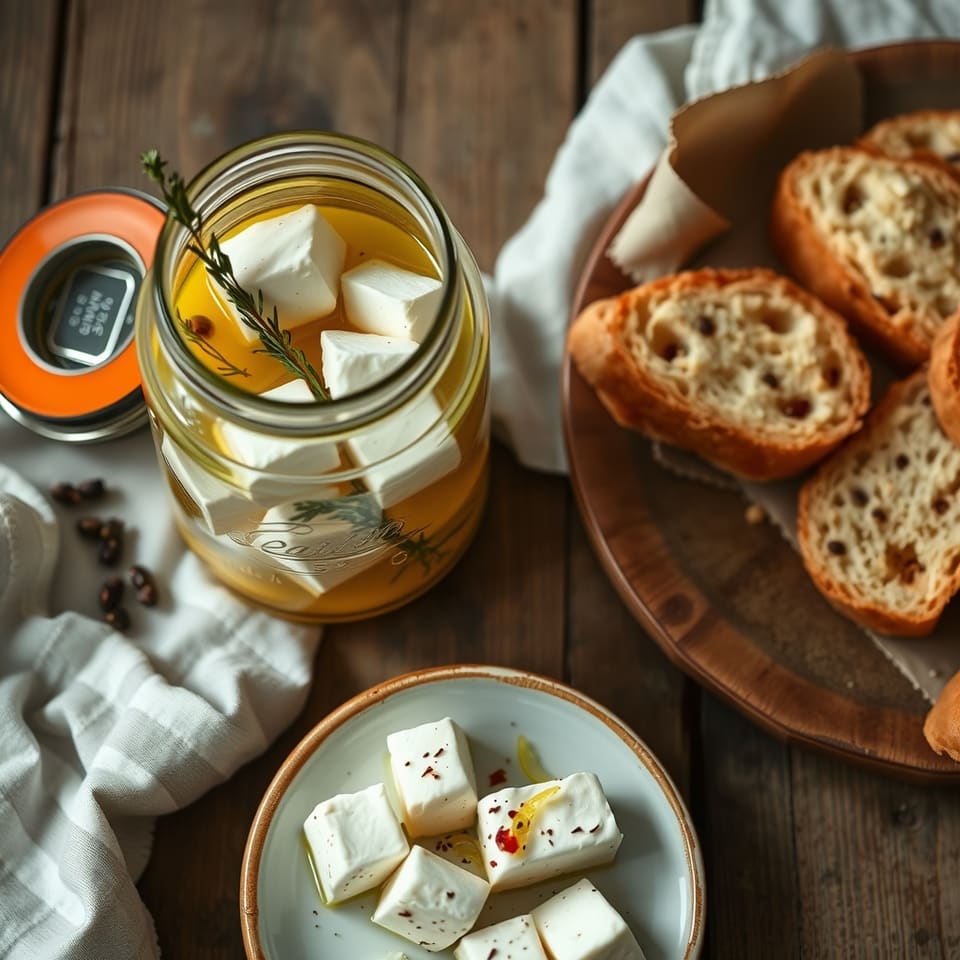
A block of feta cut into cubes, covered in good olive oil and scattered with oregano, thyme and lemon zest turns into something special after a few hours in the fridge. The cheese takes on the herbs, the oil takes on the cheese, and you get a ready-made starter for bread, salads and grilled vegetables.
It takes about ten minutes to make. The one thing to get right is storage, because homemade herbs and garlic in oil follow a strict fridge rule. Feta is also a salty cheese, so a little goes a long way.
Choosing the cheese and herbs
Choose a firm block of feta or a similar brined white cheese rather than crumbled cheese, which falls apart in the oil. Drain it well and pat it dry so the oil can cling to it. If anyone eating it is pregnant, check that the label says it is made from pasteurized milk.
Dried oregano is the classic partner and holds up well in oil. Fresh thyme sprigs add a woody, lemony note. Lemon zest, a few black peppercorns and a pinch of chili flakes give brightness and warmth. Fennel seeds, rosemary or a little sumac are other good choices.
Marinated Feta with Oregano and Thyme
You need
- block of feta, drained200 g (7 oz)
- dried oregano1 tsp
- sprigs fresh thyme4
- unwaxed lemon, zest pared in thin strips1
- black peppercorns, lightly crushed1/2 tsp
- chili flakes, optional1/4 to 1/2 tsp
- garlic clove, thinly sliced, optional1 small
- extra virgin olive oil, enough to cover150 to 200 ml (2/3 to 3/4 cup)
Method
- Wash a glass jar of about 500 ml (2 cups) and its lid in hot soapy water, rinse well and let them dry.
- Pat the feta dry with paper towel and cut it into 2 cm (3/4 inch) cubes.
- Layer the cubes in the jar with the oregano, thyme, lemon zest, peppercorns, chili and garlic.
- Pour in enough olive oil to cover the cheese completely. Close the jar and turn it gently once or twice.
- Label the jar with the date you made it and a use-by date 4 days later, then put it in the fridge straight away.
- Leave it for at least 4 hours, ideally overnight, so the flavors can develop.
- Take it out about 20 minutes before serving, lift out the cubes with a clean spoon, and return the jar to the fridge. Finish it, oil included, within 4 days.
Tips
- For a last-minute version, put the feta in a shallow dish, pour over the oil and herbs, and serve within an hour.
- Use the leftover oil, within the 4 days, for roasting potatoes or dressing a tomato salad.
- Always use a clean, dry spoon so you do not carry crumbs or water into the jar.
How to serve it
Serve marinated feta straight from the jar with crusty bread, or spoon the cubes and a little of the oil over a tomato salad, roasted peppers, warm potatoes or a bowl of beans. It is also good on toast with sliced tomato, or stirred through pasta just before serving.
The flavored oil is a bonus. Use it within the same 4 days to dress salads or drizzle over grilled vegetables. Do not keep a jar going by topping it up with fresh cheese; start a new batch instead.
Storage: the 4-day fridge rule
The CDC advises refrigerating homemade oils made with garlic or herbs and throwing them away after 4 days. Marinated feta sits in exactly that kind of oil, so treat it the same way: make it in the fridge, keep it in the fridge and finish it within 4 days.
The CDC also explains that you cannot see, smell or taste the toxin that causes botulism. A jar that looks and smells fine can still be unsafe, so go by the date, not your nose. Its advice is simple: if in doubt, throw it out.
Olive oil turns thick and cloudy in the fridge. Take out only what you need about 20 minutes before serving so the oil can loosen, and put the jar back straight away.
What the evidence says
Marinated feta is a tasty food, not a health food, and the herbs are there for flavor. Two facts matter for health. The first is salt. The NHS says adults should have no more than 6 g of salt a day, about one level teaspoon, and lists cheese and olives among salty foods to eat less often or in small amounts. That is why this recipe adds no extra salt.
The second is pregnancy. The NHS lists pasteurized soft cheeses, including feta, among cheeses that are safe in pregnancy. It warns that unpasteurized or soft ripened dairy foods may contain listeria bacteria, which can cause listeriosis, and that this infection can cause miscarriage or stillbirth. So if you are pregnant, use feta made from pasteurized milk.
Questions people ask
Can I keep marinated feta at room temperature?
No. Herbs and garlic in oil should be kept in the fridge and eaten within 4 days. Leave it out only for the short time you are serving it.
Can I use fresh oregano?
Yes. Use about 1 tbsp chopped fresh leaves instead of the dried oregano. Fresh herbs follow the same 4-day fridge rule.
Is the leftover oil safe to keep for cooking?
Only within the same 4 days, kept in the fridge. After that, throw it away with the jar.
Sources
- Preventing Botulism — CDC
- Symptoms of Botulism — CDC
- Foods to avoid in pregnancy — NHS
- Salt: the facts — NHS
This article is for general information only and is not medical advice. Herbs can interact with medicines and health conditions. Talk to a doctor or pharmacist before trying a herbal remedy, especially if you are pregnant, breastfeeding, giving it to a child, or taking any medication.