
How to Grow Basil in a Pot and Keep It From Flowering
Basil is easy to grow in a pot if you give it warmth, sun and regular pinching. Here is how to sow or plant it, keep it bushy and leafy, and harvest it all summer.
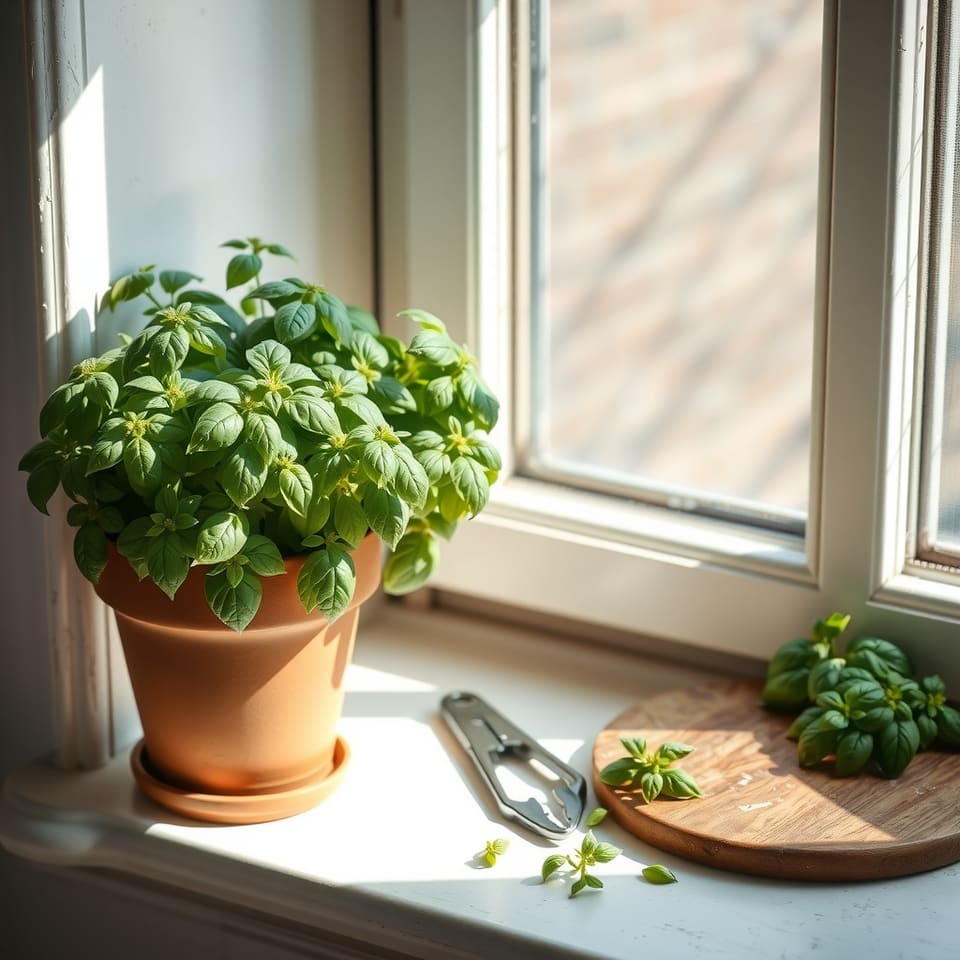
A pot of basil on a sunny windowsill or balcony can give you fresh leaves for months, and it is easy to start from seed. It has two weak spots: it hates the cold, and once it flowers, it puts its energy into seed instead of new leaves.
This guide shows you how to sow or plant basil in a pot, pinch it so it grows bushy instead of tall and thin, and harvest it so it keeps producing.
What basil needs to thrive
Basil is a tender annual. That means it is not frost hardy and usually lasts one season. Seeds sprout best at about 20 °C (68 °F), so a warm, bright windowsill is the ideal place to start them.
Outdoors, wait until night temperatures stay above 10 °C (50 °F). Choose a warm, sunny, sheltered spot. The Royal Horticultural Society (RHS) notes that pots often do better than the open ground, because they drain freely and are easier to protect from slugs and snails.
Basil in a Pot, From Seed to First Harvest
You need
- pot at least 20 cm (8 in) wide and deep, with drainage holes1
- peat-free multipurpose compostenough to fill the pot
- basil seeds, or 3 young basil plants1 packet
- for sowing, with damp peat-free seed compost1 small tray or a few small pots
- clear plastic bag or propagator lid1
- balanced liquid fertilizer, optionalas needed
Method
- Sow indoors between early spring and midsummer. Scatter the seeds thinly on the surface of damp seed compost, cover with a clear bag or lid, and keep them somewhere warm, ideally about 20 °C (68 °F).
- Once the seeds sprout, remove the cover and keep the seedlings warm and bright. Water regularly but do not overwater, as seedlings are prone to damping off, a fungal problem that makes them collapse.
- When the seedlings have several leaves, move the three strongest into the large pot, at least 10 cm (4 in) apart, at the same depth. If you bought young plants, start here.
- If the pot will live outdoors, wait until nights stay above 10 °C (50 °F). Harden them off first by getting them used to outdoor conditions gradually before leaving them out full time.
- Place the pot in a warm, sunny, sheltered spot. Water in the morning at the base of the plants, keeping the compost moist but never waterlogged.
- When each plant has several pairs of leaves, pinch out the growing tip just above a pair of leaves. Keep pinching the shoot tips about once a week.
- Check for flower buds at the tips from midsummer and pinch them off as soon as you see them.
Tips
- Sow a few small batches a few weeks apart for a longer harvest.
- If you grow several plants, let one flower. The nectar-rich flowers feed bees and other insects.
Pot, compost and watering
Use a pot at least 20 cm (8 in) wide and deep, with drainage holes, filled with peat-free multipurpose compost. Space plants at least 10 cm (4 in) apart. Crowded plants tend to flower sooner, so resist the urge to squeeze in more.
Keep the compost evenly moist. Water in the morning if you can, at the base of the plant, without splashing the leaves. Basil dislikes wet roots overnight, but letting it dry out can push it into flowering early.
Pots may benefit from a balanced liquid feed now and then. Avoid high-potassium feeds such as tomato feed, which encourage flowers rather than leaves.
What the evidence says
The advice to pinch basil and remove its flowers comes from horticultural experience rather than lab trials, but the main garden authorities agree on it. West Virginia University Extension explains that once basil blooms, it stops producing new leaves and puts its energy into seed, and that regular pinching prevents blooming. The RHS advises removing flower stems as soon as you see them to keep the leaves at their best.
Be realistic, too. Flowering usually starts in mid to late summer, and basil is normally treated as an annual and discarded in autumn. Pinching delays the end of the season but cannot stop it. Bringing the pot indoors before the cold can stretch it a little.
Harvesting and using your basil
Start picking once the plant is established. Pinch or clip the top 5 to 8 cm (2 to 3 in) of a stem, leaving about four leaves below the cut. New side shoots will grow from just under where you pinched. Doing this about once a week keeps the plant branching and leafy.
Add fresh leaves to hot dishes just before serving, because cooking dulls the flavor. Basil flowers are edible and milder than the leaves. For a glut, blend the leaves into a puree and freeze it in small portions. To root a spare stem, cut the top 10 cm (4 in), stand it in a cup of water until roots appear, then pot it up.
Questions people ask
Why is my potted basil tall and thin, or flowering already?
Usually it needs more pinching or more room. Crowding, drying out and high-potassium feeds can all bring on flowers sooner. Pinch the tips weekly and remove flower buds as soon as they appear.
Can I keep basil alive through winter?
Basil is not frost hardy and is normally grown as an annual. You can extend the season by bringing the pot indoors before the cold, or root a few stem tips in water to keep on a warm, bright windowsill.
How often should I water basil in a pot?
There is no fixed schedule. Water when the top of the compost starts to feel dry, ideally in the morning. Aim for evenly moist, never soggy.
Sources
- How to Grow Basil — Royal Horticultural Society
- Growing Basil in West Virginia — West Virginia University Extension
- Basil (Toxic and Non-Toxic Plants) — ASPCA
- How to Safely Make Infused Oils — Penn State Extension
This article is for general information only and is not medical advice. Herbs can interact with medicines and health conditions. Talk to a doctor or pharmacist before trying a herbal remedy, especially if you are pregnant, breastfeeding, giving it to a child, or taking any medication.