Hibiscus Hair Mask: Tradition and What Is Known
Hibiscus is a favorite in traditional hair care, especially in South Asia. Here is a simple mask you can make at home, an honest look at the evidence, and the safety and staining tips to know first.
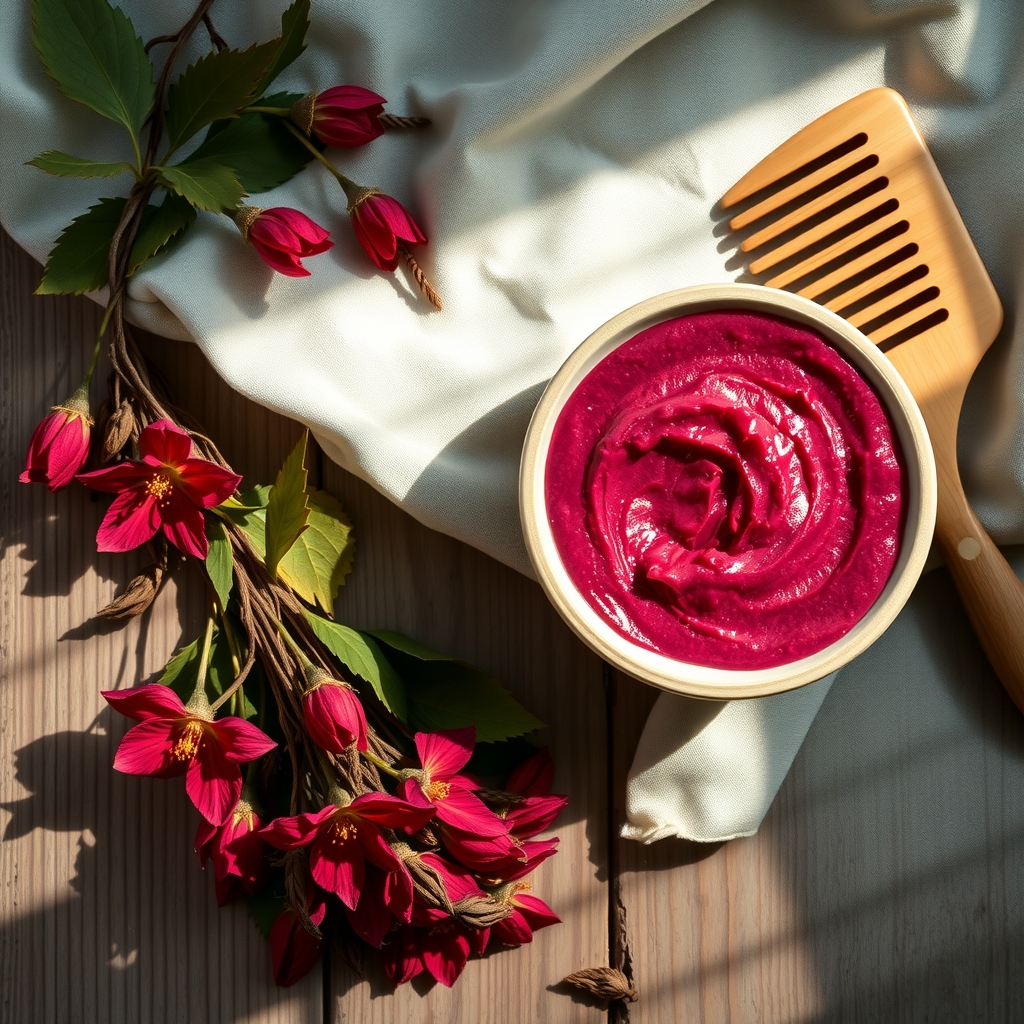
In parts of South Asia, crushed hibiscus flowers and leaves have long been used in homemade hair oils and pastes, often passed down through families. The idea has now traveled widely, and hibiscus hair masks are popular online, usually with promises of stronger, thicker, shinier hair.
A hibiscus mask is fun to make and has a beautiful color. But it is worth knowing how little research has been done in people, and that the bright red pigment can stain. Here is a simple version made with dried hibiscus from the kitchen cupboard, plus the honest evidence and the safety steps that matter.
Why people use it
In traditional hair care, hibiscus is mostly about the feel of the hair: a slippery, conditioning paste that is massaged in and rinsed out. Many people also enjoy it simply as a pleasant weekend ritual.
The dried hibiscus sold for tea is made from the calyces, the deep red parts that protect the flower, as Harvard Health explains. They are rich in plant pigments called anthocyanins, which give hibiscus tea its ruby color. Traditional hair pastes often use fresh flowers and leaves of a related garden hibiscus instead.
Simple Hibiscus Conditioning Mask
You need
- dried hibiscus flowers (the kind sold for tea)2 tbsp
- freshly boiled water125 ml (1/2 cup)
- your usual plain conditioner3 to 4 tbsp
Method
- Put the dried hibiscus in a heatproof bowl and pour the boiled water over it.
- Cover and steep for 20 to 30 minutes, until the water is deep red.
- Strain through a fine sieve, pressing the flowers to release the liquid. Let it cool completely.
- In a clean bowl, stir 2 to 3 tbsp of the cooled hibiscus liquid into the conditioner to make a smooth, pourable cream.
- Wear an old T-shirt and drape an old dark towel over your shoulders. Wash your hair as usual and squeeze out the excess water.
- Smooth the mask through damp hair, from the middle lengths to the ends, keeping it away from your eyes and hairline. Leave it on for 10 to 15 minutes.
- Rinse thoroughly with lukewarm water until the water runs clear, then pat dry with a dark towel.
Tips
- If your hair is fine or straight, keep the mask on the ends only. Dry or curly hair can take it along the full length.
- Test it first on a small hidden strand if your hair is very light, gray, bleached or colored.
- Rinse the sink and shower right away to avoid pink stains. Use any leftover hibiscus liquid the same day.
What the evidence says
We could not find any clinical trials in people showing that a hibiscus mask strengthens hair, makes it thicker or prevents hair loss. A 2025 review of plant remedies for hair loss, available through the US National Library of Medicine, did not include hibiscus at all, and it noted that most of the research on plant remedies for hair comes from lab and animal studies, with few trials in people.
So the honest summary is that a hibiscus mask is a traditional beauty treat, not a proven hair treatment. Most of the softness you notice is likely to come from the conditioner in the recipe, which the American Academy of Dermatology describes as the step that moisturizes and detangles hair.
There is also a practical point. Hibiscus pigments are strong, so a mask may tint very light, gray or bleached hair pink for a while, and it can stain towels, grout and light-colored surfaces.
Patch test and color safety
Any plant can irritate skin. Before using the mask on your scalp, dab a little on the inside of your arm and leave it for 48 hours. If you notice redness, itching, swelling or a rash, do not use it.
Because hibiscus is used partly for its color, treat it with the same care you would any hair color. The US Food and Drug Administration advises doing a skin patch test before every use of a hair dye and keeping dyes away from your eyes, eyebrows and eyelashes.
Questions people ask
Does hibiscus make hair grow?
There is no good evidence in people that it does. Hibiscus has a long traditional use in hair care, but clinical trials are missing.
Will a hibiscus mask turn my hair pink?
On dark hair you are unlikely to notice a color change. On very light, gray or bleached hair it may leave a pink tint for a while, so test a hidden strand first.
Can I use fresh hibiscus flowers from my garden?
Only if you are certain which plant it is and that it has not been sprayed with pesticides. If in doubt, use dried hibiscus sold as a food-grade tea.
Sources
- The health benefits of 3 herbal teas — Harvard Health Publishing
- Botanical drug preparations for alleviating hair loss in menopausal women: a global ethnopharmacological mini-review — PubMed Central, NCBI
- Tips for healthy hair — American Academy of Dermatology
- Hair Dyes — US Food and Drug Administration
This article is for general information only and is not medical advice. Herbs can interact with medicines and health conditions. Talk to a doctor or pharmacist before trying a herbal remedy, especially if you are pregnant, breastfeeding, giving it to a child, or taking any medication.