Herbs for Beans: Bay, Cumin and Savory
A pot of beans can taste flat or wonderful, and the difference is often a leaf, a spoonful of seeds or a pinch of a wild herb. Here are the classic pairings, when to add them, and the honest story on herbs and gas.
Beans, chickpeas and lentils are some of the oldest foods people cook, and nearly every cuisine has its favorite herb to go with them. Mexican black beans, Indian dal, Egyptian ful and Greek bean soup taste completely different, yet they share one idea: beans love strong, earthy herbs and spices.
This guide covers three of the most useful, bay leaf, cumin and savory, plus a few others, what research says about herbs and digestion, and the safety steps that matter more than any herb.
Three classic herbs for beans
Bay leaf: one or two dried leaves in the pot give a quiet, rounded flavor that you notice most when it is missing. It is used in bean dishes across Europe, the Middle East and Latin America. Add it at the start, because whole leaves hold up to long cooking, and remove it before serving, since the leaves stay tough.
Cumin: warm and slightly smoky, cumin is the backbone of bean dishes from India and the Middle East to North Africa and Mexico. Whole seeds can go in early. Ground cumin is best added in the last half hour, or fried briefly in oil and stirred in at the end for the fullest aroma.
Savory: summer savory is so linked with beans that its German name, Bohnenkraut, means bean herb. In Greece and Cyprus a wild relative, throumbi, is crumbled over bean and lentil dishes. Its peppery, thyme-like taste works well with white beans, broad beans and lentils.
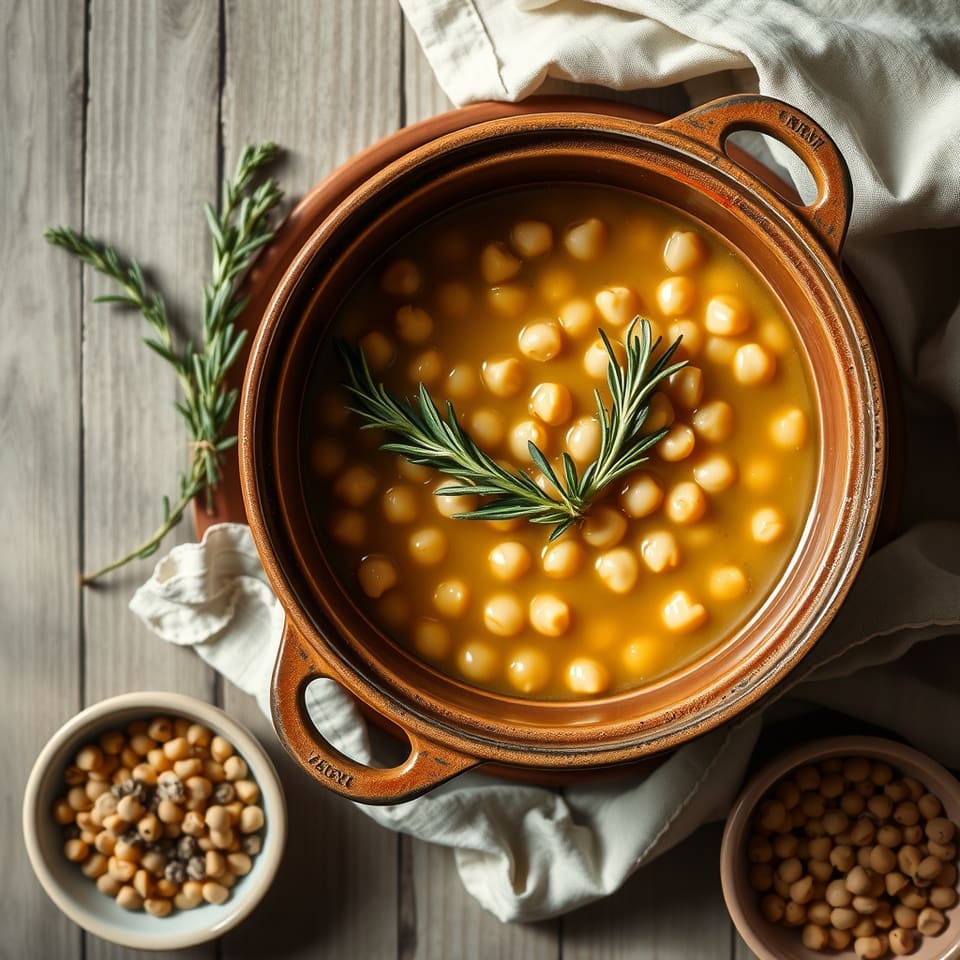
Chickpeas with Bay, Cumin and Rosemary
You need
- dried chickpeas500 g (about 2 1/2 cups)
- salt for soaking, plus more to taste1 1/2 tbsp
- dried bay leaves2
- sprig fresh rosemary, about 10 cm (4 inches)1
- onion, finely chopped1
- garlic cloves, sliced2
- olive oil, plus extra to serve60 ml (4 tbsp)
- cumin seeds, or 1/2 tsp ground cumin1 tsp
- lemon, for serving1
Method
- Rinse the chickpeas and pick out any damaged ones. Dissolve the soaking salt in about 2 liters (8 cups) of cool water, add the chickpeas and soak for 8 to 12 hours. If you need to soak them longer, move the bowl to the fridge.
- Drain and rinse. Put the chickpeas in a large pot with the bay leaves, the rosemary sprig and enough fresh water to cover by about 5 cm (2 inches).
- Bring to a boil, skim off any foam, then lower the heat and simmer, partly covered, until tender, usually 1 to 1 1/2 hours. Add hot water if the chickpeas start to show above the liquid.
- Meanwhile, warm the olive oil in a small pan, add the onion and cook gently for 8 minutes until soft. Add the garlic and cumin and cook for 1 minute until fragrant.
- Stir the onion mixture into the chickpeas for the last 15 minutes. Taste and add salt. Remove the bay leaves and rosemary stem, then serve with a squeeze of lemon and a drizzle of olive oil.
Tips
- Cool leftovers quickly. Colorado State advises refrigerating them within 2 hours and eating or freezing them within 4 days.
- The same method works for white beans: swap the rosemary for a teaspoon of dried savory, and boil kidney-type beans hard for at least 30 minutes before simmering.
More pairings to try
Rosemary with white beans or chickpeas and a little lemon. Oregano with tomato-based bean stews. Dill and spring onion with broad beans. Coriander leaves and lime with black beans. Thyme and parsley in almost anything.
A simple rule is to choose one strong herb and add one or two milder ones. Taste near the end and add more herbs, salt or a squeeze of lemon if needed.
What the evidence says
Beans cause gas because they contain resistant starch and sugars called oligosaccharides. Harvard's Nutrition Source explains that these reach the large bowel undigested, where gut bacteria ferment them and produce gas. The NHS lists beans and lentils among the common causes of wind.
Cumin, savory and bay are often said to prevent this. It is a lovely tradition, but we could not find good human studies showing that any of them reduces gas from beans. What has more support is simple: Harvard notes that soaking dried beans for at least three hours and then cooking them may help. Colorado State University Extension adds that the problem may be overstated, and that most people adapt as they eat more fiber. The NHS also suggests eating smaller meals more often and eating slowly.
Colorado State also notes that salt in the soaking water is helpful rather than harmful: it can greatly shorten cooking time and improve the texture and flavor of the beans.
Cooking dried beans safely
Raw or undercooked red kidney beans contain a natural toxin called phytohaemagglutinin. Kansas State University says eating as few as four or five undercooked beans can cause severe vomiting within a few hours, followed by diarrhea. White kidney beans contain about a third as much. Its advice: soak for at least five hours, drain, then boil in fresh water for at least 30 minutes. Do not cook dried kidney beans from raw in a slow cooker, because it may not get hot enough.
Questions people ask
Should I add salt at the start or the end?
Salt in the soaking water is fine and may even help. Colorado State University Extension says it can shorten cooking time and improve texture. You can then adjust the seasoning at the end.
Do canned beans need herbs too?
Yes, and they are quicker. Warm them with olive oil, garlic, a bay leaf and a pinch of cumin or savory for 10 minutes.
Which herb is best for lentils?
Cumin and bay are classics. Lentils do not need soaking, so add the bay leaf at the start and the cumin near the end.
Sources
- Cooking Dry Beans Safely — Kansas State University
- How to Prepare, Store, and Enjoy Beans and Pulses — Colorado State University Extension
- Legumes and Pulses — Harvard T.H. Chan School of Public Health, The Nutrition Source
- Farting (flatulence) — NHS
This article is for general information only and is not medical advice. Herbs can interact with medicines and health conditions. Talk to a doctor or pharmacist before trying a herbal remedy, especially if you are pregnant, breastfeeding, giving it to a child, or taking any medication.