Greek Lemon Potatoes with Oregano and Thyme
Soft inside, golden at the edges and soaked in lemon and olive oil, these potatoes are a fixture of the Greek Sunday table. Here is the method, the role of the herbs, and a few food safety facts worth knowing.
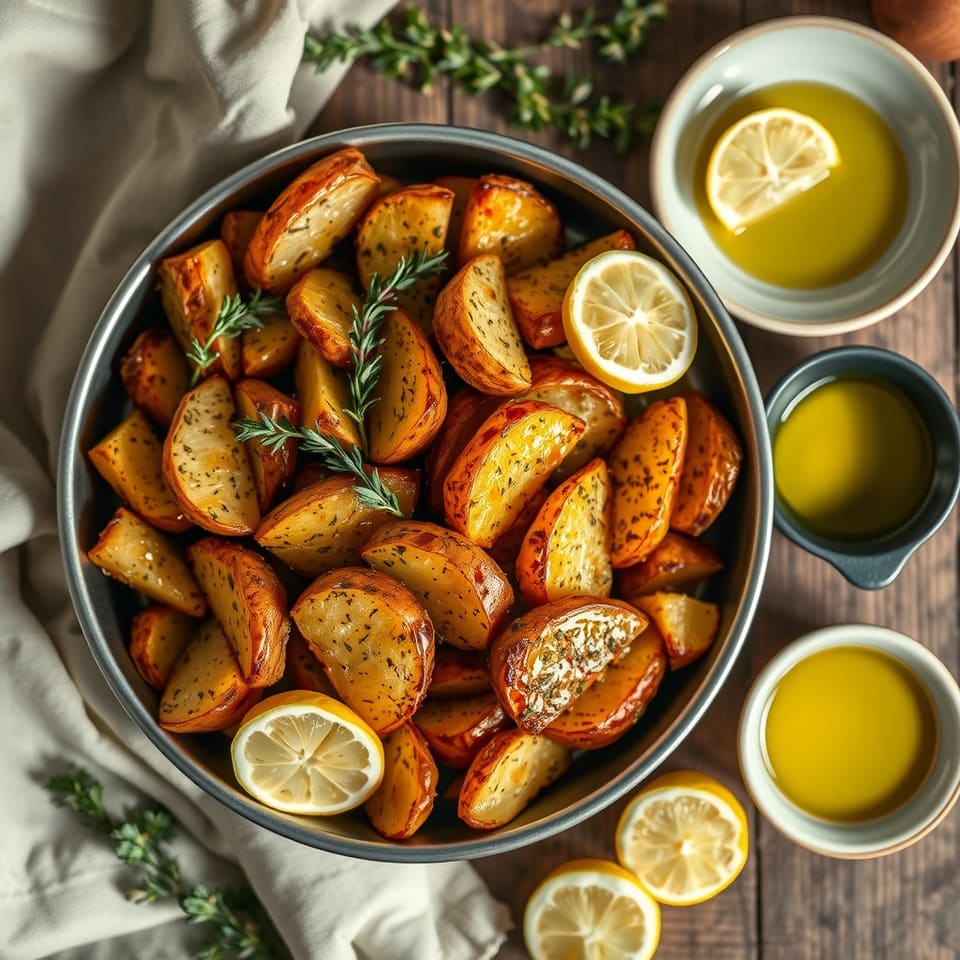
In Greece they are called patates lemonates, and they often share the oven with a roast chicken or lamb. The trick that makes them different from ordinary roast potatoes is the liquid. The wedges roast in a bath of lemon juice, olive oil and water, which they slowly absorb. They come out tender and full of flavor, with crisp golden edges.
The herbs are simple: dried oregano, the classic herb of Greek cooking, and thyme. Both stand up well to an hour in a hot oven. This version is made on its own tray, so it works as a side for meat, fish or a big bean salad, and it is fully plant-based.
Why oregano and thyme work so well
Dried oregano is what most Greek cooks reach for here, often wild oregano from the mountains, crumbled over the tray by hand. It is earthy and slightly peppery, and lemon brings out its brightness. Thyme adds a softer, woody note.
Dried herbs suit this dish because they go in at the start and cook for a long time. If you only have fresh, University of Illinois Extension's rule of thumb is to use about three times as much fresh herb as dried. Add a few extra fresh leaves at the end for aroma.
Greek Lemon Potatoes with Oregano and Thyme
You need
- floury or all-purpose potatoes, peeled and cut into thick wedges1.2 kg (2 1/2 lb)
- extra virgin olive oil80 ml (1/3 cup)
- fresh lemon juice (about 2 lemons), plus the grated zest of 1 lemon80 ml (1/3 cup)
- hot water or low-salt vegetable stock250 ml (1 cup)
- garlic cloves, crushed or thinly sliced4
- dried oregano2 tsp
- dried thyme, or 1 tbsp fresh thyme leaves1 tsp
- salt3/4 tsp
- black pepper1/2 tsp
Method
- Heat the oven to 200 °C (400 °F), or 180 °C (350 °F) for a fan oven.
- Put the potato wedges in a roasting tin large enough to hold them in a single layer.
- Whisk the olive oil, lemon juice, zest, garlic, oregano, thyme, salt and pepper in a jug. Pour over the potatoes and toss with a spoon until every wedge is coated.
- Pour the hot water or stock into the corner of the tin, so you do not wash the herbs off. The liquid should come about a third of the way up the potatoes.
- Roast for 40 minutes. Turn the wedges gently, then roast for another 20 to 30 minutes, until the liquid is mostly absorbed, the potatoes are tender and the edges are golden. If the tin dries out before they are soft, add a splash of hot water.
- Rest for 5 minutes, then finish with a squeeze of lemon and a few fresh herb leaves if you have them.
Tips
- For more lemon flavor, add a little extra juice in the last 10 minutes rather than more at the start, where it can make the potatoes soft without crisping.
- Cool leftovers, cover and keep them in the fridge. Reheat in a hot oven until piping hot all the way through.
- Cooking with a roast? Put the potatoes on the shelf below the meat, or in the same tin around it, and roast them for the same total time.
Choosing and preparing the potatoes
Floury or all-purpose potatoes absorb the lemony liquid best. Waxy salad potatoes hold their shape but stay firmer.
Check them before cooking. Germany's Federal Institute for Risk Assessment (BfR) advises storing potatoes in a cool, dark, dry place, and throwing away ones that are old and shriveled, green or heavily sprouted. On potatoes you do use, cut away any green patches and sprout eyes generously. These parts contain more natural compounds called glycoalkaloids, often known as solanine. If a cooked potato dish tastes bitter, BfR says not to eat it.
What the evidence says
Golden roast potatoes taste wonderful, but browning has a chemistry side. When starchy foods such as potatoes and bread are cooked above 120 °C, a substance called acrylamide forms naturally. The UK Food Standards Agency says acrylamide has the potential to cause cancer in humans, and that cooking to a golden yellow or lighter color keeps levels low.
You do not need to give up roast potatoes. Aim for golden edges rather than dark brown or burnt ones, and cut off any very dark bits before serving.
The herbs and lemon also help in another way. The NHS suggests using herbs, spices, garlic and lemon juice to add flavor instead of salt. Adults should have no more than 6 g of salt a day, about a level teaspoon, and children less. The recipe below uses a modest amount, and you can taste and add more at the table if you need to.
Questions people ask
Can I make Greek lemon potatoes ahead?
Yes. Roast them fully, cool, cover and refrigerate. Reheat in a hot oven for about 15 minutes until piping hot. The edges crisp up again.
Why are my lemon potatoes soggy?
Usually there is too much liquid or the tin is crowded. Use a larger tin so the wedges sit in one layer, and give them the full time so the liquid can be absorbed.
Can I leave the potato skins on?
For adults, yes, if the potatoes are fresh and undamaged, according to BfR. Scrub them well. For small children, peeled potatoes are the safer choice.
Sources
- Frequently asked questions about solanine (glycoalkaloids) in potatoes — German Federal Institute for Risk Assessment (BfR)
- Acrylamide — UK Food Standards Agency
- Salt: the facts — NHS
- More herbs, less salt (part 2) — University of Illinois Extension
This article is for general information only and is not medical advice. Herbs can interact with medicines and health conditions. Talk to a doctor or pharmacist before trying a herbal remedy, especially if you are pregnant, breastfeeding, giving it to a child, or taking any medication.