Grape Molasses (Petimezi): Uses, Recipe and Facts
Long before refined sugar was cheap, grape juice boiled down to a dark syrup sweetened winter food around the Mediterranean and the Middle East. Here is what it is, how to use it, and the honest facts on what is in the jar.
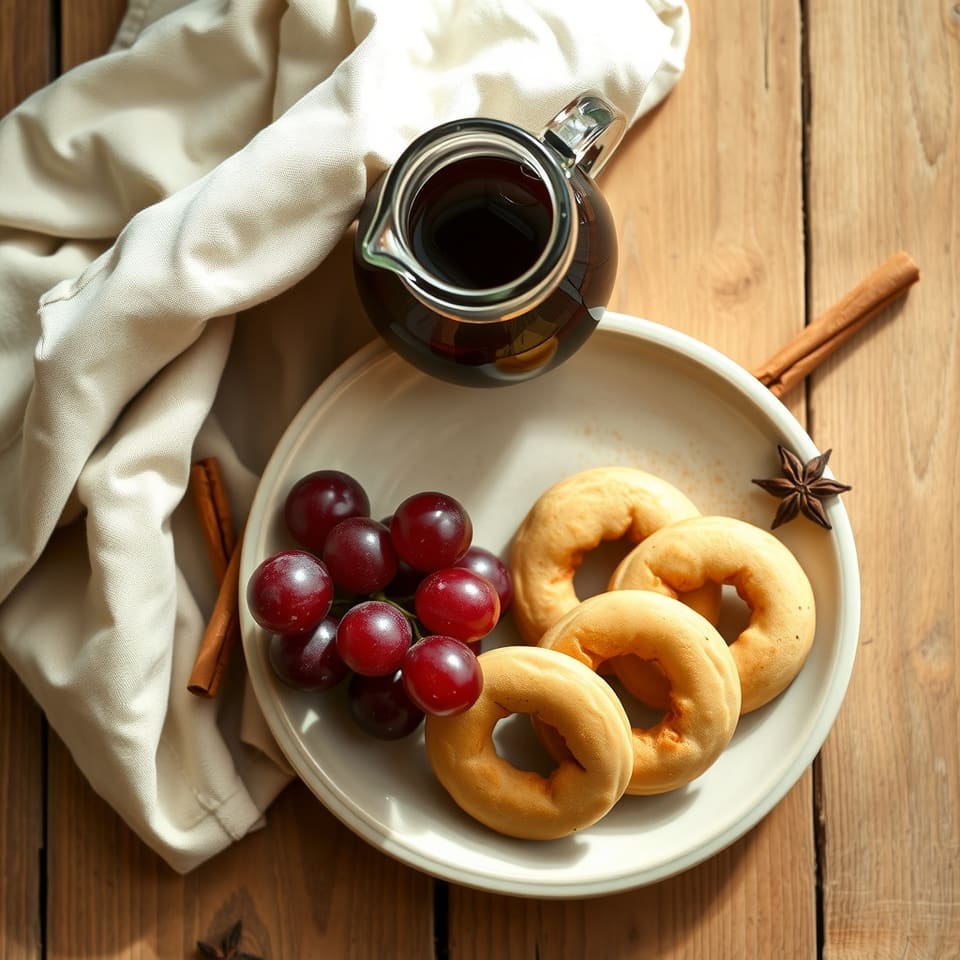
Grape molasses is grape juice that has been boiled for hours until it turns into a thick, dark, sweet syrup. It has nothing to do with sugarcane molasses. The taste is fruity and deep, somewhere between caramel and raisins, with a light tang.
Many grape-growing cultures make a version of it. In Greece and Cyprus it is called petimezi, in Turkey pekmez, in Lebanon and Syria dibs, and in Italy a similar cooked grape must is known as saba or sapa. Below you will find how it is made, easy ways to use it, a recipe for spiced cookies, and what lab tests actually show.
How grape molasses is made
A 2014 study in the Journal of Food Science and Technology followed the traditional Turkish method step by step. The grapes were crushed, and about 40 kg of juice came from 80 kg of grapes. The juice was warmed, mixed with a special white soil and left to settle, which clarified it and lowered its acidity. The clear juice was then boiled for about four hours, with the foam skimmed off, until it was thick enough.
At the end, about 61 to 67 percent of the syrup was dissolved solids, which in grape syrup are mostly the grapes' own sugars. That is why it keeps well and why a small spoonful tastes so sweet. Greek and Cypriot home cooks traditionally use wood ash or a white earth in a similar way, but buying a ready-made jar is the simplest and safest choice at home.
Grape Molasses Cookies with Cinnamon and Cloves
You need
- grape molasses120 ml (1/2 cup)
- olive oil or another mild oil120 ml (1/2 cup)
- orange juice, plus the grated zest of 1 orange60 ml (1/4 cup)
- ground cinnamon1 tsp
- ground cloves1/4 tsp
- baking soda1 tsp
- baking powder1 tsp
- all-purpose flourabout 450 g (3 1/2 cups)
Method
- Heat the oven to 180 °C (350 °F) and line two baking trays with baking paper.
- In a large bowl, whisk the grape molasses, oil, orange juice and zest. Stir in the baking soda; the mixture will foam and lighten.
- Mix the cinnamon, cloves and baking powder into the flour. Add the flour to the wet mixture a little at a time, stirring, until you have a soft dough that no longer sticks to your hands. You may not need all of it.
- Roll walnut-sized pieces into thin ropes about 12 cm (5 inches) long and join the ends to make small rings. Place them on the trays with a little space between.
- Bake for 15 to 18 minutes, until firm and slightly darker. Cool on the tray for 5 minutes, then on a rack.
Tips
- Do not taste the raw dough. Raw flour can carry germs that only baking kills.
- Store the cooled cookies in an airtight tin at room temperature and eat them within about two weeks. They soften slightly over time.
- Keep the opened syrup tightly closed and follow the label's storage advice.
Easy ways to use it
Breakfast: drizzle a teaspoon over plain yogurt or porridge, or mix it with tahini for a spread, as people do in Turkey and the Levant. Baking: use it in place of part of the honey or sugar in spiced cakes, cookies and breads; it pairs well with cinnamon, cloves, orange and walnuts.
Savory dishes: whisk a little into a salad dressing with olive oil and vinegar, or brush it thinly over roasting squash, carrots or onions in the last 10 minutes. In winter, a spoonful stirred into hot water with a cinnamon stick makes a simple warm drink.
What the evidence says
In many villages grape molasses is a traditional winter tonic, often given for tiredness or anemia. The lab data are interesting, but they are not proof of a health effect. The 2014 study found that potassium was the main mineral, and iron ranged from about 50 to 132 mg per kg, that is about 5 to 13 mg per 100 g, depending on the grape. The syrups also showed antioxidant activity and contained plant compounds called phenols.
All of these were laboratory measurements. The study did not test any health effect in people or animals. If you feel tired or think you may be low in iron, the NHS advises seeing a GP, who will usually arrange a blood test. Treatment depends on finding the cause, and one common cause, bleeding in the stomach or intestines, needs a doctor to check. A spoonful of syrup is not a substitute for that.
How much to use
Even though its sugar comes from fruit, the NHS counts syrups as free sugars, the same as table sugar. It advises adults to have no more than 30 g of free sugars a day, and less for children. Since most of grape molasses is sugar, a teaspoon or two at a time is plenty.
Questions people ask
Is grape molasses the same as regular molasses?
No. Regular molasses is a by-product of making sugar from sugarcane or beets. Grape molasses is simply grape juice boiled down, with no sugar added.
Is grape molasses a good source of iron?
It contains some iron, and the amount varies a lot by grape and method. It also brings a lot of sugar. If you think you are low in iron, see a doctor for a blood test instead of relying on syrup.
Can I use grape molasses instead of honey?
Yes, in most recipes. It is a little less sweet and more fruity and tangy, so taste and adjust.
Sources
- The effect of boiling on qualitative properties of grape juice produced by the traditional method — Journal of Food Science and Technology, via PubMed Central (NCBI)
- Sugar: the facts — NHS
- Iron deficiency anaemia — NHS
- Raw Flour and Dough — CDC
This article is for general information only and is not medical advice. Herbs can interact with medicines and health conditions. Talk to a doctor or pharmacist before trying a herbal remedy, especially if you are pregnant, breastfeeding, giving it to a child, or taking any medication.