Fresh to Dried Herbs Conversion: How Much to Use
A recipe asks for fresh thyme and all you have is a jar of dried. Here is the simple rule cooks use, why it is only a starting point, and how to get the most flavor from either form.
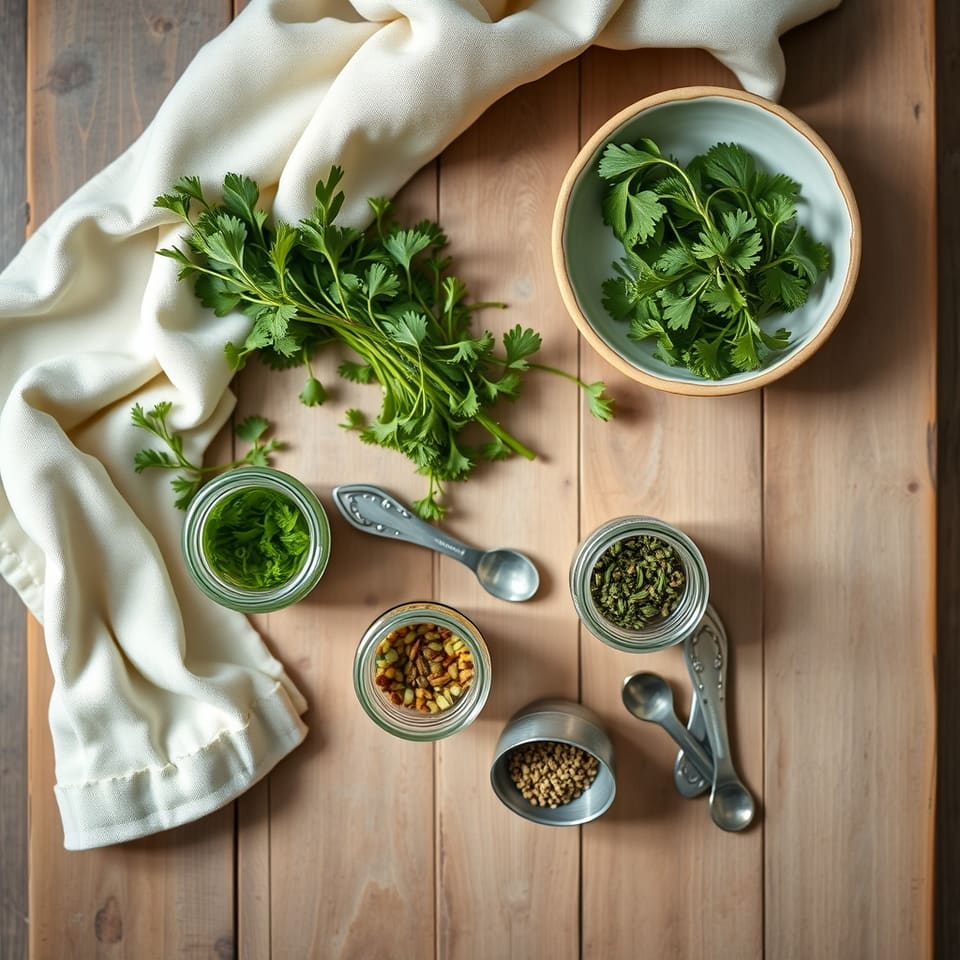
Almost every cook meets this moment. The recipe says a tablespoon of fresh oregano, but the garden is bare and the shop is closed. Can you use dried instead, and how much?
The short answer is yes, and you need much less. Dried herbs have lost their water, so their flavor is packed into a smaller space. The rule below works for most leafy herbs, from Mediterranean oregano to the thyme in a French stew. Treat it as a starting point, then trust your nose.
The basic rule: 3 to 1
University extension services in the United States give the same simple ratio: use about three times as much fresh herb as dried. Michigan State University Extension puts it as 1 teaspoon of dried equals 3 teaspoons of fresh.
Because a tablespoon holds 3 teaspoons, the easiest version to remember is this: 1 tablespoon of fresh chopped herb is about the same as 1 teaspoon of dried. Going the other way, if a recipe asks for 1 teaspoon of dried oregano and you have a pot on the windowsill, chop about 1 tablespoon of fresh leaves.
Ground herbs are stronger again. A University of Delaware fact sheet gives this rough chain: 1/4 teaspoon of powdered herb is about 3/4 to 1 teaspoon of dried, crumbled herb, which is about 2 to 3 teaspoons of fresh. So if all you have is a ground herb, start with a small pinch.
Everyday Herb Vinaigrette, Fresh or Dried
You need
- extra virgin olive oil45 ml (3 tbsp)
- red wine vinegar or lemon juice15 ml (1 tbsp)
- mustard1/2 tsp
- oregano, chopped fresh or crumbled dried1 tbsp fresh, or 1 tsp dried
- thyme leaves1 tsp fresh, or a pinch dried
- salt and black pepper1 pinch
Method
- If you are using dried herbs, crumble them between your fingers into a small jar with the vinegar or lemon juice and leave for 10 minutes to soften.
- If you are using fresh herbs, chop them finely and add them to the jar with the vinegar or lemon juice.
- Add the mustard, olive oil, salt and pepper.
- Close the jar and shake well until the dressing looks creamy.
- Taste on a lettuce leaf and add more herb, a little at a time, if needed.
Tips
- Made a few hours ahead, the dressing tastes fuller, because the herbs have time to blend in. Keep it in the fridge and use it within a few days.
- Try the same swap with other herbs: 1 tablespoon of fresh basil, dill or mint becomes 1 teaspoon of dried.
- Buy a new jar when the old one no longer smells strong.
What the evidence says
There is no exact science behind the 3 to 1 rule, and the sources do not fully agree. Michigan State and University of Illinois Extension use 3 to 1. Ohio State University Extension says dried herbs are about three to four times stronger than fresh. The reason for the range is simple: herbs differ, harvests differ, and dried herbs slowly lose their aroma in the jar.
University of Illinois Extension points out that the ratio only holds while the dried herb is still potent. An old jar of oregano that smells of dust will not taste like fresh at any ratio, and the University of Delaware notes that adding extra does not fix stale flavor. Michigan State adds that fresh herbs smell stronger, but dried herbs taste more intense.
So use the rule to get close, taste, and adjust. As the Delaware fact sheet says, start with a little: you can add more later, but you cannot take it out.
When to add fresh and dried herbs
Herb flavor fades with long cooking. For soups and stews that simmer for hours, the University of Delaware suggests adding herbs during the last 45 minutes, or adding some at the start and the rest near the end.
For quick dishes, crush dried herbs between your fingers or with a rolling pin before adding them. This breaks the leaves and releases the oils that carry the flavor. Chop fresh herbs finely for the same reason.
Cold foods work differently. In dips, dressings and marinated vegetables, give the herbs time: the Delaware fact sheet suggests adding them several hours ahead, or even the night before, so the flavors can blend.
Delicate herbs such as parsley, chives and chervil can be used in large amounts, so do not be shy with them in salads and sauces.
Is my dried herb still good?
Rub a little between your fingers and smell it. University of Illinois Extension recommends this test and suggests checking your spice cabinet every 6 months. If the smell is weak, the flavor will be weak too. Michigan State and Ohio State suggest using dried herbs within about a year for the best quality.
Store them in airtight containers in a cool, dry, dark place, away from the stove, as Ohio State and the University of Delaware advise. Buying small jars helps you use them up while they are still bright.
Questions people ask
Can I freeze fresh herbs instead of drying them?
Yes. Ohio State suggests freezing whole leaves spread on a tray, or chopped herbs in ice cube trays covered with water, broth or oil. Frozen herbs work best in cooked dishes rather than as a garnish.
Can I swap fresh for dried in baking?
Yes. Use about three times as much fresh herb as the dried amount, and chop it finely so it spreads evenly through the dough.
Can herbs replace some of the salt?
Yes. University of Illinois Extension suggests adding herbs in place of some salt, and the University of Delaware lists basil, oregano, dill seed and tarragon among good choices for lower-salt cooking.
Sources
- More herbs, less salt (part 2) — University of Illinois Extension
- Herbs (E3179) — Michigan State University Extension
- Preserving Herbs (HYG-5360) — Ohio State University Extension
- Using Herbs and Spices — University of Delaware Cooperative Extension
This article is for general information only and is not medical advice. Herbs can interact with medicines and health conditions. Talk to a doctor or pharmacist before trying a herbal remedy, especially if you are pregnant, breastfeeding, giving it to a child, or taking any medication.