Cooking With Herbs Chart: Which Herb With Which Food
Not sure whether thyme or tarragon belongs with your chicken? This herb pairing chart shows which herbs suit which foods, how to swap fresh for dried and when to add each one.
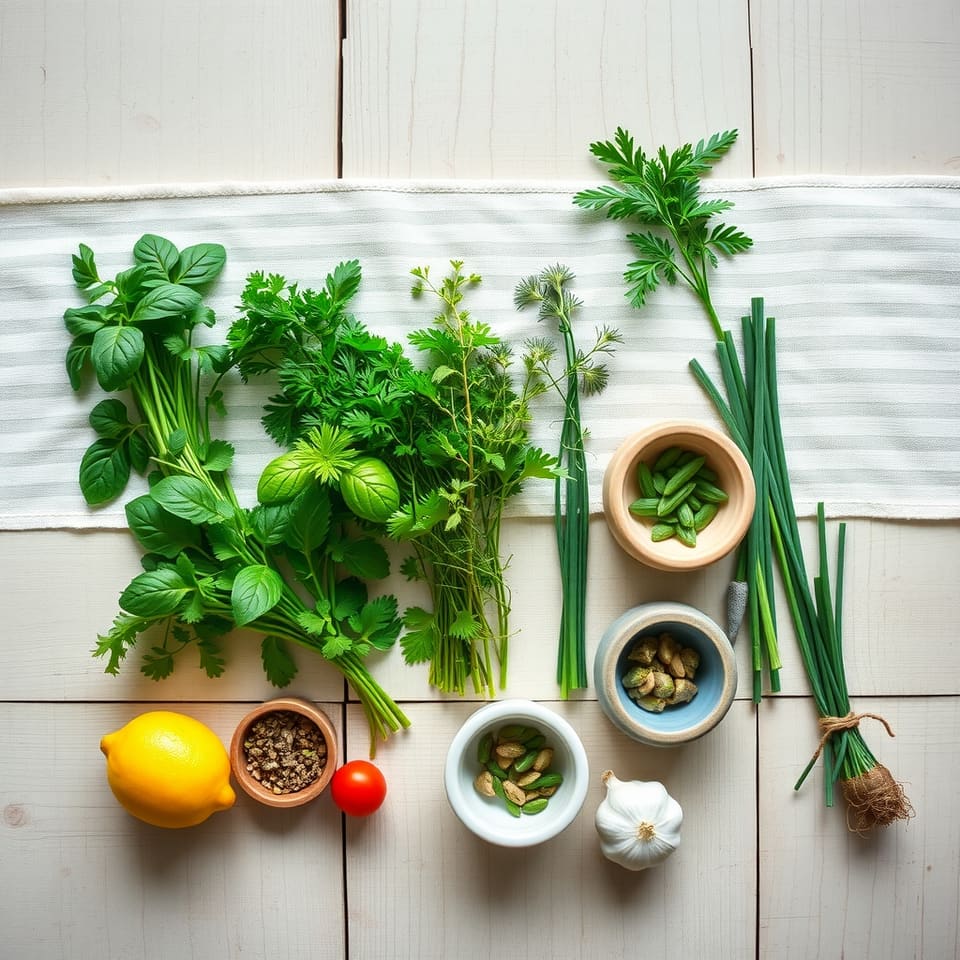
Standing at the stove with a jar of dried thyme in one hand and a bunch of parsley in the other, it is easy to wonder which one belongs in the pan. This guide answers that question herb by herb, with a few simple rules that work in kitchens anywhere in the world.
The pairings come from tables published by University of Florida IFAS Extension and University of Illinois Extension, together with their advice on swapping fresh and dried herbs and keeping dried herbs at their best. Use it as a starting point, then trust your own taste.
Fresh or dried: the 3-to-1 rule
Dried herbs are more concentrated than fresh ones. University of Florida IFAS Extension says that 1 tablespoon of finely cut fresh herb equals about 1 teaspoon of dried herb, or 1/4 to 1/2 teaspoon of ground dried herb. University of Illinois Extension calls this a 3-to-1 ratio and adds that it only works while the dried herbs are still potent.
Dried herbs and spices never actually spoil, according to Florida Extension, but their flavor and aroma fade. Keep them in tightly closed containers in a cool, dry place, away from the heat and steam of the stove. Florida gives leafy dried herbs such as parsley, basil and oregano 1 to 3 years, ground spices 2 to 3 years and whole spices up to 5 years.
To check a jar, Illinois Extension suggests rubbing a little between your fingers. If it smells fragrant and pleasant, use it. If the smell is weak or musty, throw it out. Buying small jars means you use them up while they still taste of something.
When to add herbs
Florida Extension advises adding delicate herbs, such as basil and chives, just before serving, and adding sturdier herbs, such as oregano and thyme, early in cooking. In practice, soft leafy herbs like parsley, cilantro, dill and mint taste best stirred in at the end or used raw, while woody herbs like rosemary, sage and bay leaf can simmer for longer and release their flavor slowly.
Bay leaves should be taken out before serving. With hot spices such as cayenne, Florida suggests starting with about 1/8 teaspoon and adding more if needed, because the heat grows as the dish cooks.
The chart: which herb with which food
Basil: tomato dishes, sauces, salads, eggs, fish and seafood, stews and vegetables. Think tomato sauce, pesto or a Thai-style stir-fry.
Bay leaf: soups, stews, sauces and gravies. Remove it before serving.
Chives: eggs, fish, chicken, lamb, vegetables, cream cheese, sour cream, mayonnaise and cream sauces.
Cilantro (fresh coriander): salsas, guacamole and salads, and many dishes from Mexico, India and Southeast Asia.
Dill: potato salad, dips, cheese, meat, rice, soups, chowders, stews, breads and vegetables.
Oregano: Italian and Mexican dishes, eggs, fish, poultry, meat, mushrooms, green salads, sauces, soups and vegetables.
Parsley: dips, dressings, omelets, potatoes, sauces, soups, vegetables and as a fresh garnish.
Rosemary: potatoes, fish, marinades, herb breads, sauces, soups and vegetables. A little goes a long way.
Sage: pork, poultry, cheese dishes, omelets, rice and chowders.
Tarragon: chicken, fish, shellfish, salads and salad dressings, sauces, soups and vegetables.
Thyme: soups, stews, stuffing, tomato sauces, fish and shellfish, cheese, salad dressings and vegetables.
By vegetable, Illinois Extension suggests basil, bay leaf, chives, tarragon, thyme, oregano, garlic and onion for tomatoes; parsley, thyme, marjoram, nutmeg and cinnamon for carrots; and basil, ginger, cinnamon, cloves, allspice, nutmeg and mustard seed for winter squash.
What the evidence says
Herbs in cooking are about flavor, and this chart makes no health claims for any of them. The clearest health link is with salt. The NHS says adults should have no more than 6 g of salt a day, about one level teaspoon, and suggests herbs and spices, as well as black pepper, garlic, chili and lemon juice, as ways to add flavor instead.
The NHS also gives lower limits for children, for example no more than 2 g a day for ages 1 to 3, and less than 1 g for babies under 1, whose kidneys are not developed enough to cope with much salt. Herbs are an easy way to keep family meals tasty without salting them heavily.
For fresh herbs, food safety is simple. The FDA advises washing produce under running water, without soap or produce wash, and drying it with a clean cloth or paper towel. It lists herbs among perishable produce to keep in the fridge at 4 °C (40 °F) or below.
Questions people ask
Can I use dried herbs instead of fresh in any recipe?
In cooked dishes, yes: use about 1 teaspoon dried for each tablespoon of fresh. In raw dishes such as salads or garnishes, fresh herbs usually work better.
How do I know if my dried herbs are still good?
Rub a pinch between your fingers. If it smells fragrant, it is fine. If the smell is faint or musty, replace it.
Which herbs should I start with?
Parsley, basil, thyme and oregano cover a huge range of dishes. Add dill, rosemary or cilantro once you know which cuisines you cook most.
Sources
- Shopping for Health: Herbs and Spices (FSHN13-03) — University of Florida IFAS Extension
- More herbs, less salt (part 2) — University of Illinois Extension
- Salt: the facts — NHS
- Selecting and Serving Produce Safely — FDA
This article is for general information only and is not medical advice. Herbs can interact with medicines and health conditions. Talk to a doctor or pharmacist before trying a herbal remedy, especially if you are pregnant, breastfeeding, giving it to a child, or taking any medication.