The Best Sweetener for Tea: Honey, Stevia or Sugar?
Honey sounds healthier, stevia has no calories and sugar is the old habit. Here is what the evidence really says about each one, and why the best choice may be learning to need less.
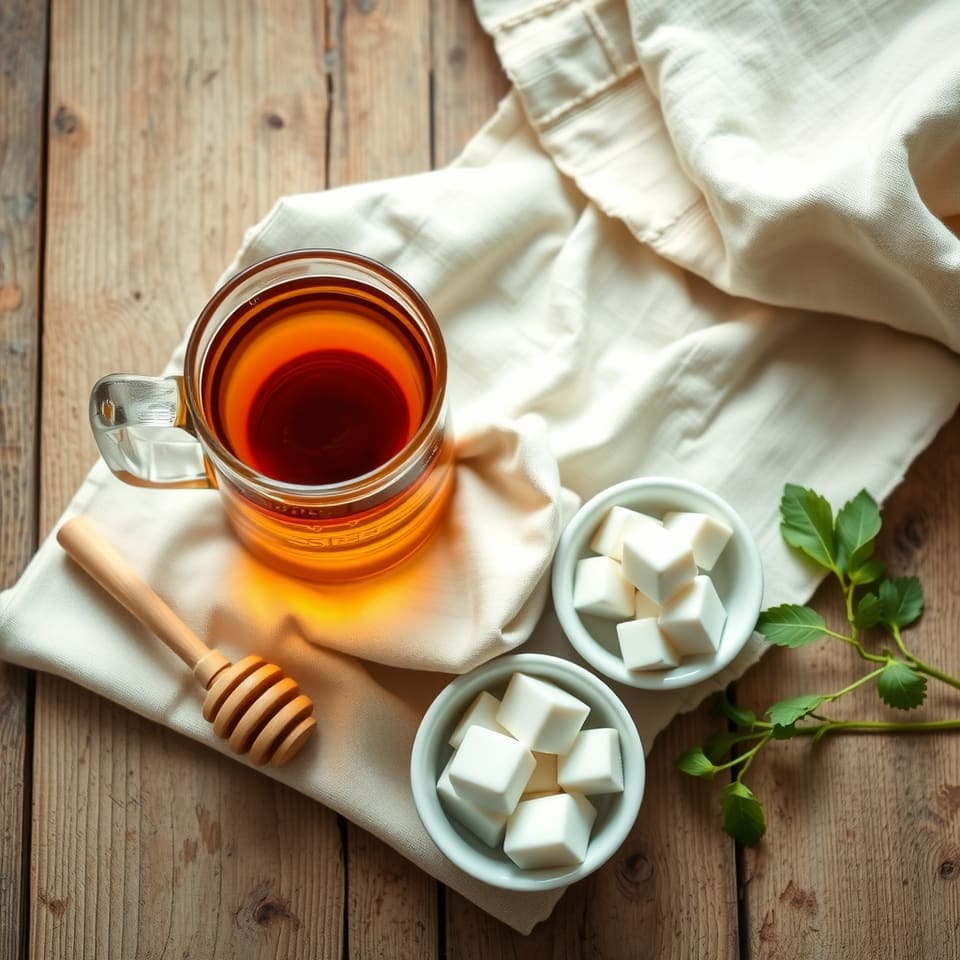
If you drink a few cups of tea a day, the spoon you stir in adds up. Many people switch from sugar to honey because it feels more natural, or to stevia because it has no calories. Others wonder whether any of it matters.
This guide looks at the three most common choices honestly, using advice from the NHS and the World Health Organization. The short answer: honey is not a free pass, sweeteners are a reasonable swap but not a weight-loss tool, and the cup that serves you best is often the one you gradually sweeten less.
Honey and sugar: closer than you think
The NHS groups honey with table sugar. Both count as free sugars, the kind health guidelines ask us to cut down on. So do syrups such as maple and agave, and nectars. Honey may taste richer, but in health guidance it still counts as added sugar.
The NHS advises adults to have no more than 30 g of free sugars a day, which is about 7 sugar cubes. That limit covers everything: biscuits, cereals, soft drinks and the sugar or honey in your tea. If you take two spoonfuls in each of several mugs, your tea alone can use up a large part of it.
Too much sugar adds extra calories, which can lead to weight gain over time, and the NHS names sugar as one of the main causes of tooth decay. A sweetened mug several times a day is a habit, and habits are where small changes add up.
Four-Week Step-Down Plan for Sweet Tea
You need
- your usual tea, black, green or herbal250 ml (1 cup) per mug
- sugar, honey or sweetener, to startYour usual amount
- flavor helper: a strip of orange or lemon peel, a thin slice of fresh ginger, a few fresh mint leaves or a cinnamon stick1 per mug, optional
Method
- Week 1: measure honestly. Use a level teaspoon for every mug and note how many you take in a day. Do not change anything yet.
- Week 2: take off about a quarter. If you use 2 level teaspoons, use 1 and a half. Add a flavor helper to the pot or mug while it steeps.
- Week 3: halve your starting amount. If you used 2 teaspoons, use 1. Keep using a flavor helper if you like it.
- Week 4: try one mug a day with no sweetener at all, using a naturally fragrant tea or a flavor helper.
- If a step feels too hard, stay on it for another week. There is no deadline.
Tips
- Brew for the time on the packet. A cup that tastes balanced to you needs less sweetening.
- If you switch to a no-calorie sweetener, treat it as a bridge and keep stepping down the amount.
- Fragrant herbal teas such as mint or lemon verbena often taste fine without any sweetener.
Stevia and other no-calorie sweeteners
Stevia-based sweeteners are made from purified steviol glycosides, listed on labels as E960. The NHS includes them among the sweeteners approved in the UK, alongside sucralose, aspartame and others. All approved sweeteners go through a safety assessment, and the NHS calls them a safe and acceptable alternative to sugar.
There are a few points to know. Aspartame is not suitable for people with phenylketonuria (PKU), which is why products containing it carry a warning. Sugar alcohols such as sorbitol, xylitol and erythritol can have a laxative effect in large amounts. On the plus side for teeth, the NHS says using no-calorie sweeteners instead of sugar can help reduce the risk of tooth decay.
What the evidence says
On weight, the picture is mixed. The NHS notes that short-term trials found no-calorie sweetened drinks, used instead of sugary ones, can help lower calorie intake and weight gain. Longer-term observational studies give conflicting results.
In 2023 the World Health Organization went further. It advised against using non-sugar sweeteners, including stevia, as a way to control body weight. Its review found no long-term benefit for reducing body fat and suggested possible harms from long-term use. WHO rated this a conditional recommendation, because the evidence is not certain, and it does not apply to people who already have diabetes.
Put together, a sweetener is a fair swap if it helps you move away from sugar, but it is not a weight-loss aid. The approach both bodies point toward is reducing how sweet your food and drinks are overall.
Questions people ask
Is honey healthier than sugar in tea?
Not in any meaningful way for weight or teeth. The NHS counts honey as a free sugar, just like table sugar, so it comes out of the same daily limit.
Is stevia safe to use every day?
Purified stevia sweeteners are approved for use in food and drink in the UK, and the NHS calls approved sweeteners a safe alternative to sugar. WHO, however, advises against relying on them for weight control.
What is the best sweetener for tea if I want to lose weight?
The best option is gradually using less of any sweetener. A no-calorie sweetener can help you move away from sugar, but WHO found no long-term benefit for body fat.
Sources
- Sugar: the facts — NHS
- The truth about sweeteners — NHS
- WHO advises not to use non-sugar sweeteners for weight control in newly released guideline — World Health Organization
- Foods to avoid giving babies and young children — NHS
- Questions and Answers about FDA's Initiative Against Contaminated Weight Loss Products — U.S. Food and Drug Administration
This article is for general information only and is not medical advice. Herbs can interact with medicines and health conditions. Talk to a doctor or pharmacist before trying a herbal remedy, especially if you are pregnant, breastfeeding, giving it to a child, or taking any medication.