Tabbouleh: The Herb Salad That Is Mostly Parsley
Real tabbouleh is a green salad of finely chopped parsley and mint with just a little bulgur, sharpened with lemon. Here is how to make it, keep it fresh and adapt it.
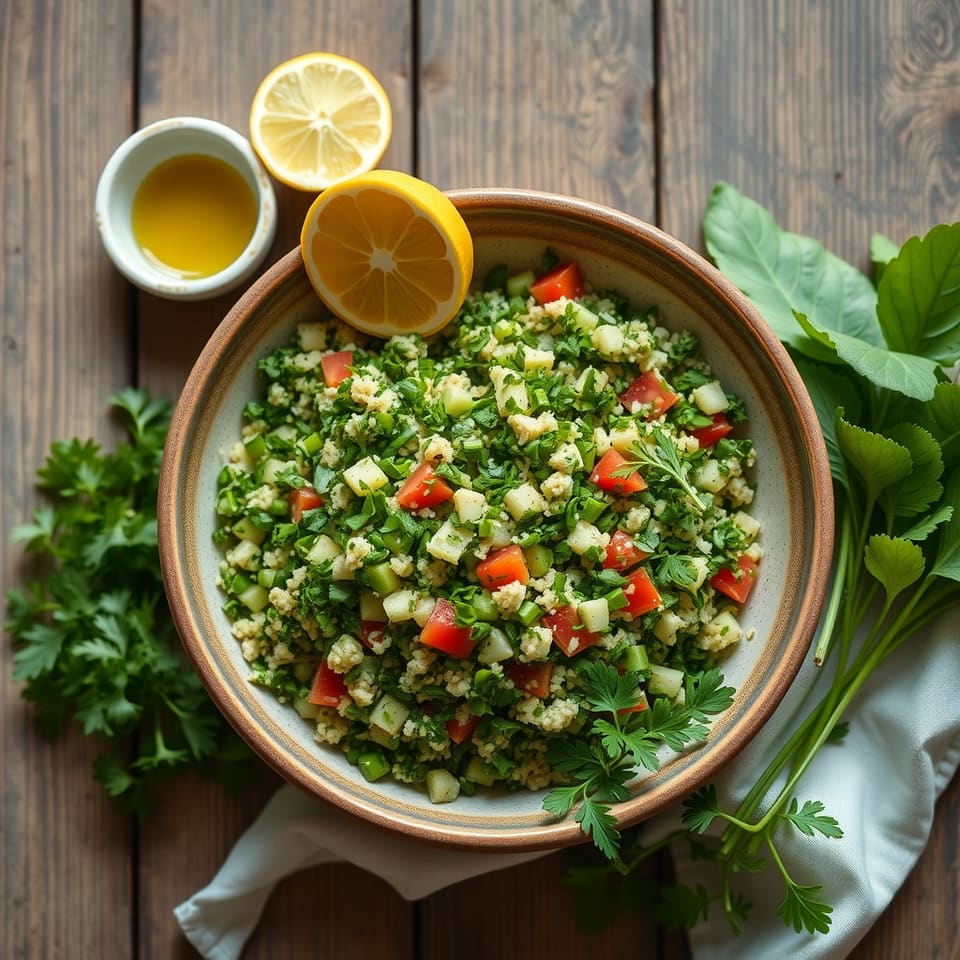
If you have only had tabbouleh as a bowl of grain with a few green flecks, the classic version from the Levant may surprise you. It is mostly parsley, with mint, tomato, spring onion and only a small spoonful of fine bulgur, all dressed with lemon juice and olive oil.
That makes it one of the easiest ways to eat a big handful of fresh herbs in one meal. It needs no cooking, and the secret is in the chopping and the timing, plus a couple of details worth knowing if you avoid gluten or take warfarin.
Herbs first, grain second
Think of tabbouleh as a parsley salad with a little grain, not a grain salad with herbs. Flat-leaf parsley gives the bulk and a clean, slightly peppery taste. Fresh mint adds coolness, spring onions add bite, and ripe tomatoes add juice that soaks into the bulgur.
Fine bulgur only needs a short soak, not boiling. A small amount is enough. If you add too much, the herbs get lost and the salad turns heavy and dry.
Herb-First Tabbouleh
You need
- fine bulgur40 g (1/4 cup)
- cold water, for soaking60 ml (1/4 cup)
- flat-leaf parsley, about 150 g (5 oz) leaves and thin stems2 large bunches
- fresh mint, about 20 g (3/4 oz) leaves1 small bunch
- ripe medium tomatoes, about 300 g (10 oz)3
- spring onions (scallions)4
- fresh lemon juice, from about 2 lemons60 ml (1/4 cup)
- extra virgin olive oil60 ml (1/4 cup)
- salt, or to taste1/2 tsp
- ground allspice or black pepper, optional1/4 tsp
Method
- Rinse the bulgur in a fine sieve, put it in a small bowl and add the cold water and 1 tbsp of the lemon juice. Leave it for 15 to 20 minutes, until tender, then press out any water that is left.
- Wash the parsley and mint under running water. Spin or pat them completely dry with a clean towel.
- Pick the mint leaves and cut off the thick lower parsley stems. Bunch the herbs tightly and chop them finely with a sharp knife.
- Dice the tomatoes small, keeping their juice. Slice the spring onions thinly.
- In a large bowl, combine the herbs, tomatoes with their juice, spring onions and drained bulgur.
- Just before serving, add the rest of the lemon juice, the olive oil, salt and allspice or pepper. Toss gently, taste and add more lemon or salt if needed.
- Put any leftovers in a covered container in the fridge straight after the meal and eat them within a day for the best texture.
Tips
- For a gluten-free version, use about 60 g (1/3 cup) cooked and fully cooled quinoa instead of the bulgur.
- To get ahead, chop the herbs and vegetables a few hours early, keep them covered in the fridge, then mix and dress at the last minute.
How to keep it green, not soggy
Wash the parsley and mint under running water and dry them very well. The FDA advises washing produce under running water rather than with soap, detergent or produce wash, then drying it with a clean cloth or paper towel. Wet leaves turn to mush when you chop them and make the salad watery.
Use a sharp knife and chop the herbs finely without mashing them. A blunt knife or a food processor crushes the leaves, which darkens them and releases water. The thin upper parsley stems can go in; discard the thick lower ones.
Add the lemon, oil and salt just before serving. Salt draws water out of the tomatoes and herbs, so dressed tabbouleh is at its best within an hour or two.
What the evidence says
Tabbouleh is a fresh vegetable dish, not a remedy, and no herb in it has proven medical effects in food amounts. It is simply a generous, tasty serving of leafy greens and vegetables.
Bulgur is a whole grain. The Harvard T.H. Chan School of Public Health lists bulgur among whole grains and explains that the bran, the fiber-rich outer layer, is part of what makes whole grains a good choice. It adds that fiber helps lower cholesterol and moves waste through the digestive tract. In a herb-first tabbouleh the amount of bulgur is small, so see it as a bonus rather than the main point.
Two groups need to adjust the recipe. Bulgur is wheat, so it contains gluten: a gluten-free diet leaflet from West Suffolk NHS Foundation Trust lists bulgur wheat and couscous among gluten-containing cereals and quinoa among gluten-free ones. And because the salad is so leafy, people taking warfarin should read the cautions below.
Serving and storing
Serve it with grilled chicken or lamb, fish, falafel or hummus. Crisp romaine leaves make a good edible scoop.
The FDA lists herbs among perishable produce to keep in the fridge at 4 °C (40 °F) or below. Chopped, undressed herbs and tomatoes can wait a few hours, covered, in the fridge. Once dressed, tabbouleh softens quickly, so eat it the same day.
Questions people ask
Why is my tabbouleh soggy?
Usually the herbs were wet when chopped, the salad was dressed too early or there was too much bulgur. Dry the herbs well, keep the bulgur small and dress it just before serving.
Can I use curly parsley?
Yes. Flat-leaf is the usual choice, but curly parsley works and stays crisp. Chop it very finely.
Can I make tabbouleh with quinoa?
Yes. Quinoa is gluten free, so it suits a gluten-free table. Cook it, let it cool completely and use about 60 g (1/3 cup) cooked quinoa.
Sources
- Selecting and Serving Produce Safely — FDA
- Whole Grains — Harvard T.H. Chan School of Public Health, The Nutrition Source
- Anticoagulant medicines: considerations — NHS
- Gluten Free Diet (patient leaflet 7023-1) — West Suffolk NHS Foundation Trust
This article is for general information only and is not medical advice. Herbs can interact with medicines and health conditions. Talk to a doctor or pharmacist before trying a herbal remedy, especially if you are pregnant, breastfeeding, giving it to a child, or taking any medication.