Thyme Steam for a Blocked Nose: How to Do It Safely
Warm, moist air can feel good when your nose is blocked. Here is how adults can do a thyme steam safely, and why children should never use a bowl of hot water.
A blocked nose is one of the most annoying parts of a cold. It makes it hard to sleep, taste food or think clearly. Leaning over a bowl of steaming water with a towel over your head is an old home remedy, and adding a few sprigs of thyme gives the steam a fresh, herbal scent.
Many people find it comforting. But steam is also a common cause of painful scalds, especially in children. If you try it, the safety steps below matter more than the herbs.
Why people use steam
The NHS lists breathing in steam as one way to ease a blocked nose during a cold. Warm, moist air can make your nose feel more open for a while and is soothing when you feel stuffy.
Thyme is a traditional cold-season herb. In Europe, thyme preparations taken as tea or by mouth are recognized for traditional use for chesty coughs with colds. Using thyme in steam is a home habit rather than a studied treatment, so here it mainly adds a pleasant aroma.
Thyme Steam for Adults
You need
- hot water, just off the boil and left to cool for 5 minutes1 liter (4 cups)
- fresh thyme, or 1 tbsp dried thyme4 to 5 sprigs
- large cotton towel1
Method
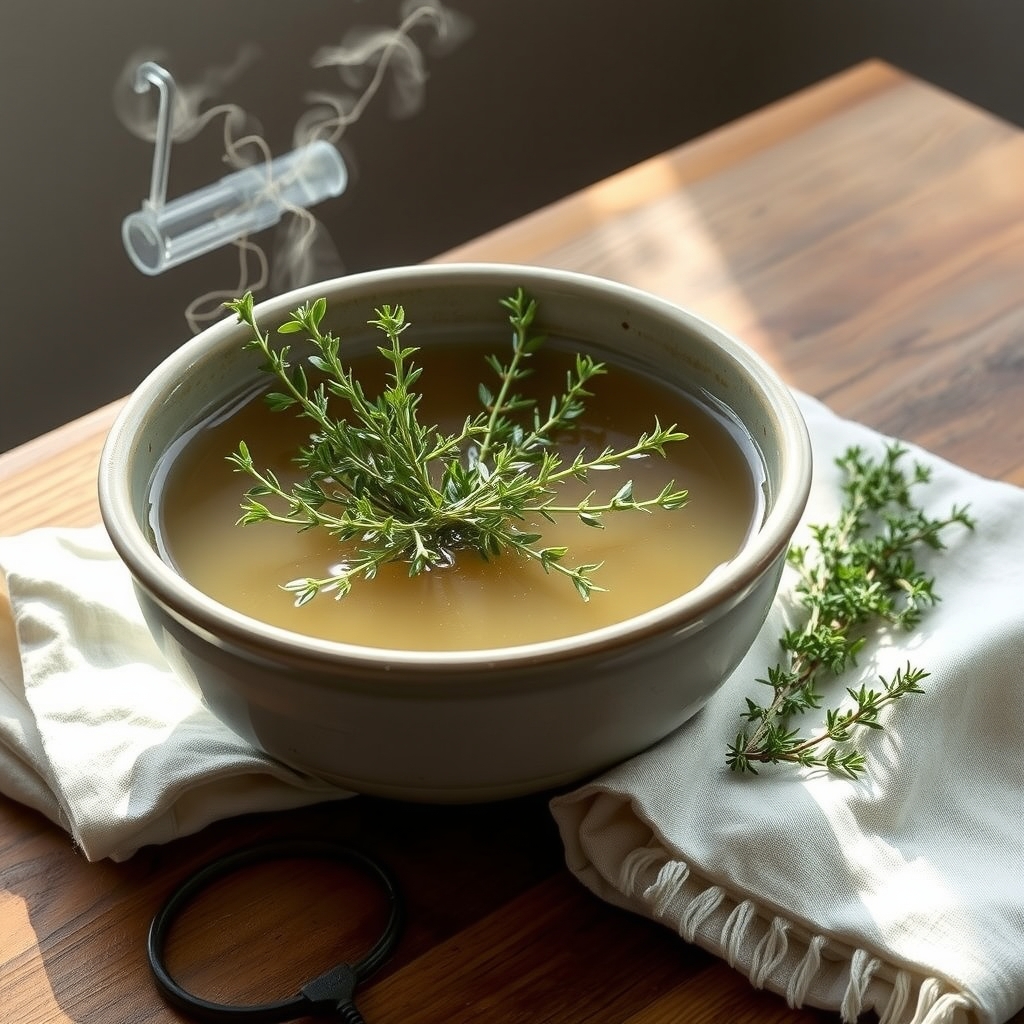
- Put the thyme in a wide, heavy, heat-proof bowl with a flat base.
- Place the bowl on a stable table, then pour in the hot water. Let it stand a few minutes so the steam is warm, not scalding.
- Sit on a chair facing the bowl with your face at least 30 cm (12 inches) above the water.
- Drape the towel over your head and the bowl, close your eyes and breathe slowly through your nose.
- Lift the towel or move back at once if it feels too hot. Stop after 5 to 10 minutes.
- When you finish, let the water cool fully before you move the bowl.
Tips
- Never use water straight from a boiling kettle, and never hold the bowl or rest it on your knees.
- Do not add essential oils, menthol rubs or other products to the water.
- Prefer to skip the bowl? A warm shower with the bathroom door closed gives similar comfort.
What the evidence says
A Cochrane review looked at trials of heated, humidified air for the common cold. It included six small trials and found no clear benefit or harm, and rated the evidence as low quality. Some people reported minor effects such as nasal irritation, discomfort or more congestion.
There is no good research on adding thyme to steam. So the honest view is that steam may feel good for a short time, but it is unlikely to change how long your cold lasts.
The risk side is clearer. Steam from a bowl can scald, and the NHS specifically warns against letting children breathe in steam from a bowl of hot water for that reason.
A safer way to get steam
The simplest and safest option is to sit in the bathroom while a hot shower runs, which the NHS also suggests. You get warm, moist air without a bowl of hot water in front of you.
If you do use a bowl, set it on a sturdy table, never on your lap, and sit on a chair so you are stable. Keep children and pets out of the room.
Questions people ask
Can I use steam for my child's blocked nose?
Not with a bowl of hot water. The NHS advises against it because of the risk of scalding. Ask your pediatrician or pharmacist about safer options for children.
Is thyme better than plain water?
There is no research showing thyme adds a benefit in steam. It simply smells pleasant. Plain warm steam or a hot shower is just as reasonable.
How often can I do a steam session?
Once or twice a day for 5 to 10 minutes is a common home approach. Stop if your nose feels more irritated, and remember the evidence for any benefit is weak.
Sources
- Common cold — NHS
- Heated, humidified air for the common cold — Cochrane Library
- Burns and scalds — NHS
- Thymi herba - herbal medicinal product — European Medicines Agency
This article is for general information only and is not medical advice. Herbs can interact with medicines and health conditions. Talk to a doctor or pharmacist before trying a herbal remedy, especially if you are pregnant, breastfeeding, giving it to a child, or taking any medication.