Linden Blossom Tea: A European Evening Classic
Honey-scented linden flowers have been brewed across Europe for centuries to settle the nerves and ease a cold. Here is how to make a cup and what science can and cannot say.
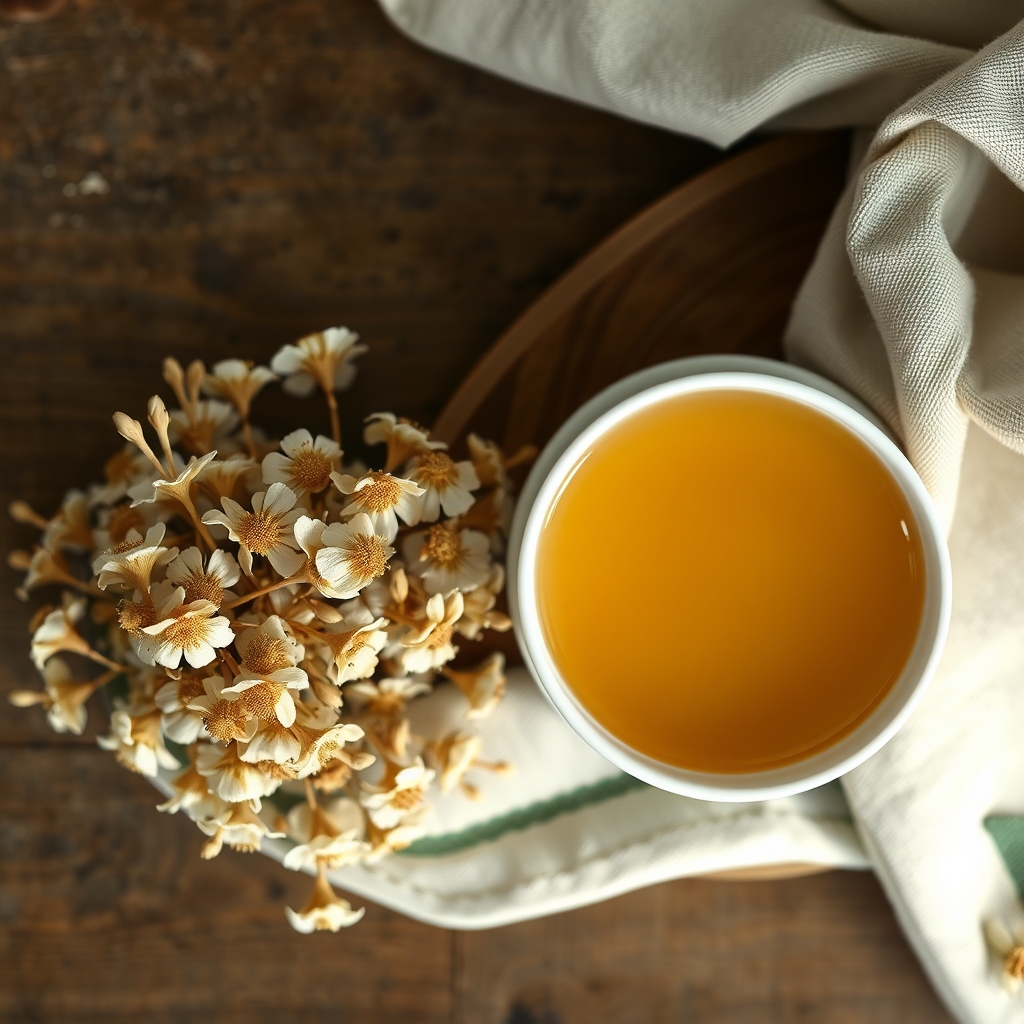
Walk under a linden tree in early summer and you will smell it before you see it: a sweet, honey-like scent from clusters of small cream flowers. Those flowers, dried with their papery pale-green bracts, make one of Europe's best-loved evening teas.
You may know it as lime blossom, tilleul in France, or tilia in Greece and Cyprus. Whatever you call it, it is mild, gentle, and pleasant to drink. Here is how to brew it, what the research shows, and the cautions worth knowing.
A long European tradition
According to the European Medicines Agency, linden flower has been used since the Middle Ages. It was traditionally given as a hot drink to encourage sweating during colds and fevers, and for coughs and catarrh. It was also used as a calming remedy for nervous tension and anxiety.
That tradition is written into several old European pharmacopoeias, and linden flower tea has been sold in Germany and elsewhere for decades. Today the agency recognizes it as a traditional herbal remedy for two uses: relief of common cold symptoms, and relief of mild symptoms of mental stress.
Simple Linden Blossom Tea
You need
- dried linden flowers with bracts1.5 g (about 1 heaped tablespoon)
- freshly boiled water150 ml (about 2/3 cup)
- honey, for adults and children over 12 months only1 teaspoon (optional)
Method
- Bring fresh water to a boil.
- Put the linden flowers in a cup or small teapot and pour the boiling water over them.
- Cover and steep for 5 to 10 minutes. The flowers are light and fluffy, so press them down with a spoon once.
- Strain and let the tea cool until it is comfortable to sip. Add a little honey if you like.
- Adults can drink 2 to 4 cups a day, which matches the traditional range of 3 to 6 g of dried flower daily.
Tips
- The flowers are bulky. A tablespoon looks like a lot but weighs very little.
- Linden blends well with a few lemon verbena or mint leaves.
- For a cold, sip it hot. For an evening wind-down, let it cool a little and drink it slowly.
What the evidence says
The evidence is thin. The European assessment found almost no clinical research on linden flower. One small, open study of people with catarrh who inhaled linden steam had no statistical analysis, so it could not be properly judged.
The assessors concluded that linden's benefits are plausible based on long use but not proven by clinical data, and that proper randomized trials are needed. Its recognized status rests on tradition and a good safety record at normal doses, not on proof that it works.
So linden tea is best seen as a soothing, warm drink that may help you relax at the end of the day or feel more comfortable with a cold. It is not a treatment for anxiety, insomnia, or infection.
Choosing and storing the flowers
Look for dried flowers that still smell sweet and show their pale bracts. Dull brown, dusty, or musty-smelling flowers are past their best.
Keep them in a sealed glass jar in a cool, dark cupboard. If you pick your own, choose trees away from busy roads, dry the flowers fully in a shaded, airy spot, and check that you have the right tree before you use them.
Questions people ask
Is lime blossom tea made from lime fruit?
No. In British English, lime tree is another name for the linden tree (Tilia). The tea is made from its flowers and has nothing to do with the citrus fruit.
Will linden tea make me drowsy?
It is traditionally used to calm, but no studies have tested its effect on driving or alertness. See how you feel after a cup before you drive.
Can I drink linden tea every day?
Adults commonly drink 2 to 4 cups a day. If you find you need it for stress every day and symptoms are not easing, speak to a doctor rather than relying on the tea.
Sources
- Tiliae flos - herbal medicinal product — European Medicines Agency
- Community herbal monograph on Tilia cordata Miller, Tilia platyphyllos Scop., Tilia x vulgaris Heyne or their mixtures, flos — European Medicines Agency
- Assessment report on Tilia cordata Miller, Tilia platyphyllos Scop., Tilia x vulgaris Heyne or their mixtures, flos — European Medicines Agency
This article is for general information only and is not medical advice. Herbs can interact with medicines and health conditions. Talk to a doctor or pharmacist before trying a herbal remedy, especially if you are pregnant, breastfeeding, giving it to a child, or taking any medication.