Lavender and Chamomile Bedtime Tea Blend
Apple-sweet chamomile with a whisper of lavender makes a soothing evening cup. Here is how to balance the blend and use it safely.
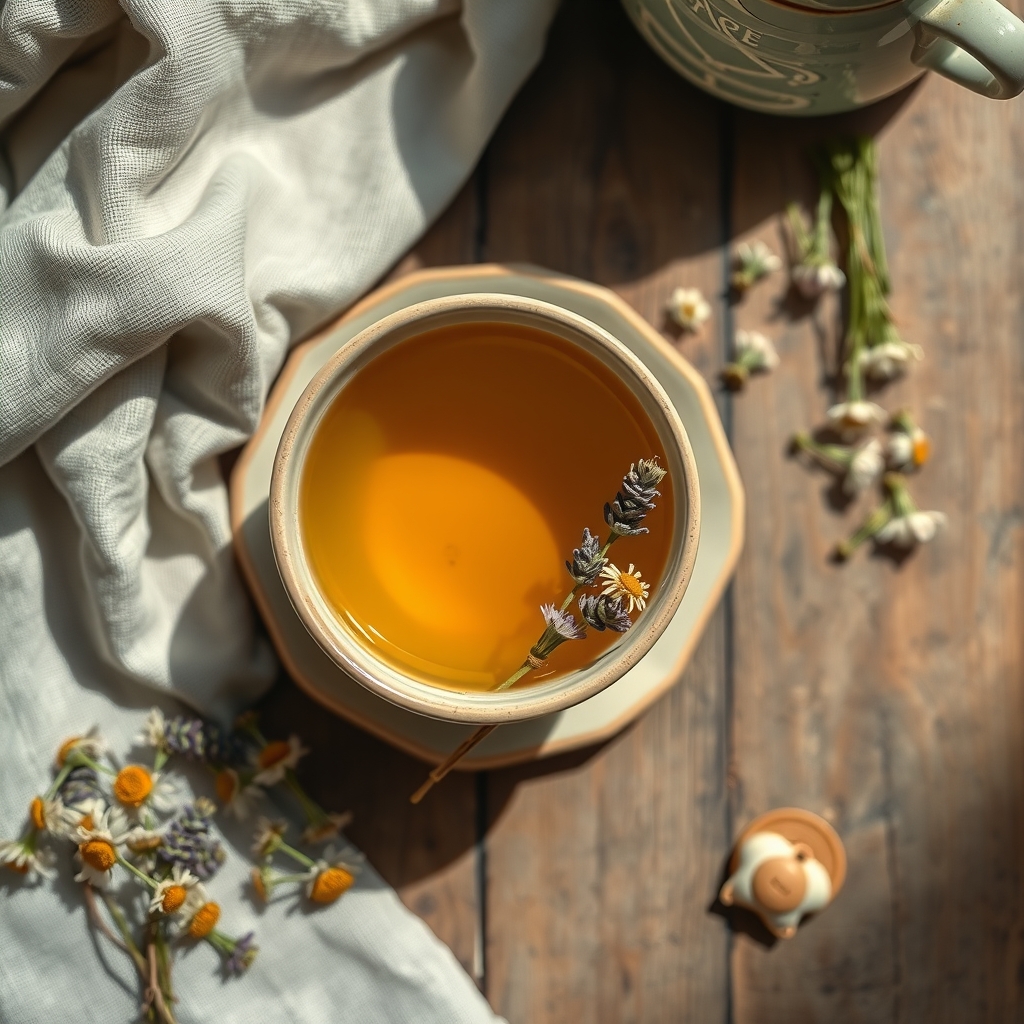
Chamomile and lavender are two of the best-known bedtime herbs. Together they make a mellow, floral cup that feels like a signal to your body that the day is over.
The trick is balance. Chamomile does most of the work on flavor, while a small pinch of culinary lavender buds adds perfume without tasting soapy. Here is the recipe, plus an honest look at the research and the cautions that matter.
Why people use it
Chamomile has traditionally been used for sleeplessness and anxiety, and it is one of the most popular evening teas.
Lavender flower is recognized in Europe as a traditional herbal medicine for mild symptoms of stress and exhaustion and to aid sleep. That status is based on long-standing use rather than strong clinical trials.
Use only food-grade dried lavender buds. Never add lavender essential oil to a drink, as essential oils are not meant to be swallowed.
Lavender and Chamomile Bedtime Tea
You need
- freshly boiled water250 ml (1 cup)
- dried chamomile flowers2 g (about 1 tablespoon)
- dried culinary lavender buds0.5 g (about 1/4 teaspoon)
Method
- Bring the water to a boil, at 100°C (212°F).
- Place the chamomile and lavender in a cup or small teapot and pour the water over them.
- Cover and steep for 5 minutes. Taste, and steep up to 3 minutes longer if you want a stronger cup.
- Strain and sip slowly 30 to 60 minutes before bed.
Tips
- If the lavender tastes too strong, halve it next time.
- Make a small jar of the dry blend at a ratio of four parts chamomile to one part lavender for quick evenings.
- A thin strip of lemon peel brightens the flavor.
What the evidence says
For chamomile, the picture is mixed. The US National Center for Complementary and Integrative Health says there is very little information on chamomile and insomnia, and that clinical trials have not shown conclusive benefit. Memorial Sloan Kettering's review notes modest benefits in some studies, and preliminary studies of chamomile supplements suggest they might help with generalized anxiety.
For lavender, small studies of oral lavender oil capsules suggest they may help with anxiety, but the research is limited. Those were standardized products, not tea. Evidence for lavender and sleep, mostly from aromatherapy, is unclear.
So this blend may help you relax as part of a bedtime routine, but it is not a proven sleep treatment.
Getting the balance right
Lavender is strong. Too much turns a cup bitter and perfumed, so start with a small pinch and add more next time only if you want it.
Store both herbs in airtight jars away from light and heat to keep their aroma fresh.
Questions people ask
Can I use lavender from a garden center?
Only use lavender sold as food-grade or culinary, so you know it was grown and handled to be eaten. If in doubt, leave it out.
Can I add a drop of lavender oil instead of buds?
No. Essential oils are highly concentrated and should not be taken by mouth. Stick to dried culinary buds.
Is chamomile tea safe every night?
Chamomile is likely safe in amounts usually found in tea for most adults. Check with your doctor if you take medicines such as blood thinners, or if you are pregnant or breastfeeding.
Sources
- Chamomile: Usefulness and Safety — NCCIH
- Chamomile — Memorial Sloan Kettering Cancer Center (About Herbs)
- Lavender: Usefulness and Safety — NCCIH
- Community herbal monograph on Lavandula angustifolia Mill., flos — European Medicines Agency
This article is for general information only and is not medical advice. Herbs can interact with medicines and health conditions. Talk to a doctor or pharmacist before trying a herbal remedy, especially if you are pregnant, breastfeeding, giving it to a child, or taking any medication.