Herb Salad Dressing: Easy Recipes and Safe Storage
One easy formula, a jar and a handful of fresh herbs give you a salad dressing that beats most bottles. Here is the ratio, three variations and how long each one keeps.
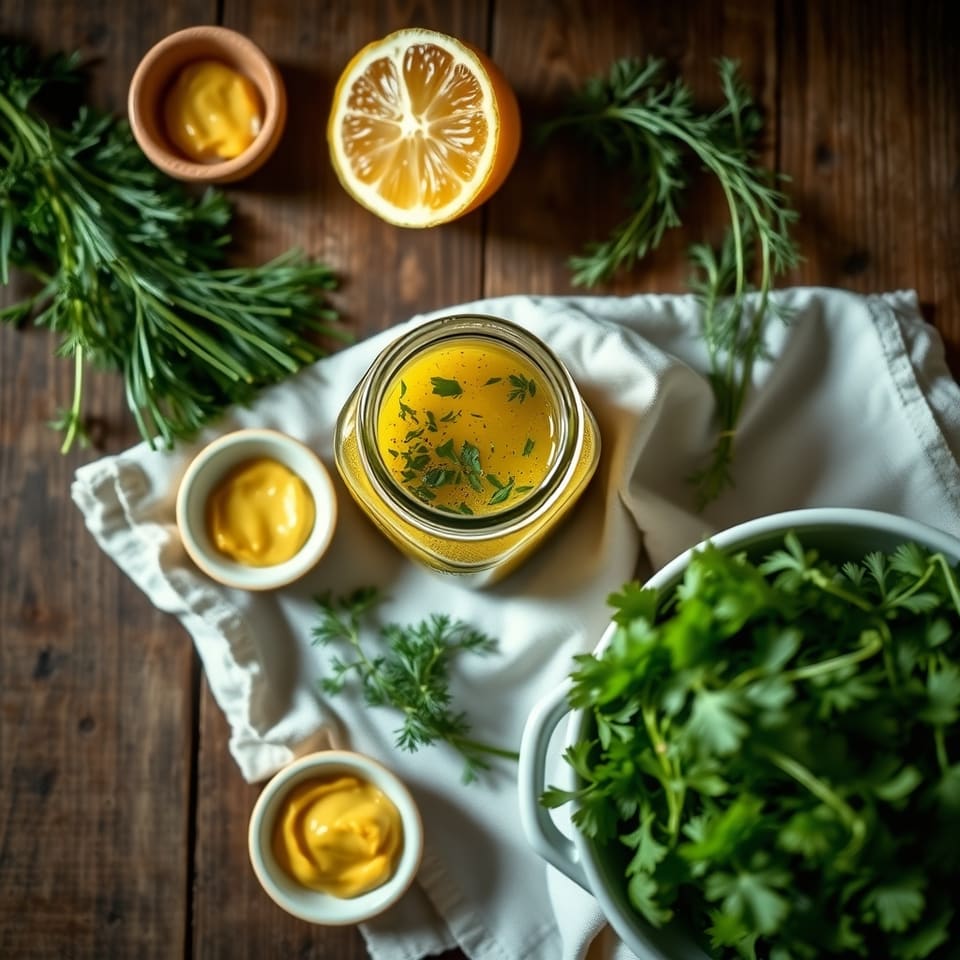
A good herb dressing takes about five minutes and uses things you probably already have: oil, something sour, a little mustard or garlic and a handful of soft herbs. Once you know the basic proportions, you can change the herbs and the acid to suit whatever is on your plate.
Homemade dressings also come with storage rules that bottled ones do not, because fresh herbs and garlic need the fridge. Below you will find the formula, a main recipe, three variations and the simple facts on keeping them safe.
The basic formula
Oklahoma State University Extension gives an easy starting ratio: 3 tablespoons of acid, 1 tablespoon of seasoning and half a cup of oil. That is about 45 ml acid, 15 ml seasoning and 120 ml oil, or a little under 3 parts oil to 1 part acid. Use more acid for a sharper dressing and less for a mellow one.
The acid can be lemon or lime juice or almost any vinegar: red or white wine, apple cider, rice or balsamic. The seasoning can be fresh herbs, Dijon mustard, minced garlic or grated Parmesan. Olive oil is the classic choice, but avocado, canola or another mild oil works too.
A spoonful of mustard helps the oil and acid stay blended for longer, and a pinch of salt makes the herbs taste brighter.
Lemon Herb Vinaigrette
You need
- fresh lemon juice or white wine vinegar45 ml (3 tbsp)
- Dijon mustard1 tsp
- garlic clove, finely grated, optional1 small
- finely chopped fresh parsley2 tbsp
- finely chopped fresh chives1 tbsp
- finely chopped fresh dill or basil1 tbsp
- salt1/4 tsp
- black pepper1 pinch
- honey, optional1/2 tsp
- extra virgin olive oil120 ml (1/2 cup)
Method
- Wash your hands. Rinse the herbs under running water and pat them completely dry.
- Put the lemon juice, mustard, garlic, salt, pepper and honey in a clean jar with a tight lid. Shake or whisk until the salt dissolves.
- Add the herbs and the oil. Close the jar and shake hard for about 20 seconds, until the dressing looks creamy.
- Taste it on a lettuce leaf. Add a little more acid if it tastes flat, or a little more oil if it is too sharp.
- Dress the salad just before serving. Put the jar of leftover dressing in the fridge straight away, write the date on it and use it within 7 days.
Tips
- Red wine and oregano: use red wine vinegar instead of lemon, and 1 tsp dried oregano plus 1 tbsp parsley as the herbs.
- Ginger and cilantro: use rice vinegar, 2 tbsp cilantro, 1 tbsp mint, 1 tsp grated fresh ginger and a mild oil instead of olive oil.
- Yogurt and dill: mix 125 g (1/2 cup) plain yogurt, 1 tbsp lemon juice, 1 tbsp olive oil, 2 tbsp dill, 1 tbsp chives and a pinch of salt. Keep it in the fridge and use it within 3 to 4 days.
Choosing your herbs
Soft, leafy herbs are best raw: parsley, chives, dill, basil, chervil, tarragon, cilantro and mint. Chop them finely just before mixing, because cut herbs darken as they sit. Hardy herbs such as oregano, thyme and rosemary are much stronger, so use less and chop them very finely, or use a pinch of dried oregano.
Try combinations from different kitchens. Lemon, parsley and chives make a classic French-style vinaigrette. Red wine vinegar with oregano suits a Mediterranean salad of tomato, cucumber and feta. Rice vinegar with cilantro, mint and a little grated ginger is lovely on noodle salads or shredded cabbage. For a creamy dressing, stir dill and chives into plain yogurt.
How long homemade dressing keeps
Oklahoma State University Extension advises putting leftover dressing in an airtight container in the fridge as soon as possible, and within 2 hours, and using it within 7 days. For the best flavor, use it sooner, because fresh herbs lose their color and brightness after a few days.
Herbs or garlic in plain oil, with no vinegar or lemon, are a different case. That is a flavored oil, not a vinaigrette, and the CDC advises refrigerating homemade oils made with garlic or herbs and throwing them away after 4 days.
Creamy yogurt dressings are perishable dairy dishes. The USDA says leftovers keep 3 to 4 days in a fridge at 4 °C (40 °F) or below, so make small amounts.
Olive oil thickens and turns cloudy in the fridge. That is normal. Take the jar out a few minutes before serving, or stand it in a bowl of warm water, then shake.
What the evidence says
A herb dressing is about flavor, not medicine. The facts that matter here are about food safety.
The CDC explains that you cannot see, smell or taste the toxin that causes botulism, and says simply: if in doubt, throw it out. So a dressing that still smells fine is not proof that it is safe. Following the fridge and time limits above is the reliable way to enjoy homemade dressings.
Questions people ask
Can I use dried herbs in a salad dressing?
Yes. Use a small pinch and let the dressing sit for 10 minutes so the herbs soften. Dried oregano is especially good in red wine vinaigrette.
Why does my dressing separate?
Oil and acid naturally separate. A little mustard helps hold them together, and a quick shake before serving brings it back.
Can I keep homemade dressing in the cupboard?
No. Keep homemade dressing in the fridge and use it within the times above. Store-bought dressings are made differently, so follow their labels.
Sources
- Homemade Salad Dressing — Oklahoma State University Extension
- Preventing Botulism — CDC
- Symptoms of Botulism — CDC
- Leftovers and Food Safety — USDA Food Safety and Inspection Service
This article is for general information only and is not medical advice. Herbs can interact with medicines and health conditions. Talk to a doctor or pharmacist before trying a herbal remedy, especially if you are pregnant, breastfeeding, giving it to a child, or taking any medication.